
(Justin Deschamps) We’re implicitly social creatures. We are biologically, neurologically, psychologically, and spiritually designed to associate with other people, things and beings. Finding a balance between a healthy desire for social interaction is essential. Social media helps this in some ways, but it isn’t a replacement for true fulfillment and meaningful fellowship.
psychology
Mathematical Framework Explores How the Brain Keeps a Beat

(Neuroscience News) A new mathematical model can predict how the brain reacts when learning a rhythmic beat. The model shows how a neural network can act as a ‘neural metronome’ by estimating time intervals between beats within tens of milliseconds. The metronome relies on gamma oscillations to keep track of time.
Changing Our Narratives, Changing Our Lives: A Strategy to Unhook from the Unhelpful Stories We Tell Ourselves

(Beth Kurland, Ph.D.) Not long ago I was caught up in a temporary funk of self-doubt. I was at a several day event surrounded by incredibly talented people and I found myself slipping back into an old narrative involving social comparison and thoughts of “I’m not good enough.”
Dharma, a Path Toward Truth and a Meaningful Life

(Exploring your Mind) Those who act rightfully, those who obey, understand, and practice Dharma, get the benefits of the cosmic ordering. It brings them happiness, mystical ecstasy, which gives them a sense of well-being and fulfillment.
Sharenting: The Risks of Putting your Child on Social Media

(Explore Your Mind) Knowing when it’s right to post something on social media is one of your duties as a parent. Learn about the risks of putting your children on social media.
When You Compare Yourself to Strangers on Social Media

(Margarita Tartakovsky, M.S.) When you say it out loud, it sounds silly, comical, and absurd. But in the moment, you can’t help but compare yourself to strangers on social media.
Making Love All the Time

(Linda and Charlie Bloom) If we define lovemaking broadly, we can make love anywhere, any time—and many couples do! Having sex is what most people mean when they use the phrase. Of course, sex can be a wonderful form of lovemaking and is a real expression of love for one another.
25 Quotes to Foster Emotional Resilience

(Therese J. Borchard) “I ask not for a lighter burden, but broader shoulders,” says a Jewish proverb. That is the essence of emotional resilience … broader shoulders. We can’t control what illness we are diagnosed with, what tragedies come our way, or how many disappointments we will run into in our day.
Symmetry between Parents and Children

(Exploring your Mind) When there is symmetry between parents and their children, children believe that they’re their parents’ peers. The parents have no authority over their children, and the children have a hard time developing their own identity. Instead, they copy what they see in their parents, including trauma and anxiety.
How to Stop Giving Away Your Personal Power, and Ways to Take it Back

(Robin Schwartz) How many times have you wanted to reach out to someone, but you were afraid to seem needy? Or perhaps you were worried about what another person might think of you, or even that they might not respond to you?
Scientists Unveil a ‘Brain Decoder’ That Turns Neural Activity Into Speech
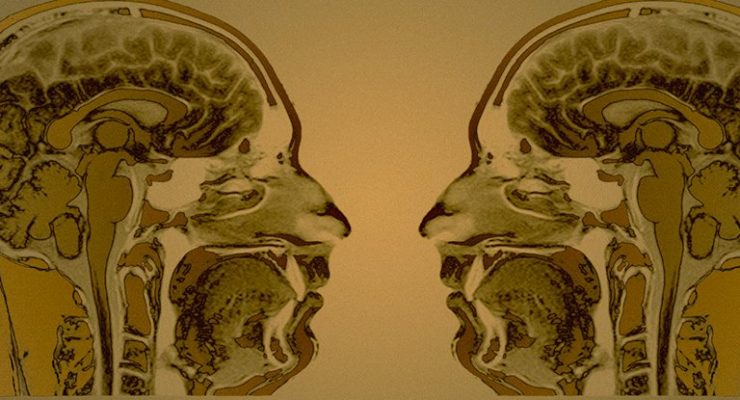
Scientists Unveil a ‘Brain Decoder’ That Turns Neural Activity Into Speech
Learn to Identify Automatic Negative Thoughts

(Explore Your Mind) As soon as you can learn to identify your automatic negative thoughts, you then can be free of self-doubt and choose positivity.
Narcissistic Families: Growing Up in the War Zone

(Amanda Robins, MSW, PhD) When you are raised in a narcissistic family it can feel like there is no help. Parents who are narcissistic are often self-focussed. They will relate to their children as “self-adjuncts” serving to support them and their image of themselves. Do something that reflects well on them and you are suddenly the Golden Child. Make a mistake, ask for help or express your vulnerability, and you are on your own or worse, ridiculed.
Are You a Highly Sensitive Person? There Are 4 Profound Brain Differences That Explain Why You Feel the Way You Do

(Evangelyn Rodriguez) Over the years, studies have tried to explain what makes a highly sensitive person (HSP), well, sensitive. Research shows that such people possess a trait called sensory processing sensitivity, which makes them overly responsive to environmental and social stimuli. They also process information more thoroughly and pay more attention to things. The cause is said to be genetic, but environmental factors also contribute to their hypersensitivity. To better understand the underlying mechanisms of hypersensitivity, scientists have looked at one organ in particular: the brain.
Meaning Without Words: Gestures and Visual Animations Reveal Cognitive Origins of Linguistic Meaning

(Neuroscience News) Gestures and visual animations can help reveal the cognitive origins of meaning, indicating that our minds can assign a linguistic structure to new informational content “on the fly”—even if it is not linguistic in nature.