
(Neuroscience News) Religious people facing life crises rely on emotion-regulation strategies that psychologists also use, a new study finds. They look for positive ways of thinking about hardship, a practice known to psychologists as “cognitive reappraisal.” They also tend to have confidence in their ability to cope with difficulty, a trait called “coping self-efficacy.” Both have been shown to reduce symptoms of anxiety and depression.
neuroscience news
How the Brain Distinguishes Speech From Noise
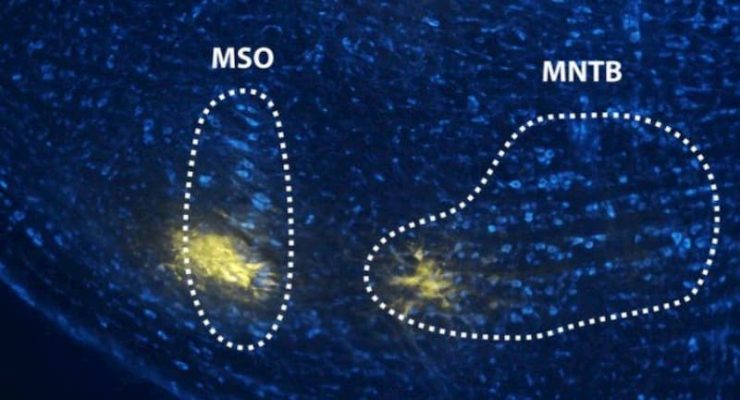
(Neuroscience News) For the first time, researchers have provided physiological evidence that a pervasive neuromodulation system – a group of neurons that regulate the functioning of more specialized neurons – strongly influences sound processing in an important auditory region of the brain. The neuromodulator, acetylcholine, may even help the main auditory brain circuitry distinguish speech from noise.
Why People Make Healthy Claims but Indulge in Unhealthy Behaviors

(Neuroscience News) The time period between Thanksgiving and Christmas is characterized by overindulgence. While we tell others that we are eating and drinking in moderation, controlling our spending, and exercising more, in reality, we do the exact opposite. So where does this disconnect come from?
Stereotypes Prejudice Our Musical Tastes

(Neuroscience News) Music prompts strong emotional responses. But it turns out it’s not just the sound, or even the lyrics, that control the emotions we experience.
The Gut Trains the Immune System to Protect the Brain

(Neuroscience News) The membranes surrounding our brains are in a never-ending battle against deadly infections, as germs constantly try to elude watchful immune cells and sneak past a special protective barrier called the meninges. In a study involving mice and human autopsy tissue, researchers at the National Institutes of Health and Cambridge University have shown that some of these immune cells are trained to fight these infections by first spending time in the gut.
How Does the Brain Process Fear?
(Neuroscience News) When a frightful creature startles you, your brain may activate its fear-processing circuitry, sending your heart racing to help you escape the threat. It’s also the job of the brain’s fear-processing circuits to help you learn from experience to recognize which situations are truly dangerous and to respond appropriately–so if the scare comes from a costumed goblin, you’ll probably recover quickly.
An Amazonian Tea Stimulates the Formation of New Neurons
(Neuroscience News) One of the main natural components of ayahuasca tea, dimethyltryptamine (DMT), promotes neurogenesis (the formation of new neurons) according to research led by the Complutense University of Madrid (UCM).
Unlocking the Mysteries of the Brain

(Neuroscience News) Seeking an answer, researchers at CHU Sainte-Justine Hospital and Université de Montréal have made a major discovery in understanding the mechanisms underlying learning and memory formation. Related Programmed Holographic Discs For Physical and Spiritual Health Source – Neuroscience News by Staff Writer, August 26th, 2020 The results of their study are presented today in Nature […]
Study: Sensory Information Underpins Abstract Knowledge

(Calli McMurray) Neuroimaging reveals our brains combine information from different categories of sensory information to drive abstract knowledge.
Study: What Women Really Want — The Effect of Women’s Cycle on Preferences for Male Behavior

(Neuroscience) In the past, there has been much excitement over research that purported to show a link between changes in a woman’s cycle and how attracted she was to men behaving in different ways. However, research at the University of Göttingen using the largest sample size to date questions these results. The new research showed that shifts in women’s cycles did not affect their preferences for men’s behaviour. The researchers found, however, that when fertile, women found all men slightly more attractive and, irrespective of their hormone cycle, flirtier men were evaluated as being more attractive for sexual relationships but less attractive for long-term relationships. The results were published in Psychological Science.
Study: Men Can Smell When a Woman is Sexually Aroused

(Neuroscience News) University of Kent research suggests that men can distinguish between the scents of sexually aroused and non-aroused women.
Revenge, Brain Science: The Neural Processes Behind Our Desire for Revenge

(Neuroscience News) New insight on the neural processes that drive a desire for revenge during conflict between groups has been published today in the open-access journal eLife.
Study: Sitting Still Linked to Increased Risk of Depression in Adolescents

(UCL) Too much time sitting still – sedentary behavior – is linked to an increased risk of depressive symptoms in adolescents, finds a new UCL-led study.
Component of Human Breast Milk Enhances Cognitive Development in Babies

(Neuroscience News) Maternal factors, such as breast milk, have been shown to affect a baby’s development, and previous animal studies have determined that a carbohydrate, the oligosaccharide 2’FL found in maternal milk, positively influences neurodevelopment. Now, in the first study done in humans, investigators at Children’s Hospital Los Angeles in collaboration with the University of California, San Diego, have shown that 2’FL found in breast milk enhances cognitive development. Findings will be published in PLOS ONE on Feb 12.
Kids Three Times as Likely to Eat Healthy After Watching Cooking Shows with Healthy Food

(Neuroscience News) Children aged between 10-12 were almost three times as likely to make healthier eating decisions after watching cooking shows that featured healthy foods. Related Parents Beware: Food Causes Nutrition Deficiency: Soda and Fast Food Cripple Brain Development, According to New Study Source – Neuroscience News by Staff Writer, January 3rd 2020 Television programs […]