
(Neuroscience News) Research published in the journal Cerebral Cortex has shown that stronger functional connectivity—that is, communication among neurons in various networks of the brain—is linked to youthful memory in older adults. Those with superior memories—called superagers—have the strongest connectivity.
psychology
How Art Changes Consciousness
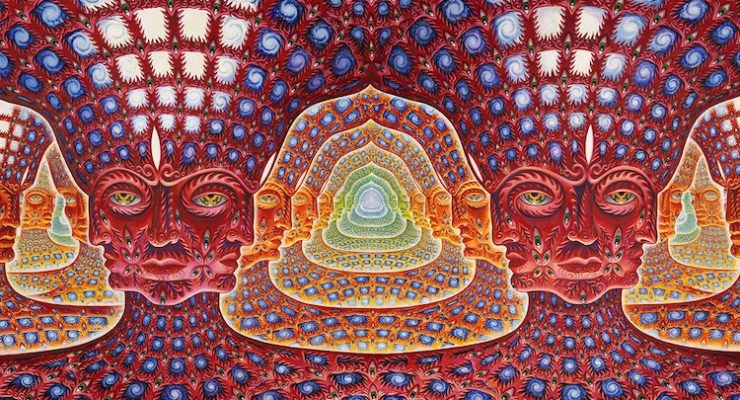
(Jacob Devaney) Art can heal us, inspire us, and alter our brain chemistry
How Adverse Childhood Experiences Affect Relationships

(Renee Catt) Childhood trauma is surprisingly common and understandably painful, but healing is possible.
Healthy Relationships with Others Begins with the Self

(Bonnie McClure) We all have in our minds an image of the best possible version of ourselves. We call this self, the “ideal self.” The ideal self represents our highest values, our total potential, everything that we strive to be, and the goals that we set for ourselves.
Yawning Cools the Brain

(Exploring your Mind) Why do we yawn? Does it have anything to do with our health? Neuroscientist Raquel Marin gives an overview of the importance and function of yawning.
Flashbulb Memories: How Emotion Influences Cognition

(Zainab Hassan) What are flashbulb memories?
The theory of flashbulb memories was proposed by Roger Brown and James Kulik in 1977 after they investigated memories of the JFK assassination. They found that people had very vivid memories of when they received the news including exactly what they were doing, the weather, and the smells in the air.
Consciousness: Predicting the Future

Consciousness: Predicting the Future
Research Shows That Time In Prison Does Not Successfully “Rehabilitate” Most Inmates

(Dr. Faye Snyder) Ignorance is so convenient. But time’s up. We all have a choice to make, and hopefully, it will be an informed one.
The Phenomenon of the Moth to a Flame — How Do We Get Stuck?

(Exploring Your Mind) The phenomenon of the moth to a flame is a metaphor about emotional dependence. It’s about how you sometimes feel attracted to the things that harm you. On the flip side, it may also lead you to fear the very thing that can free you.
How It Takes Courage to Build Healthy Relationships

(John Amodeo, PhD) The word “courage” is often reserved for entering a battlefield or facing difficult circumstances. But there’s a more subtle aspect to courage that is needed in our close relationships.
Exploration Create Positive Emotions — You Were Designed for Play

(Justin Deschamps) Simply put: you were designed for play. Within our brain, systems designed to encourage us to explore the unknown reward us for bravery in the face of uncertainty. That feeling of excitement you get when you’re about to do something you’ve been looking forward to is this mechanism of positive emotion through exploration.
Victim Mentality: Codependency, Passive Aggressiveness, and the Healing Power of Bravery

(Justin Deschamps) Victimhood is a serious problem on earth. A culture of victimhood encourages the individual to avoid self-growth—the very thing needed to overcome victimization. In the following article, the cost of maintaining victimhood is highlighted, helping one to understand that maintaining a belief you are a victim hurts yourself and others.
The Science Behind Yoga and Stress

(Dr. M Storoni MD PhD) There are two functional parts of the brain that play a key role in stress. These serve the functions of emotion and cognitive function. So I am calling them the ’emotional’ brain (amygdala and its connections and medial forebrain structures including the medial prefrontal cortex) and the ‘logical’ brain (the dorsolateral prefrontal cortex, other parts of the prefrontal cortex, parts of the cingulate cortex and parts of the hippocampus).
The ABCs of Human Instincts

(Exploring Your Mind) People are always talking about human instincts. Nevertheless, most people might not know what that means. This is a phrase that was borrowed from biology. It reminds us that, at the end of the day, humans are just mammals that evolved beyond the rest.
7 Realistic Ways to Look on the Bright Side—Which Don’t Feel Fake or Forced

(Margarita Tartakovsky) We tend to view looking on the bright side as silly or stupid. We see it as annoying and inauthentic. We see it as naïve and immature.