
(Neuroscience News) Maternal factors, such as breast milk, have been shown to affect a baby’s development, and previous animal studies have determined that a carbohydrate, the oligosaccharide 2’FL found in maternal milk, positively influences neurodevelopment. Now, in the first study done in humans, investigators at Children’s Hospital Los Angeles in collaboration with the University of California, San Diego, have shown that 2’FL found in breast milk enhances cognitive development. Findings will be published in PLOS ONE on Feb 12.
psychology
Study: Love Matters — How Parents’ Love Shapes Children’s Lives

(Neuroscience News) Parents often put their own relationship on the back burner to concentrate on their children, but a new study shows that when spouses love each other, children stay in school longer and marry later in life.
The Left-Handed Brain: Differences and Advantages

(Exploring Your Mind) In a right-handed world, the left-handed brain has to make a number of adaptations. We’re talking about creating and putting into practice strategies that could make you more skilled on a psychomotor and cognitive level.
Rage and Depression: How Are They Related?

(Exploring Your Mind) Rage and depression are both expressions of frustration, discomfort, and unease in the face of reality. They represent a failed processing of internal malaise. Someone who’s always mad is probably depressed and vice versa.
Free Time as Emotional Release

(Exploring Your Mind) It’s extremely important to have a balance between recreation and work to benefit from the emotional release that free time gives you.
How to Survive a Traumatic Experience

(Marie Hartwell-Walker, Ed.D.) Somewhere in the world people are experiencing traumatic events every day. Communities fall apart due to tornadoes, floods, fires, and war — cataclysmic events that cause multiple losses for everyone in their path. Homes and possessions are lost; individuals suffer injuries; friends and family disappear or die.
The Psychology of Confirmation Bias — Discernment Fails

(John M. Grohol, Psy.D.) People seem to stubbornly cling to their preexisting beliefs, even when provided evidence to the contrary. In psychology, researchers have a name for this stubbornness — confirmation bias. It’s one of the most common of biases humans hold in their mind, called cognitive biases.
Feeling Disappointed? These 4 Truths Will Help You Move Forward

(Michael Bianco-Splann) No one is free from the trials and tribulations of living on planet Earth. The unfortunate truth is that a large percentage of the planet’s more than 7 billion inhabitants are, at this moment, hungry and suffering.
Study: The Use of Jargon Kills People’s Interest in Science, Politics

(Science Daily) When scientists and others use their specialized jargon terms while communicating with the general public, the effects are much worse than just making what they’re saying hard to understand.
Lack of Sleep and its Consequences

(Exploring Your Mind) Lack of sleep is tied to cognitive, emotional, and physical problems. Thus, sleeping as much as you need should be a priority for the sake of your well-being.
Pour Your Soul Out: Crying Is A Symbol Of Emotional Intelligence, Not A Sign Of Weakness

(Mayukh Saha) Crying is as normal an event as breathing. But the forces that govern us have forever seen this action to be one of weakness. Men especially are always ridiculed if they cry. It is viewed as an emasculating thing to do. On the other hand, women are seen as extremely spoilt if they cried, no matter the reason. To put it simply, one’s reasons for crying could be varied, but a single tear down the eye would be perceived as less humanly.
The Wise Words of Tacitus | Life Wisdom

(Exploring Your Mind) The wise words of Tacitus still hold true in modern times. Amongst the greatest of Roman historians, he addressed themes of power, honor, education, envy, and criticism.
Engrams Emerging as the Basic Unit of Memory
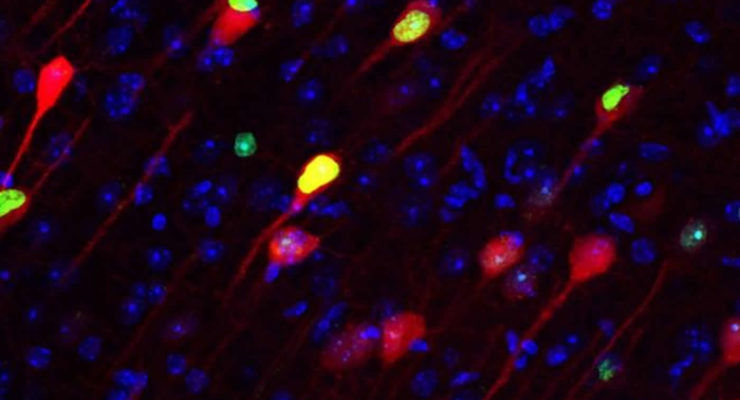
(Neuroscience) Though scientist Richard Semon introduced the concept of the “engram” 115 years ago to posit a neural basis for memory, direct evidence for engrams has only begun to accumulate recently as sophisticated technologies and methods have become available.
How Does Your Body Respond to Feelings of Moral Outrage? Depends on Your Politics

(Neuroscience News) Study reveals liberals and conservatives feel certain violations of moral concerns, such as loyalty and purity, in different areas of their bodies. Related Somatic Therapy: Releasing Trapped Emotions Source – Neuroscience News by Staff Writer, January 18th 2020 When you see someone being unfair, disloyal or uncaring toward others, do you feel a […]
Validating Emotions: What Does it Mean? | Psychology

(Exploring Your Mind) Validating emotions is often the starting point when you set out to help someone. In fact, it’s one of the main ingredients for this help to be effective.