
(Ben Mattice) If you’re like me, your home workspace doubles as your gaming space. This was detrimental to my productivity. Every time I sat down, my brain saw my VR headset and my slick gaming PC and said, “it’s time to play, right?”
Consciousness
How People With Psychopathic Traits Control Their ‘Dark Impulses’

(Science Daily) How do people with psychopathic traits control their ‘dark impulses?’ A team of researchers are finding answers in levels of gray matter density in the ventrolateral prefrontal cortex, a region of the brain involved in the regulation of emotions, including fear and anger.
The Dawn of Consciousness, Symbolically Depicted in Lion King

The Dawn of Consciousness, Symbolically Depicted in Lion King
How to Heal Yourself by Talking to Your Body

(Therese Wade) Your Cells are Listening
How I Stopped Chasing Happiness and Started Enjoying My Imperfect Life

(Mai Pham) “I want to live my life without stress and worries. I don’t need to be rich or famous. I just want to be happy.” ~Unknown
Study Suggests That Individuals with Anxiety and Depression Can Manage Their Symptoms Using Breathing Exercises and Yoga

(Edsel Cook) Anxious and depressed? Massachusetts-based researchers suggest taking up breathing exercises or yoga sessions to ease your symptoms. The two practices appear to improve mood by stimulating the vagus nerves and increasing the levels of gamma-aminobutyric acid (GABA), an essential neurotransmitter in the brain.
10 Strategies for Discovering and Living as Your True Self

(Rebecca C. Mandeville) If you find yourself continuing to act out old patterns and roles that no longer serve you, this is more than likely interfering with your ability to create mutually rewarding, respectful, and reciprocal relationships. Below are my ten strategies for getting in touch with your true self so as to create an integrity-based and emotionally rewarding life.
The Power of a Smile – Three Experiments

(Exploring Your Mind) Thanks to several experiments on the power of the smile conducted in different parts of the world, we now know that it isn’t enough to just smile. A smile must be sincere and reflect genuine feelings.
Parables For The New Conversation (Chapter 4: The Island)
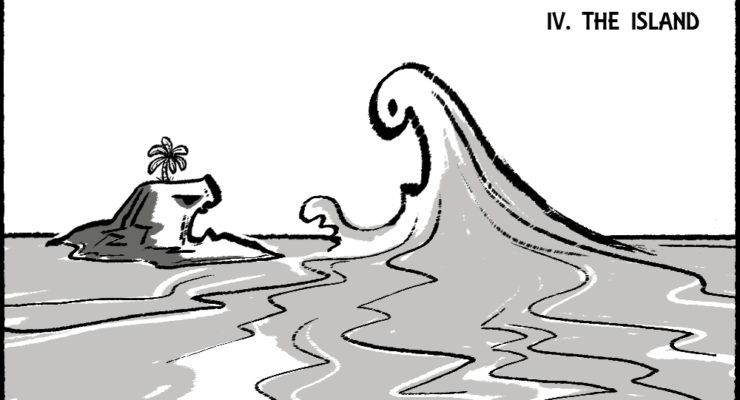
Parables For The New Conversation (Chapter 4: The Island)
Does Unconditional Love Really Exist?

(Exploring Your Mind) Unconditional love exists, but is it a good thing? After all, conditions and boundaries can help protect your self-esteem and well-being in all kinds of loving relationships.
The Ten Commandments for Dealing with Conflict in Your Relationship

(Exploring Your Mind) These guidelines for dealing with conflict in your relationship focus on simple attitudes and behaviors. Although we often forget to consider these things, they can really make the difference between resolving the conflict and making it worse.
Parables For The New Conversation (Chapter 3: The Shadow)

3. The Shadow
Well past midnight in a home on the island of Allandon, the village schoolteacher was retiring to bed and noticed the light on in the room of her son, who was known to the villagers as ‘the young philosopher’. Upon entering, she saw him in his familiar place, sitting at his desk buried in a mountain of heavy tomes.
Pattern Mapping: Your Choices Map Directly on to Your Nervous System — Intellectual vs Somatic Beliefs
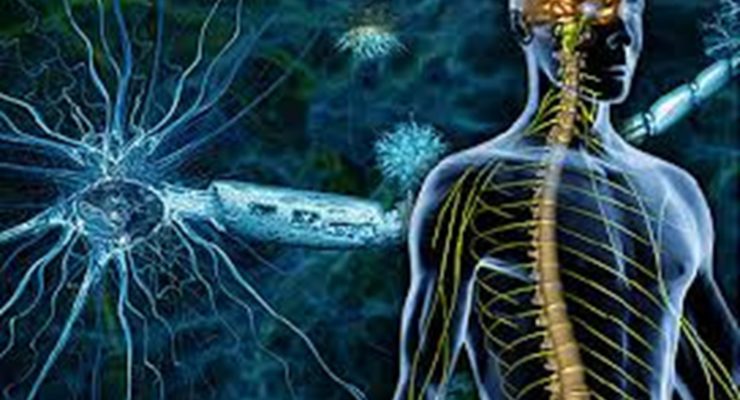
(Justin Deschamps) As anyone who’s tried to change a habit knows, it’s a lot harder than we might think. We’d like to believe that we can use the power of our conscious mind to override a habit, instinct, fear, or emotion. To be sure, the conscious mind has this power to a certain extent, but it’s more akin to the relationship between an architect and a general contractor. You have to “install” an intellectually worked out way of thinking into the body itself, which usually requires taking action.
David Wilcock, Dimensions of Disclosure 2019 Presentation Notes: Part 4

David Wilcock, Dimensions of Disclosure 2019 Presentation Notes: Part 4
The Process of a Child’s Emotional Development

(Exploring Your Mind) A child’s emotional development makes them aware of the origin and development of their emotions. They begin to read them in other people’s facial expressions, and thus interpret them according to the social context (1). The change and growth expected of them on an emotional level stems from two areas. On the one hand, from the experiences that occur in their context, and, on the other hand, from their maturity.