
(Neuroscience News) Most of us know somebody who tends to get over involved in certain behaviors, and the saying often goes that they must have an “addictive personality”. But is there such a thing?
Psychology
What Are Personality Disorders and How Are They Treated?
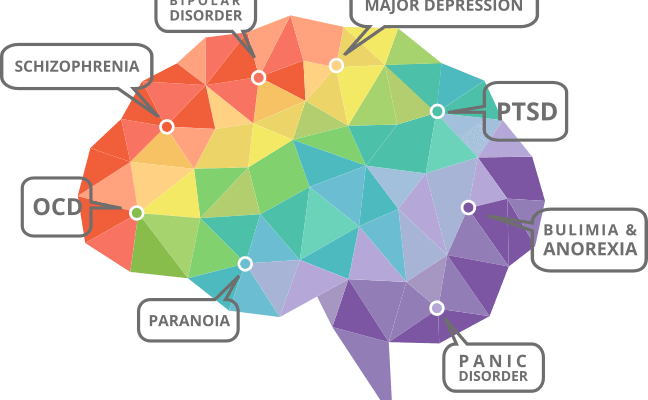
(Justin Deschamps) As one who studies psychology, I’ll be the first to tell you that it’s hardly perfect. Especially on the clinical side, drug companies and other interests have diluted the true power of understanding the nature of our being. This being said, there is much within the accumulated knowledge of psychology we can gain wisdom in studying. With this in mind, consider the following.
7 Reasons INFJs and INTJs Work Really Well Together

(Sarah Keene) I’m an INFJ who works as the assistant director of a performing arts program in the public school system. The head director, the person with whom I work most closely on a daily basis, is an INTJ personality type.
This Is Why Your Attitude Is More Important Than Your IQ

(Mayukh Saha) What is the right determinant of success? Most would say intelligence. After all, we have been taught that intelligent people are often smart and can find their way in life quite easily. They will race to their goal faster and more efficiently than those who have less IQ and are less intelligent. However, a study at Stanford University claims that it is not IQ but the attitude that can be a determinant of success.
The Propensity to Hear ‘Voices’ in Schizophrenia May Be Established by Infancy

(Science Daily) Some people suffering from severe mental illness, particularly schizophrenia, hear “voices,” known as auditory hallucinations. This symptom, which afflicts more than 80% of patients, is among the most prevalent and distressing symptoms of schizophrenia.
Memory and Trauma: What’s the Link?

(Exploring Your Mind) In this article, we’re going to talk about the link between memory and trauma and the ways that an intense emotional disruption can impact your mind. Through the lens of post-traumatic stress disorder (PTSD), we’ll explain the difference between traumatic memories and regular ones.
New Baby Smell: How Newborn Babies’ Head Odor Facilitates Bonding

(Neuroscience News) A team led by Kobe University Professor Mamiko Ozaki (Department of Biology, Graduate School of Science) has become the first to identify the chemical makeup of the odors produced by newborn babies’ heads. The results shed more light on the olfactory importance of newborns’ heads in mother-baby and kin recognition. They also developed a non-invasive and stress-free method of sampling these odors directly from heads of the babies.
Study Identifies Psychology of Attraction to Religious Deities and Super-Heroes

(Neuroscience News) A new psychological study published by University of Otago researchers has addressed centuries-old questions about how and why supernatural beings are worshipped.
Self-Destructive Behaviors in Relationships

(Exploring Your Mind) What are the most self-destructive behaviors in romantic relationships?
The Fun Theory: Rewards Over Punishments

(Exploring Your Mind) The fun theory is based on the idea that people are more likely to do things that take some effort if they have a fun thing as an incentive. In other words, a rewards system can shape people’s behavior.
Mindfulness Strategies and Techniques

(Exploring The Mind) Resorting to mindfulness techniques can help you be more flexible, control your attention, and face any situations that come your way.
Destructive Pride in Borderline Personality Disorder

(Exploring Your Mind) In many cases, the destructive pride characteristic of borderline personality disorder is nothing but a mask that hides an extreme fear of criticism. In this article, we’re going to tell you all about it.
Your Brain Thinks Your Meanings are More Real Than Reality Itself

Your Brain Thinks Your Meanings are More Real Than Reality Itself
Teenagers Less Likely to Respond to Mothers with Controlling Tone of Voice

(Neuroscience) Teenagers are less likely to cooperate and put effort into their mother’s requests when they are said in a controlling tone of voice, researchers have found.
The First Panic Attack and What Happens Next

(Exploring Your Mind) Having a first panic attack is terrifying, so much so that many people believe they’re having a heart attack. What scares then the most about that first experience is the fear of the unknown. Thus, what happens next is a persistent fear that it could happen again.