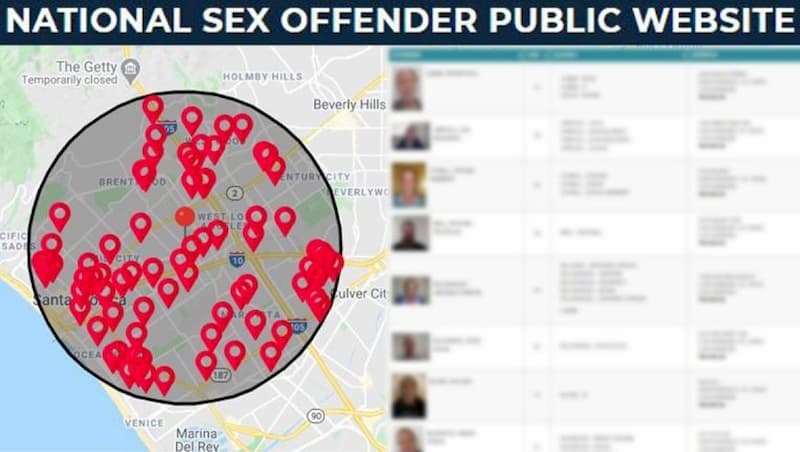
(Mary Stringini) A new bill headed to Governor Gavin Newsom’s desk would lower penalties for adults who have consensual sex with a minor if the offender is within 10 years of age with the victim.
by Mary Stringini, September 2nd, 2020
SB 145 passed in both houses of the State Legislature late Monday evening.
“If signed into law, a 24-year-old could have sexual relations with a 15-year-old child without being required to register as a sex offender,” State Senator Shannon Grove wrote in a tweet.
Under current law, while it is illegal for an adult to have consensual sex with a teenager between 14 and 17 years old, who cannot legally give consent, vaginal intercourse between the two does not require the offender to be listed on the state’s sex offender registry, as long as the offender is within 10 years of age of the minor. Instead, the judge has the discretion to decide, based on the facts of the case, whether the sex offender registration is warranted.
Other forms of intercourse such as oral and anal intercourse require sex offender registration.
State Senator Scott Wiener, who presented the bill, said the existing law “disproportionately targets LGBT young people for mandatory sex offender registration since LGBT people usually cannot engage in vaginal intercourse.”
“California’s sex offender registry continues to draw that distinction — an antiquated, outdated, leftover distinction — that somehow oral sex is worse than vaginal sex,” Wiener said.
The bill was sponsored by the Los Angeles County District Attorney’s Office. During an August press conference, Deputy District Attorney Bradley McCartt recounted a case in which a mother was upset that her 17-year-old daughter was in a relationship with a high school basketball teammate and pressed charges against her daughter’s 18-year-old girlfriend, the San Francisco Chronicle reported. McCartt was able to prevent the prosecution. However, he said that if others were more willing to prosecute the case, the girlfriend would have been placed on the sex offender registry for life if convicted.
According to the bill’s language, the goal of SB 145 is to “exempt from mandatory registration under the act a person convicted of certain offenses involving minors if the person is not more than 10 years older than the minor and if that offense is the only one requiring the person to register.”
Critics of the bill argue that rather than amending existing law to include vaginal intercourse with a minor as an act that requires mandatory sex offender registration, the bill aims to make all criminal sex acts with a minor over 14 equal by providing offenders with an opportunity to evade mandatory registration.
“Any sex is sex,” argued Assemblywoman Lorena Gonzalez. “I don’t care who it is between or what sex act it is. That being said, I cannot in my mind as a mother understand how sex between a 24-year-old and a 14-year-old could ever be consensual.”
According to Wiener, the bill would not change the potential sentence for having sex with an underage minor. Instead, the bill would give judges the ability to evaluate whether the accused be required to register as a sex offender.
Stillness in the Storm Editor: Why did we post this?
The news is important to all people because it is where we come to know new things about the world, which leads to the development of more life goals that lead to life wisdom. The news also serves as a social connection tool, as we tend to relate to those who know about and believe the things we do. With the power of an open truth-seeking mind in hand, the individual can grow wise and the collective can prosper.
– Justin
Not sure how to make sense of this? Want to learn how to discern like a pro? Read this essential guide to discernment, analysis of claims, and understanding the truth in a world of deception: 4 Key Steps of Discernment – Advanced Truth-Seeking Tools.
Stillness in the Storm Editor’s note: Did you find a spelling error or grammatical mistake? Send an email to [email protected], with the error and suggested correction, along with the headline and url. Do you think this article needs an update? Or do you just have some feedback? Send us an email at [email protected]. Thank you for reading.
Source:
Leave a Reply