
(Christine Stevens) From biology to the brain, rhythm seems to play a significant role in igniting the circuits that lead to transformation and awakening. Yet we wonder why humans have been drumming together for centuries, keeping together in time, moving from the individual –focus to social bonding. Could it be that enlightenment is just a few beats away?
music
Exposing The Music Industry: Celebrity Cloning, the Deep State & the Donald Marshall Story

Exposing The Music Industry: Celebrity Cloning, the Deep State & the Donald Marshall Story
Humans Are Hardwired for Music: Our Brains Appear Uniquely Tuned for Musical Pitch

(Science Daily) In the eternal search for understanding what makes us human, scientists found that our brains are more sensitive to pitch, the harmonic sounds we hear when listening to music, than our evolutionary relative the macaque monkey. The study, funded in part by the National Institutes of Health, highlights the promise of Sound Health, a joint project between the NIH and the John F. Kennedy Center for the Performing Arts that aims to understand the role of music in health.
The One-Eye Sign: Its Origins and Occult Meaning

(Vigilant Citizen) Why are there so many pictures of celebrities hiding one eye? It is definitely not random. In fact, the One-Eye sign has a profound meaning and proves an important fact about the powers that be. This article looks at the origins and the meaning of the unescapable One-Eye sign. Related Sigil Magic: How to […]
Music Helps to Build the Brains of Very Premature Babies

(Neuroscience) In Switzerland, as in most industrialized countries, nearly 1% of children are born “very prematurely”, i.e. before the 32nd week of pregnancy, which represents about 800 children yearly.
The Math Behind the Music

(Neuroscience News) Next time you listen to a favorite tune or wonder at the beauty of a natural sound, you might also end up pondering the math behind the music.
Scientists ‘Clear’ Alzheimer’s Plaque From Mice Using Only Light And Sound
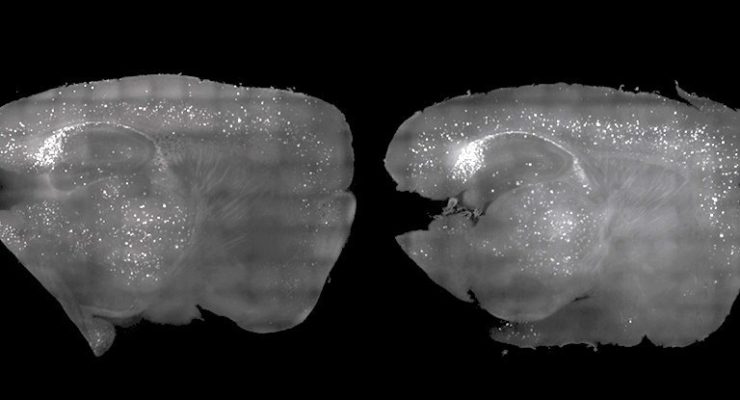
(Mike McRae) Clumps of harmful proteins that interfere with brain functions have been partially cleared in mice using nothing but light and sound.
Working to the Beat: How Music Can Make Us More Productive

(Neuroscience News) Listening to music while working helps improve productivity and increases perceptions of happiness.
Mathematical Framework Explores How the Brain Keeps a Beat
(Neuroscience News) A new mathematical model can predict how the brain reacts when learning a rhythmic beat. The model shows how a neural network can act as a ‘neural metronome’ by estimating time intervals between beats within tens of milliseconds. The metronome relies on gamma oscillations to keep track of time.
The Music of Life — The Deep State Changed Music, and This is Why We Need to Change it Back
(Taboodata) Known as Verdi’s ‘ A’, the enigma that is A=432 Hz is a pure mathematical tone resonant throughout nature, and as such music played at this frequency exhibits many fundamental health benefits to the listener . In recent history, according to Dr. Len Horowitz the world underwent the strategic “militarization” of music.
Seven Songs that Reduce Anxiety

(Exploring Your Mind) Dr. Lewis-Hodgson, along with the Mindlab Institute, demonstrated that some songs reduce anxiety as they influence heartbeat, breathing, and blood pressure, among other things.
Deep State History: The Beatles, Doors, Grateful Dead, and more Were Engineered for CONTROL

Deep State History: The Beatles, Doors, Grateful Dead, and more Were Engineered for CONTROL
The Beatles Pioneered The Mass Mind Control of Music — John Colman on Tavistock and Adorno (Recovered Audio)

The Beatles Pioneered The Mass Mind Control of Music — John Colman on Tavistock and Adorno (Recovered Audio)
People With Higher Empathy Levels Process Music Differently, According to Breakthrough Study
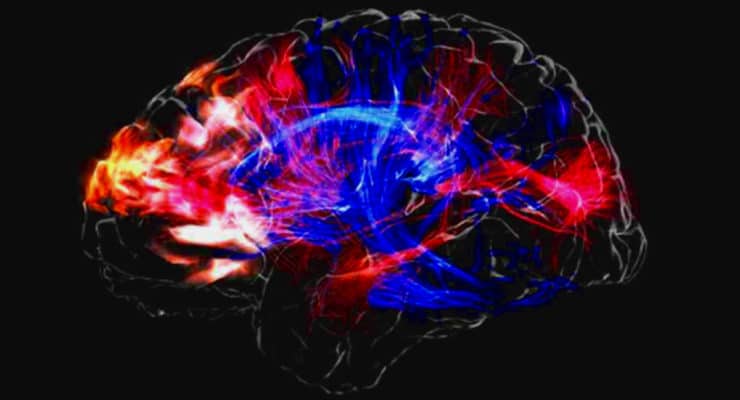
(Gerald Sinclair) People who feel the pain of others are much more empathic than most. They can relate to the people who are suffering on a real level and touch on that pain as if it were their own.
Active Music Therapy Increases Brain Activation
(Edsel Cook) A Japanese study evaluated the effect of active and passive participation in music therapy on the frontal lobe of the brain. In addition to demonstrating the relaxing effect of calm music, it determined that active music therapy appeared to trigger activity in the brain more often than merely listening to the music.