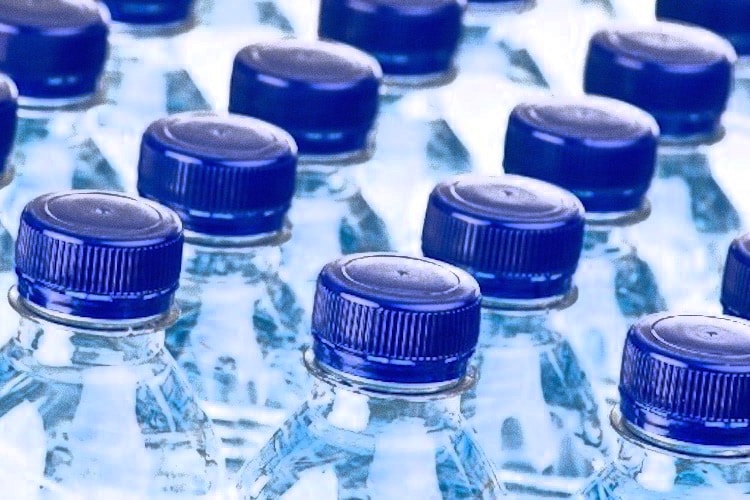
(Dr. Mercola) Plastic has become an incredibly harmful convenience, now threatening environmental and human health alike, and in more ways than one. With Earth Day being tomorrow, there is no better time to analyze the impact bottled water has had on our planet. There’s the issue of bulk plastics in our landfills, where it will remain indefinitely since most plastic does not biodegrade,1 and microplastics — microscopic pieces of degraded plastic — which now choke waterways across the globe and contaminate drinking water and sea life.
by Dr. Mercola, April 25th, 2018
On top of that, there are the chemicals used in the production of plastic, many of which have hormone-mimicking activity, thereby threatening animal and human health, including reproductive health. Disturbingly, recent tests reveal most bottled water contains microplastic pollution2 — contamination thought to originate from the manufacturing process of the bottles and caps.
The featured CBC marketplace investigation of bottled water found plastic contamination, including rayon and polyethylene, in 30 of 50 water bottles tested. Plastic was even found in bottled water that was sold in a glass container.
Researchers at the State University of New York also tested 259 bottles of 11 popular bottled water brands for the presence of microscopic plastic on behalf of Orb Media, a nonprofit journalism organization. Brands included Aquafina, Nestle Pure Life, Evian, Dasani and San Pelligerino. On average, the bottled water tested contained 325 pieces of microplastic per liter; just over 10 of those pieces were at least 100 microns in size, the rest were smaller.
Most of these bits and pieces are so tiny they’re invisible to the naked eye. To reveal them, the researchers used a special dye that binds to plastic, combined with infrared laser and blue light. Using orange-colored glasses, the particles appear lit up like stars in the night sky when the water sample is viewed under a microscope.
Buy Book Endocrine Disruption and Human Health

Bottled Water Contaminated With Microscopic Plastic
Overall, only 17 of the 259 bottles were found to be free of microplastic particles, and none of the brands tested consistently free of plastic contaminants. The worst offender was Nestlé Pure Life, the most contaminated sample of which contained 10,390 particles per liter, while the least contaminated brand, San Pellegrino, contained a high-end density of 74 particles per liter. Here’s a summary breakdown of the most and least contaminated brands:3
| Most contaminated brands | Least contaminated brands |
|---|---|
| Nestlé Pure Life | San Pellegrino |
| Bisleri | Evian |
| Gerolsteiner | Dasani |
| Aqua | Wahaha |
| Epura | Minalba |
As noted in Orb Media’s “Plus Plastic” report:4
“Humans need approximately 2 liters of fluids a day to stay hydrated and healthy — even more in hot and arid regions. Orb’s findings suggest that a person who drinks a liter of bottled water a day might be consuming tens of thousands of microplastic particles each year …
For microplastic debris around 100 microns in size … bottled water samples contained nearly twice as many pieces of microplastics per liter (10.4) than the tap water samples (4.45) … According to existing scientific research, the plastic particles you consume in food or drinks might interact with your body in a number of different ways …
Some particles might lodge in the intestinal wall. Others might be taken up by intestinal tissue to travel through the body’s lymphatic system. Particles around 110 microns in size (0.11 millimeters) can be taken into the body’s hepatic portal vein, which carries blood from the intestines, gallbladder, pancreas and spleen to the liver.
Smaller debris, in the range of 20 microns (0.02 mm) has been shown to enter the bloodstream before it lodges in the kidneys and liver … Ninety percent of the plastic particles we found … were between 100 and 6.5 microns — small enough … for some to cross the gut into your body.”

World Health Organization Launches Health Review
In response to Orb Media’s report, the World Health Organization (WHO) has vowed to launch a safety review to assess the potential short- and long-term health risks of consuming microplastic in water. WHO’s global water and sanitation coordinator, Bruce Gordon, told BBC News: 5
“When we think about the composition of the plastic, whether there might be toxins in it, to what extent they might carry harmful constituents, what actually the particles might do in the body — there’s just not the research there to tell us.
We normally have a ‘safe’ limit but to have a safe limit, to define that, we need to understand if these things are dangerous, and if they occur in water at concentrations that are dangerous. The public are obviously going to be concerned about whether this is going to make them sick in the short term and the long-term.”
Plastic Debris in World’s Oceans Predicted to Triple By 2025
In related news, a report by the U.K. Government Office for Science warns plastic debris littering the world’s oceans — 70 percent of which does not biodegrade — is likely to triple by 2025 unless radical steps are taken to curb pollution.6
Already, an estimated 150 million tons of plastic contaminate our oceans, with about 8 million tons being added each year. Ontario alone throws away an estimated 12,000 plastic water bottles every four minutes. At the rate we’re going, estimates by the World Economic Forum suggest that by 2050, our oceans will contain more plastic than fish by weight.7 Already, in some ocean waters plastic exceeds plankton by a factor of 6-to-1.8
“The New Plastics Economy: Rethinking the Future of Plastics” — a 2016 joint report by the World Economic Forum and the Ellen MacArthur Foundation, created as part of Project MainStream, a multi-industry, global initiative launched in 2014 — presented “a vision of a global economy in which plastics never become waste and outlines concrete steps toward achieving the systemic shift needed.”
A key problem is the fact that we dispose of as much as $120 billion-worth of plastic each year. To rein in plastic pollution, this disposal of plastic must be eliminated. To do this, the report proposes a new “circular economy” in which materials are reused and repurposed for as long as possible, if not indefinitely. Most plastic packaging is used only once, hence 95 percent of the value of this plastic is immediately lost after its very first use.
“The New Plastics Economy, outlined in this report, envisages a fundamental rethink for plastic packaging and plastics in general — a new model based on creating effective after-use pathways for plastics; drastically reducing leakage of plastics into natural systems, in particular oceans; and finding alternatives to crude oil and natural gas as the raw material of plastic production,” the press release states.9
“Achieving the systemic change needed to shift the global plastic value chain will require major collaboration efforts between all stakeholders across the global plastics value chain — consumer goods companies, plastic packaging producers and plastics manufacturers, businesses involved in collection, sorting and reprocessing, cities, policy-makers and NGOs.
The report proposes the creation of an independent coordinating vehicle to set direction, establish common standards and systems, overcome fragmentation, and foster innovation opportunities at scale. In line with the report’s recommendations, the Ellen MacArthur Foundation will establish an initiative to act as a cross-value-chain global dialogue mechanism and drive the shift toward a New Plastics Economy.”
Pacific ‘Garbage Patch’ Contains Far More Plastic Than Previously Thought
Yet another disturbing study10,11 suggests the Great Pacific Garbage Patch — a 1.6 million square kilometers — nearly 618,000 square miles — area of ocean between Hawaii and California — may contain anywhere from four to 16 times more plastic than estimated by earlier studies. This conclusion was reached by gathering both aerial survey and net catch data and creating a computer model to estimate the total burden.
According to these estimates, the density of plastic litter is estimated to be about 1 kilo of plastic per square kilometer around the perimeter, while exceeding 100 kilos per square kilometer at the center of the gyre. In all, this single garbage patch alone is thought to contain over 78,082 tons (79,000 metric tons) of plastic trash, and possibly as much as 142,198 tons (129,000 metric tons). More than three-quarters of all this trash is pieces larger than 5 centimeters. About 8 percent of the total mass is thought to be microplastics.
Microbeads and Microfibers Also Pose Severe Environmental Hazards
In addition to all this larger-scale ocean trash, we also have microfibers12 and microbeads to contend with. While the microplastic found in bottled water was deemed to be byproducts of the manufacturing process, our global waterways also contain microplastics — primarily from clothing and personal care products — that threaten the ecosystem at large.
The tiny plastic pellets found in body washes, facial scrubs and toothpaste travel right through wastewater treatment plants, filling the bellies of sea animals with plastic that acts as a sponge for other toxins.
According to a 2016 National Geographic report,13 an estimated 4,360 tons of microbeads were used in personal care products sold in the European Union (EU) in 2012, all of which get flushed down the drain. One 2015 study14 estimates there may be as much as 236,000 tons of microbeads filling the water columns of our oceans.
Beginning July 2018, microbeads will also no longer be permitted in cosmetics sold in the U.S.15 As of July 2018, a ban on microbeads in personal care products also takes effect in Canada,16 while the EU has taken no action on the matter. This is a good start, but the question still remains how to remove the microplastic already in our waterways. As reported by National Geographic:
“As reiterated from the study by the French Institute for the Exploitation of the Sea, ‘Oysters that consume microplastics eat more algae and absorb it more efficiently … [their] ability to reproduce is almost halved’ … Filter feeding organisms are vital components of marine food webs, and their demise could mean severe threats to numerous trophic levels, and perhaps to the humans who rely on these species as a source of food.
Another concern … is that the chemicals comprising microplastics are causing reproductive complications in oysters, which is a very important point … Chemical toxins such as DDT and BPA have been found to adhere to microplastic particles … which then ‘enter the food chain when ingested by aquatic life, accumulating in birds, fish, marine mammals and potentially humans.’”
Acrylic Fibers Contribute to Environmental Pollution
With regard to microfibers released from clothing, acrylic fibers release the greatest amounts.17 Testing reveals each washing of a synthetic fleece jacket releases 1.7 grams of microfiber, and the older the jacket, the more microfibers are shed.18 Different types of machines also release different amounts of fibers and chemicals from your clothes. Top loading machines release about 530 percent more microfibers than front loading models.19
Up to 40 percent of these microfibers leave the wastewater treatment plant and end up in the surrounding lakes, rivers and oceans. To address the problem, scientists are urging appliance companies to add filters to catch the microfibers in their machines.20 Wexco is currently the exclusive distributor of the Filtrol 160 filter,21 designed to capture nonbiodegradable fibers from your washing machine discharge.
However, it doesn’t actually solve the problem in the long term, since the fibers will simply end up in landfills instead. Microfibers released during washing has been shown to raise mortality among water fleas,22 and reduce the overall food intake of crabs, worms and langoustines (Norway lobster), thereby threatening their growth and survival rates.23,24 Not surprisingly, microplastics and microfibers have also been linked to plastic contamination in fish.25
Both are easily consumed by fish and other sea creatures, and research shows these plastic particles tend to bioaccumulate, becoming increasingly concentrated in the bodies of animals higher up the food chain. And, since many of these toxins bind to fats, they allow the toxins to bioaccumulate in the body much faster, reaching ever higher amounts as you move up the food chain.
These chemicals have been shown to cause liver damage, liver tumors and signs of endocrine disruption in fish and other seafood, including lowered fertility and immune function.
How You Can Be Part of the Solution
Our cultural affection for all things disposable has left a trail of destruction. Now, how can you be part of the solution? In short, by becoming a more conscious consumer. Really give some thought to the manufacturing of the products you buy, how they may affect you during use, and what will happen to them once you dispose of them.
Few of us are capable of living a zero-waste lifestyle at this point in time, but every single one of us can take small but definitive steps toward the goal of reducing plastic trash in all of its forms. Here are a few suggestions to consider:
•Avoid bottled water. Instead, invest in a good water filtration system for your home and fill your own reusable bottles with filtered tap water. Previous testing has revealed most bottled water is nothing but tap water anyway, which may or may not have undergone additional filtration. With over 267 toxins found in public tap water, it’s worth the investment to install a high-quality filter and bring your own water wherever you go
•Reduce your use of all things plastic: Purchase products that are not made from or packaged in plastic. While the items involved are near-endless, here are a few ideas:
◦Use reusable shopping bags for groceries
◦Bring your own mug when indulging in a coffee drink, and skip the lid and the straw
◦Store foods in glass containers or mason jars as opposed to plastic containers or bags
◦Take your own leftover container to restaurants
◦Request no plastic wrap on dry cleaning
•Avoid personal care items containing microbeads. Many products containing microbeads will advertise them on the label, although they may also be listed as “polyethylene” or “polypropylene” in the ingredients list. Once the ban takes effect this summer, you shouldn’t be able to find any personal care items with microbeads in the U.S. or Canada, but keep your eyes open for them until then, and if you live in the EU, please avoid them wherever you find them
•Avoid microfiber clothing such as fleece, and/or wash them as infrequently as possible. Ideally, look for 100 percent organic clothing, dyed with natural, nontoxic dyes
•Recycle what you can: Take care to recycle and repurpose products whenever possible, and/or participate in “plastic drives” for local schools, where cash is paid by the pound
Stillness in the Storm Editor’s note: Did you find a spelling error or grammar mistake? Send an email to [email protected], with the error and suggested correction, along with the headline and url. Do you think this article needs an update? Or do you just have some feedback? Send us an email at [email protected]. Thank you for reading.
Source:
http://www.wakingtimes.com/2018/04/25/most-bottled-water-contaminated-with-microplastics/
Leave a Reply