(Stillness in the Storm Editor) As someone who’s been involved in science all my life, I can tell you that there’s a lot of room for misinterpretation.
Science is the pursuit of objective truth, through the use of observation of the objective world, with an effort to reduce human error in the process as much as possible.
For the non-scientific, science is akin to magic. Most people don’t know what makes good science or bad science—they just know science can be a way to discovering the truth. No-fault for thinking this way, because it’s true. Science can lead us to the truth. But it requires correct thinking.
For us, for humans, with limited awareness and knowledge, a truth is a meaning generated by the mind via thinking. This means we should learn how to think properly as much as possible so we can guide our lives with truth.
A compass is an instrument that can measure the magnetic field of the earth, pointing to the poles of the earth. Is this device reliable? Yes, as long as it’s working properly, it will tell us where the north and south pole is. But what makes it useful is when a person knows how to use it correctly.
Science and the results of studies are the same. Whether we’re talking about the scientists themselves or the general public, if we aren’t reading the information correctly, we’ll get bad conclusions and form incorrect beliefs.
The thing that we use to interpret something correctly is philosophy—your own mind. You might not think of yourself as a philosopher, but you are. Actually, everyone is. Philosophy, as a principle, is simply the act of using your mind to find meaning in something.
Book How Do We Know?: An Introduction to Epistemology (The Philosophy of Discernment)
If I showed you a compass, with the red hand pointing to N and the white end pointing to S, what would this mean to you?
For those who know how to read a compass, it would mean that the compass is pointing north. If you didn’t know how to read a compass, the data the device provides wouldn’t make sense to you, obviously.
The meaning, here, is what the compass hands tell us. The meaning your mind comes up with is based on your experience and knowledge.
Science as a technique is only about gathering data. The sensors, measuring devices, and processes used don’t tell the scientist what the data means.
As a matter of fact, when you start to dive into science yourself, you’ll discover a lot of scientists debate each other about what a study, result, or dataset means. Debate is an extremely important part of science. Without it, we have to accept the often antiquated and less than precise conclusions of the past, like the idea the earth is flat.
As it turns out, we all have a very real experience of the earth seeming flat. It looks flat to us as we go about our day. But this meaning doesn’t hold true when we fly high above the earth—because we then see that it curves, which means the earth is a sphere. Once that more precise meaning enters the mind, the seeming flatness of the earth from the ground can be reinterpreted, changing how we perceive it.
This underscores the power of philosophy and striving to think critically. It gives us the ability to change our beliefs to align with reality by learning how to interpret raw data ourselves.
I want to highlight all this because misinterpretation of scientific observation happens all the time. Scientists do it and the layman does it.
The following article presents some good examples of incorrect interpretation around scientific study, specifically about neuroscience.
So before you blindly accept expert opinion, remember, the experts are people too. They make mistakes. And it’s actually our job to help experts by trying to internalize their understanding. If we can understand something ourselves, now we become the expert, and we can add our voice to the interpretation choir, thereby helping others by acting as guards against incorrect thinking and beliefs.
– Justin
by Staff Writer, January 11th, 2020
As neuroscience makes more discoveries about the human brain, interest in the field has grown exponentially. Unfortunately, one consequence of this increased interest is the misinterpretation or decontextualization of research about the brain, resulting in what we call “neuromyths”.
These myths about neuroscientific knowledge seem to be especially pervasive in the world of education. Consequently, parents, teachers, and students have ended up with certain erroneous beliefs about the brain and about the learning process.
This kind of information bias has led to educational methods that aren’t based on evidence. It also leads to mistaken judgments and perceptions that affect how educators (parents and teachers) approach the learning process.
Book Science Set Free: 10 Paths to New Discovery by Rupert Sheldrake
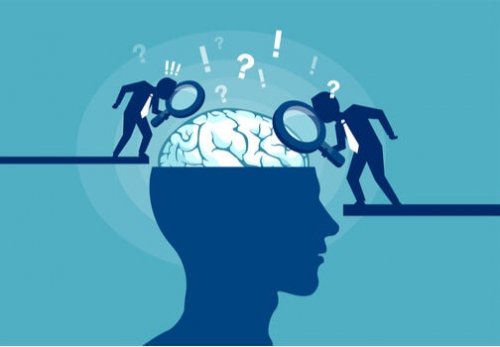
Debunking neuromyths
All neuromyths have their origins in real scientific knowledge. However, for one reason or another, people distort the information or only look at one very specific aspect of the research. Next, we’ll debunk the three most common neuromyths.
1. Humans only use 10% of their brains
This is probably the most widespread neuromyth of all, repeated by educators, parapsychologists, and advertising companies, among other people. The myth suggests that humans only use 10% of their brain, but that you can increase that percentage with certain training or learning techniques. It implies that the other 90% of your brain is basically unused.
The grain of truth in this neuromyth is that the brain is a powerful organ and, because of the way it works, it never operates at 100%. That doesn’t mean that you can’t improve your abilities. The improvements, however, happen by strengthening connections, creating new networks, and improving brain health. It isn’t a question of “space”.
If your brain was 100% activated, it would require an enormous amount of energy. It would also trigger every kind of behavior all at the same time. The brain works by activating different zones that connect to each other in order to trigger certain behaviors or cognitive processes.
Scientists have also seen that when you sleep, your brain still shows some level of activity. So, you do use 100% of your brain, but not all at the same time.
2. You can learn better if you follow your “learning style”
Another widespread belief is that students learn better when the presentation of the information coincides with their learning style. People usually identify three different styles: auditory, kinesthetic, and visual. According to this belief, you should teach each student differently, catering to their learning style. Some schools have even gone so far as to label children with the first letter or their learning style.
Given the pervasiveness of this belief, you might be surprised that there’s no scientific evidence to support it. Nor have any studies shown that people learn better when they receive information through a specific channel. On the contrary, the research that has been done on the subject is notably deficient.
Nevertheless, it’s certainly true that each individual brain is the result of distinct experiences and biology. Thus, it makes sense that each individual has a preference when it comes to the learning process. But is that better?
What we do know for sure is that when your brain receives several stimuli that aren’t integrated in a sensorial way, it can cause confusion. In that case, your brain has to draw on more resources to absorb and process the information. When the information is rich and covers several sensory channels, on the other hand, the learning experience is stronger.
3. The hemispheres of the brain are independent and determine your personality
This popular myth argues that each brain hemisphere is responsible for certain processes and that they work independently. Another part of this myth is that one side of the brain is always dominant and that that determines certain personality traits.
According to this idea, the right hemisphere is responsible for more comprehensive thinking. It’s more artistic, sensorial, and carefree. The left brain, on the other hand, is analytic, responsible, accurate, structured, and logical.
Scientific research has shown that these ideas about the right and left brain are patently untrue. It turns out that both hemispheres receive and process all kinds of information. However, there are certain functions that tend to happen more in areas of the brain that are on one side of the brain or the other. Nevertheless, these areas process information in an interconnected way, unless there’s some kind of brain disorder at play.
In addition, although being right or left-handed implies the domination of one hemisphere, this has nothing to do with people’s personalities or the way they process information. Right or left-handed, each person’s skills and abilities are determined by experience and other hereditary factors.
Stillness in the Storm Editor: Why did we post this?
– Justin
Not sure how to make sense of this? Want to learn how to discern like a pro? Read this essential guide to discernment, analysis of claims, and understanding the truth in a world of deception: 4 Key Steps of Discernment – Advanced Truth-Seeking Tools.
Stillness in the Storm Editor’s note: Did you find a spelling error or grammatical mistake? Send an email to [email protected], with the error and suggested correction, along with the headline and url. Do you think this article needs an update? Or do you just have some feedback? Send us an email at [email protected]. Thank you for reading.
Source:
https://exploringyourmind.com/what-are-neuromyths/
Leave a Reply