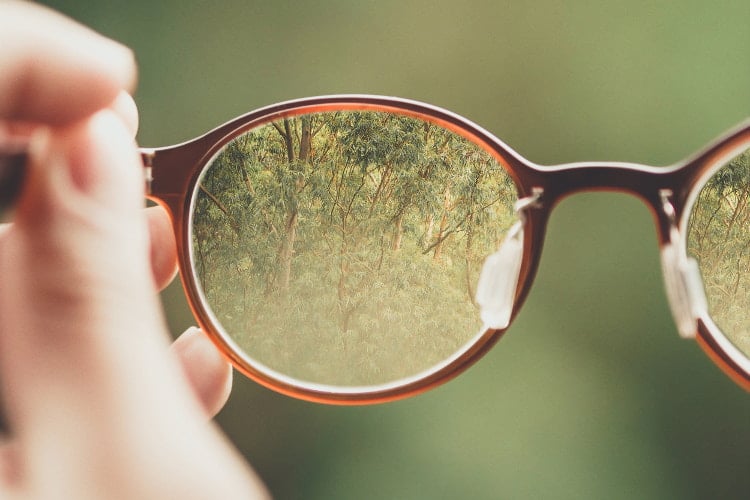
(Sofia Adamson) Although the rates of farsightedness have skyrocketed over the past few centuries, age-related vision decline shouldn’t be accepted as normal. Sadly, though, that’s exactly how we view this very common ailment, and most of us don’t realize that there is something we can do to improve eyesight and protect them from future decline.
Related Natural Remedies for Macular Degeneration and Healthy Vision
by Sofia Adamson, February 19th, 2019
Today’s vision treatments do not do much to actually protect your eyes. They only treat the symptoms of poor eye health with corrective lenses. After all, glasses don’t protect your damaged lens or retina. Instead, all they do is bend the light before it goes into your eyes. If you choose risky laser surgery, this often offers only a temporary solution.
Yet, age-related vision decline is not natural, even if it’s happening to everyone around you. Simply, our diets are lacking essential nutrients to support healthy vision and protect the eyes from environmental pollution. We’re being increasingly bombarded by blue light radiation from electronic screens, LED street lights, and even in-home LED lighting. As well, our industrialized world has increased the amount of oxidative stress placed on the body, including the eyes. This can lead to cloudy vision and other vision problems.
Buy Book Turmeric Cancer Prevention: The Ayurvedic and TCM Prevention for Cancer Rediscovered
Ways to Protect Your Eyes and Improve Eyesight
Consequently, our eyes need help producing the necessary antioxidants needed for healthy vision, especially as we age. These compounds protect the eye’s lens from becoming stiff and inflexible and help to clear away damaging toxins. Below is a list of natural supplements that can effectively help the eye produce detoxifying compounds and prevent age-related vision ailments such as farsightedness.
1. Carotenoids: Lutein and Zeaxanthin
Lutein and Zeaxanthin are rare carotenoids and vision detoxifier compounds found in many colorful flowers, such as dandelions and marigolds. According to a 2017 study published in the medical journal Molecules, their molecular structure is perfectly designed to dissolve damaging oxygen molecules, called Reactive Oxygenated Species (ROS).
According to this research, when Lutein and Zeaxanthin make contact with ROS Toxins, they burst those toxins apart. Your body absorbs what’s left, and your lens stays safe. Thus, these carotenoids shield your lens against ROS Toxin damage. They help maintain the clarity and flexibility of your lens. As well, they protect your near-distance vision, your far-distance vision, and your night-vision.
Buy Carotenoids
2. Zinc
A different study from the University of Connecticut discovered that the body more effectively absorbs carotenoids when accompanied by zinc.
Zinc is a simple mineral that your body uses for everything from hormone balancing to skin health. And when you pair zinc with carotenoids like lutein and zeaxanthin, your body absorbs them better. As a result, it can more effectively use these compounds to dissolve ROS toxins and support vision health.
Buy Zinc Supplements
3. Beta-carotene
Beta-carotene is a form of Vitamin A, and most of us associate it with carrots. Like lutein and zeaxanthin, it gives vegetables its yellow and orange colors. According to researchers at the University of Colorado, Beta-carotene protects your vision against overly bright light, including blue UV light that activates ROS toxins. It also slows the death of vital eye cells, and lowers your risk of serious vision concerns.
Unfortunately, you won’t get enough Beta-carotene to support your vision from eating a few carrots. In fact, you’d need to eat 3 cups of carrots every single day to get enough to make a difference. This is why supplementing with Beta-carotene may be necessary.
Buy Beta-Carotene

4. Lycopene
Lycopene is a red color compound found in fruits and vegetables like tomatoes, watermelons, and guavas. Like the other carotenes, lycopene protects the cells in your eyes.
A study presented at the Conference on Natural Vision Improvement found that people who ate high levels of lycopene had the lowest rates of vision issues. And low levels of lycopene were linked to increased risk of vision issues
Furthermore, in 2016, the Brazilian Journal of Ophthalmology reported that lycopene helps reduce oxidative stress.
Rose hips are a good source of lycopene, as per research from The Institute of Nutrition in Germany. These little berries, which grow on rose bushes before the flowers bloom, show scientific potential to support vision health through their high antioxidant content.
Buy Lycopene
5. Vitamin A
A study from the World Health Organization in Geneva warned that low Vitamin A levels are linked to several serious vision issues. Further, another study found that administering Vitamin A to patients helped reduce vision concerns like cell damage, spots in your vision, and night blindness.
Beta-carotene offers one form of vitamin A. In addition, your eyes can benefit from an extra boost of this vitamin in a form called retinyl palmitate.
Buy Vitamin A
6. Taurine
Taurine is an amino acid found in many meats and seafood. Researchers at the Vision Institute of France discovered that low taurine levels are linked to vision concerns. On the other hand, when we consumer adequate taurine, it can protect they eyes against light damage.
Buy Taurine
7. Grape Seed Extract
The journal Molecular Vision reported that grape seed extract has potential to protect your lens cells. It’s no surprise, then, that this extract is used in Europe to protect against vascular disorders, including those that affect your eyes.
8. Bilberry Extract
Bilberries are a close cousin to the Blueberry. British Air Force pilots ate them in WW2 to improve their night vision and help them shoot down Nazi bombers. The Journal of Science, Food, and Agriculture found that taking Bilberry Extract helped people prevent DNA damage, and reduce their levels of ROS toxins in the eyes.
Buy Bilberry Extract
Conclusion
Declining vision is considered to be a normal symptom of aging, yet it should not be this way. Research now shows that it’s possible to prevent age-related vision decline and even improve eyesight with the proper supplements.
All of the above nutrients can be found in Vision 20 from Zenith Labs. Instead of needing to figure out what amount of each supplement you need, Zenith Labs has formulated Vision 20 with precise amounts of each of these nutrients to best protect your vision.
Stillness in the Storm Editor: Why did we post this?
The Deep State has weaponized healthcare in the sense that most people never learn the true methods of maintaining their health. The preceding information dispels this false reality that an individual cannot be healthy without the mainstream medical establishment. It offers information that the reader can use to make better choices, which are ultimately the primary contributors to an individual’s health estate. With health autonomy in hand, neuroticism decreases due to not fearing for the communication of diseases, resulting in the liberation of consciousness-energy that can be used to positively contribute to making the world a better place.
– Justin
Not sure how to make sense of this? Want to learn how to discern like a pro? Read this essential guide to discernment, analysis of claims, and understanding the truth in a world of deception: 4 Key Steps of Discernment – Advanced Truth-Seeking Tools.
Stillness in the Storm Editor’s note: Did you find a spelling error or grammar mistake? Send an email to [email protected], with the error and suggested correction, along with the headline and url. Do you think this article needs an update? Or do you just have some feedback? Send us an email at [email protected]. Thank you for reading.
Source:
https://www.wakingtimes.com/2019/02/19/these-8-nutrients-protect-eye-health-and-improve-eyesight/
Rosehips ar the fruit of rosebushes, so they can not appear before the roses themselves. Just sayin…
How about Sun Gazing ?
I over 50 years a do not need glasses.
Have been doing Sun gazing for more then 20 years.