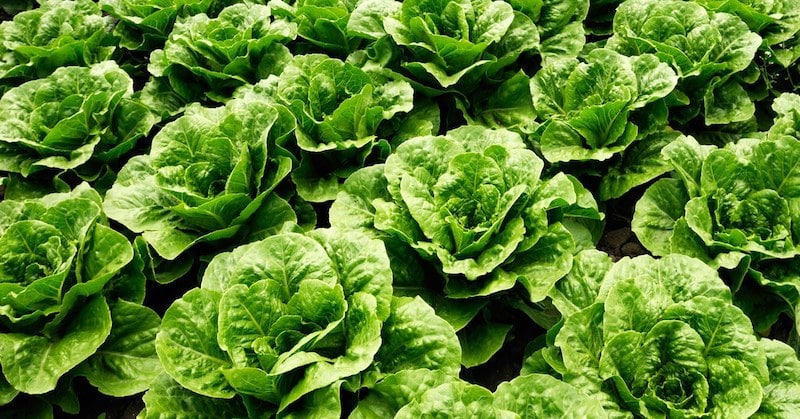
(Expand Your Consciousness) Investigators from the CDC determined that William Whitt, a 37-year-old father of three from Idaho, had been infected with E. coli in an outbreak traced to romaine lettuce from the Yuma agricultural region in Arizona.1
Related How To Create A Toxin-Free Home
Source – Expand Your Consciousness
by Staff Writer, November 28th, 2018
According to an account in Wired, Whitt’s “body swelled up so much that his wife thought he looked like the Michelin Man, and on the inside, his intestines were inflamed and bleeding.” Melinda Whitt said, “’I was terrified. I wouldn’t leave the hospital because I wasn’t sure he was still going to be there when I got back.’” 1
He suffered from an extremely toxic version of E. coli (the E. coli O157:H7 strain) that can cause hemolytic uremic syndrome which can lead to acute renal failure. Even with recovery, survivors can be left with hypertension, chronic kidney disease and neurological problems.2
Buy Book The Non-Toxic Farming Handbook
Whitt is one of the lucky ones, there have been five documented deaths from the contaminated lettuce that sickened people from at least 32 states last spring (a completely different romaine lettuce scare is currently underway). Lawsuits are pending from people recovering from E. coli infections who attribute their illness to romaine lettuce eaten at restaurant chains that included Papa Murphy’s in California, Red Lobster in Arizona, Texas Roadhouse in Georgia, a Freshway in Pennsylvania and Panera Bread in New Jersey. 3
Investigative reporters Elizabeth Shogren and Susie Neilson looked into the failures of the public and private agencies that are charged for ensuring the safety in our food supply. They identified what they called “a gaping hole in American food safety: Growers aren’t required to test their irrigation water for pathogens such as E. coli. As a result, contaminated water can end up on fruits and vegetables.” 1
There has been a push and pull for growers to test irrigation water. After earlier disease outbreaks, new federal testing guidelines were ordered in 2011, but the produce industry successfully lobbied the current administration to defer water testing for at least four years. 1 The FDA analyzed the cost of postponing water testing and found it would reduce costs to industry by $12 million to $103 million (depending on economic analysis used). But delaying water testing could increase foodborne illness and suffering at a cost to consumers between $108 million to $925 million. 4 For now, testing irrigation water quality remains voluntary and many growers consider it too expensive.
Buy Book Gaia’s Garden: A Guide to Home-Scale Permaculture, 2nd Edition
How Does E. coli Get In the Farm Water?
The process by which irrigation water becomes contaminated with E. coli is complex. It takes lengthy investigation to discover the sources of contamination, but such detective work is only carried out once many, many people have become sickened or die from contaminated food. For example, a CDC investigation of a 2006 multistate outbreak of E. coli illness caused by bagged spinach identified a complicated farm-water to table loop that likely happened like this
CDC epidemiologists first identify the specific E. coli strain that has caused the illness (in this case, E. coli O157:H7) and then they work backwards, tracing it to a particular spinach brand, then to an individual farm operation, then to a specific contamination source. In this case, contaminated spinach came from a California farm located in an area where cattle pastures were located on hillsides in adjoining agricultural areas. Rainwater contaminated by cow feces ran off into the surrounding watershed. The CDC explained that the risk of irrigation contamination rises after stored groundwater is depleted from pumping it out of the aquifer during the growing season and the underground basin is more likely to be replenished later in the season by contaminated river water. The same strain of E. coli was identified throughout this loop as being present in the spinach, the groundwater, and the river water. 5
According to Food Safety News, “Multiple studies have indicated E. coli O157:H7 can both survive and remain able to infect after long periods in both water and soil. One study indicated the bacteria could live up to 245 days in a cattle water trough and remain viable. In addition, E. coli can live up to 15 weeks in soil and stay infective.” 6
According to the FDA: a single production lot may contain romaine from multiple ranches. The production lot may be supplied to restaurants and retailers through multiple processors and shippers.2
Buy Book What Is Biodynamics?: A Way to Heal and Revitalize the Earth [Rudolf Steiner’s Methods]
What to Do If You Think You Have Been Sickened by Contaminated Food
According to the FDA, consumers who have symptoms of E. coli (severe stomach cramps and bloody diarrhea) should contact their health care provider to report their symptoms and receive care.2
You may report a complaint or adverse event (illness or serious allergic reaction), by calling an FDA Consumer Complaint Coordinator.
Why does romaine lettuce get E.coli?
Buy Music Proven to Reduce Stress and Anxiety by 65%
References
1Shogren E and Neilson S. The Science Is Clear: Dirty Farm Water Is Making Us Sick. 27 September 2018 Wired. Shared from Shogren E and Neilson S. 5 People Died from Eating Lettuce, But Trump’s FDA Still Won’t Make Farms Test Water for Bacteria. 27 September 2018. Reveal from The Center for Investigative Reporting.
2U.S. Food & Drug Administration. FDA Investigated Multistate Outbreak of E. coli O157:H7 Infections Linked to Romaine Lettuce from Yuma Growing Region. Updated 1 November 2018.
3Lowe E. Lawsuit Claims Man Contracted E. coli from Nampa Papa Murphy’s Salad. 25 May 2018. Idaho Press.
4CSPI. Standards for the Growing, Harvesting, Packing, and Holding of Produce for Human Consumption; Extension of Compliance Dates for Subpart E. 82 Fed. Reg. 42963, 42967, Table 4 (Sept. 13, 2017) as quoted in CSPI letter to FDA Commissioner. 13 November 2017.
5CDC. Irrigation Water Issues Potentially Related to Multistate E. coli Outbreak on Spinach. 15 October 2014.
6Smith MS. Why Are There More E. coli Infections in Summer? Food Safety News. 3 January 2011.
Not sure how to make sense of this? Want to learn how to discern like a pro? Read this essential guide to discernment, analysis of claims, and understanding the truth in a world of deception: 4 Key Steps of Discernment – Advanced Truth-Seeking Tools
Stillness in the Storm Editor’s note: Did you find a spelling error or grammar mistake? Send an email to [email protected], with the error and suggested correction, along with the headline and url. Do you think this article needs an update? Or do you just have some feedback? Send us an email at [email protected]. Thank you for reading.
Source:
http://expand-your-consciousness.com/the-science-is-clear-dirty-farm-water-is-making-us-sick/
Are you sure the romaine lettuce did not come from California? Governor Brown is encouraging the use of sewage to grow California produce because California has a “drought” problem. Speaking of that drought problem, Brown was busy selling California’s aquifer water to a Globalist corporation, Nestle, while he was passing draconian water conservation laws.