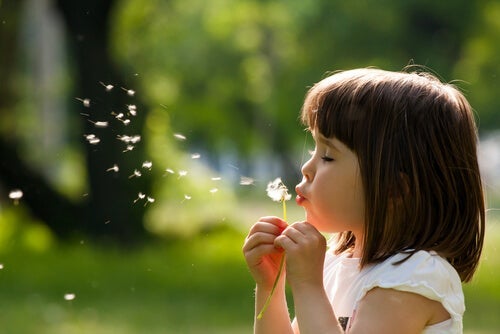
(Exploring Your Mind) A child’s emotional development makes them aware of the origin and development of their emotions. They begin to read them in other people’s facial expressions, and thus interpret them according to the social context (1). The change and growth expected of them on an emotional level stems from two areas. On the one hand, from the experiences that occur in their context, and, on the other hand, from their maturity.
Related Cold-parenting Linked to Premature Aging, Increased Disease Risk in Offspring
by Staff Writer, September 11th, 2019
That’s why they start to set certain emotional goals regarding themselves and others. They do this by taking into account the context and the situation. The way in which children show different types of emotions varies substantially depending on their past experiences. It also has a lot to do with their learning history. This, as a result, leads to important achievements in understanding, emotional regulation, and empathic response (3).
Below, we share three aspects of children’s emotional development that allow us to see how emotionally competent they are (2).
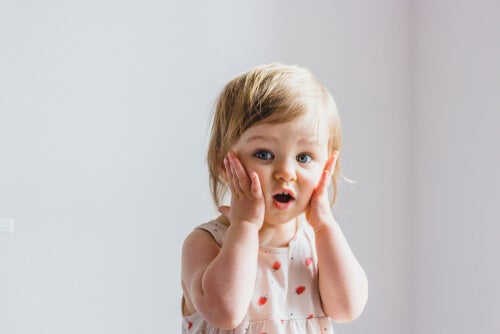
Emotional understanding
Acquiring understanding during a child’s emotional development is especially important. On the one hand, we have an understanding of their emotions and, on the other, the understanding of emotional ambivalence and rules of expression.
Understanding emotions and learning to look at things by using our emotions is something that develops at an early age. Boys and girls, during preschool, experience increasingly diverse situations that generate different emotions (2). They start understanding their emotions when they start to consider other children and also what they want or need.
Their emotional perspectives and level of understanding often depend on the society they grow up in and the family home. Ultimately, what children believe and expect is related to contextual factors and their personal constitution (4).
Society encourages different rules to express emotions. Children acquire an understanding of these rules through modeling and indirect learning. Thus, cultural factors set limits and rules for emotional expression. Understanding these rules of emotional expression involves aspects such as:
- The intensity of the expression
- Its persistence
- Inhibitions
Another aspect is that of understanding emotional ambivalence, which is the capacity we need to understand, get to know, and discriminate the presence of several conflicting emotions (2). The possibility of understanding this is a basic point for small children to acquire dexterity when it comes to managing stable relationships with big emotional loads (5).
Buy Book Sparks of Genius: The Thirteen Thinking Tools of the World’s Most Creative People
Emotional regulation as part of children’s emotional development
Emotions are how we make contact with reality. Therefore, in order to achieve this, they need to be flexible and consistent with the situation, as well as with their objectives.
There are many ways of using strategies to regulate our emotional levels, as it’ll always depend on the individual situation. Gradually, children learn that some strategies are effective for certain situations and that these depend on what they hope to achieve from them.
The flexibility in how they manage, develop, and internalize them will show the usefulness of regulation in adjusting adaptive behavior and social-emotional adjustment (6).

Empathy in emotional development in children
Empathy is the ability of a person to understand someone else’s emotional situation and also to respond positively to how that person is feeling. (2). Because of that, empathy is an emotional component that only arises after the child achieves the following (2):
- First of all, the ability to understand their own emotions.
- Secondly, the ability to understand other people’s emotions.
- Third of all, the ability to regulate their own emotions.
These three aspects are aimed at social situations that allow the child to analyze the scope of their goals, highlight emotional actions, and also to understand the reason why they feel different emotions (7).
This is why many factors affect a child’s emotional development. However, it should be noted that, in order to develop the strategies mentioned above, their family and social environment must allow them to be able to develop their emotions correctly.
Stillness in the Storm Editor: Why did we post this?
There are a great many factors that influence human consciousness. Arguably one of the most influential is the time we’re in the womb. Modern science and psychology continues to misinterpret prenatal and familial influences as genetic. However, a new understanding is emerging. Parents are faced with incredible challenges in the modern world. The Deep State has made being a parent a hinerence, a social problem, and a laborious task instead of the sacred joy that it truly is. If parents took more time to learn about the factors that influence their children, a new generation free of the hardships of the past would emerge that will have so-called superpowers simply due to the fact their innate potentials were allowed to blossom. The preceding article discusses these more subtle and little acknowledged truths that are arguably some of the most important things to understand. With this knowledge in hand, the trials of being a parent can be alleviated simply by preparing for the child’s life before it has arrived. Additionally, the human race has yet to realize it’s full potential, but that potential is within our grasp should we choose to align ourselves to these fundamental truths.
– Justin
Not sure how to make sense of this? Want to learn how to discern like a pro? Read this essential guide to discernment, analysis of claims, and understanding the truth in a world of deception: 4 Key Steps of Discernment – Advanced Truth-Seeking Tools.
Stillness in the Storm Editor’s note: Did you find a spelling error or grammar mistake? Send an email to [email protected], with the error and suggested correction, along with the headline and url. Do you think this article needs an update? Or do you just have some feedback? Send us an email at [email protected]. Thank you for reading.
Source:
https://exploringyourmind.com/process-childs-emotional-development/
Leave a Reply