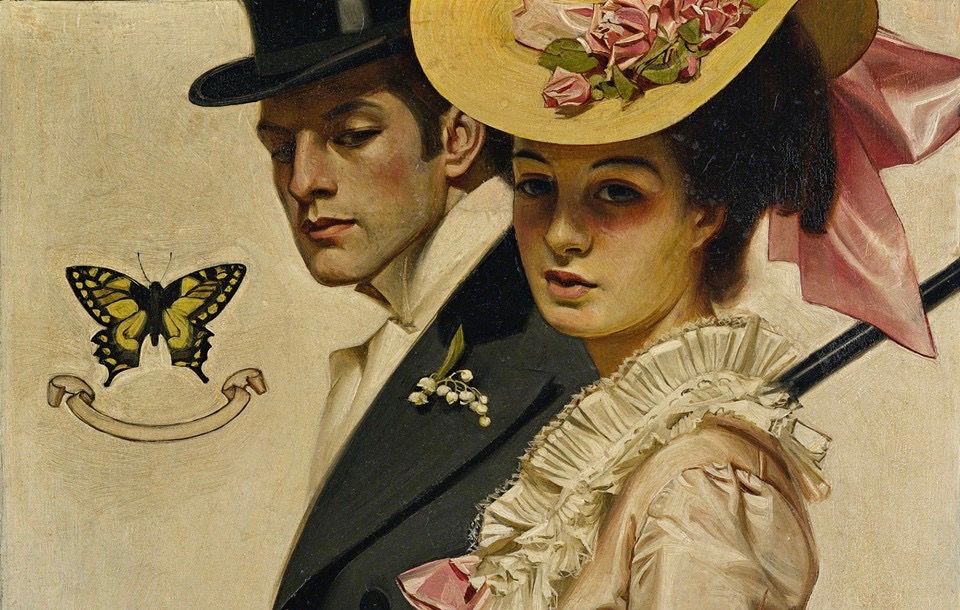
(Stillness in the Storm Editor) Romanticism, according to author Alain De Botton, introduced the idea of love, romance, and soul mates into modern culture. Before that, marriage was more about business and procreation, not so much about personal fulfillment. Surely, there are some good things that came from romantic thinking, like the idea that love should be a guiding force inn relationships. But it also introduced several ideas that to this day cause the modern man and women a lot of problems.
Related These Cultural Myths Keep You Emotionally Sick and Unhappy in the Modern-Age
As we laid out in the above-related article, our beliefs and expectations about life greatly affect our sense of fulfillment, along with our goals and values.
For instance, if you assume everyone in life is good, kind, and honest when you encounter a mean, hateful, deceptive person, it will be very difficult for you to handle. Similarly, if you were taught that when learning something new, you’ll always do well in the first attempt, you’ll find it really hard to cope with failure when gaining new skills.
When ideals conflict with reality, they create unrealistic expectations that we assume are valid. We act as if these false ideals are approachable. When we fail to meet them, we’ll suffer the tragedy of low self-worth and self-judgment—because if the ideal is real, then the problem has to be us.
I would argue, this interplay between ideals, expectations, and our sense of fulfillment and satisfaction is one of the most important things to understand as a human being, Relationships and love are no exception.
Romanticism brought forth the idea of a soul mate. But to be clear, this idea isn’t new nor is there only one version.
The romantic concept of a soul mate is, I argue, unrealistic. There are other better definitions and ideals to work with when it comes to soul mate conceptualization. We’re going to focus on the bad one so you can understand why it creates so many issues.
Book The School of Life: An Emotional Education
The romantic version of a soul mate is this:
There’s a soul mate out there that was put here just for you. This soul mate will love you completely just as you are. They will know your every need. Satisfy your every whim without having to ask. And they’ll never challenge you, because, well, you’re already perfect. You’ll find your soul mate by feeling and instincts you don’t understand but are unmistakeable. One day, you’ll see them and it will just hit you “that’s my soul mate.” And from that moment on, all of your dreams for life will be within your grasp. They will perfectly and completely satisfy all your needs, without you having to say anything or work on yourself.
If you’re dating anyone and you feel anything less than what I just described, it’s because they aren’t your soul mate. You need to ditch them ASAP because your soul mate is right around the corner!
This is what mass media portrays to the average person, through social engineering via mass media. Granted, I took some liberties to exaggerate certain points, but the way we tend to act in relationships agrees with these characteristics of a romantic soul mate.

Anyone who’s been in a relationship longer than a few months, wherein true connection and soul growth was occurring, knows that the above is completely unrealistic.
Looking through the archives of relationship history, as compiled by historians, psychologists, dating coaches, and radio show call-ins (which, by the way, I review because answering the question of what ideal love is has been of vital importance), one thing becomes abundantly clear.
The above concept of a soul mate is a total myth.
The sheer reality of life is that, while sometimes people do things for you without you having to ask, no one is telepathic and no one should be expected to know your needs and meet them without communication. Expecting them to do so sets an impossible standard, making you feel persistently disappointed as you drive your partner insane trying to meet this irrational ideal.
Book Sex in America: A Definitive Survey
Looking to common sense, resting on accumulated records of relationship dynamics and the problems they face, coaches report that if your partner isn’t meeting your needs its because either they refuse to do so (antagonism, a wellness issue) or they don’t know how because you haven’t told them (lack of clear communication on your part) or they aren’t sure how to do meet the need, once it’s been presented. For the most part, we generally want to meet our parter’s needs, albeit in a mutually beneficial way. It can be incredibly damaging to the other person why they try with all their might but they just can’t seem to make you happy. In short, this isn’t good for either party.
If we use another situation, like playing with other musicians or working with your colleagues at your job, would it make sense to think they will know automatically how to act for group success? Is it reasonable to assume your co-worker is going to know you’ll be late for work and come in early to cover you? Would your boss expect you to do well without training? Of course not. But in the realm of romance, all sorts of unrealistic ways of thinking seem to guide our lives. And, if you’re like most, you’ve never thought all that much about what you expect of your partner, taking the time to decide whether it’s reasonable or not.
But no more. It’s time to slaughter these sacred cows once and for all.
As one who cares deeply about my fellow humans, it pains me to watch people suffer so much in relationships. It can be a bitter pill to swallow but it’s one you’ll be so much happier with once you’ve come to terms with the truth and grieved the loss of this false ideal.
I admire Botton because he delivers the truth in a fun and captivating way, which makes you laugh at yourself for thinking these things are true. Don’t be too ashamed. We’ve all be duped into thinking like this to a certain extent.
We live in a world with pervasive social engineering and subtle influences. Most of the beliefs we have about romance come from times where we weren’t thinking critically, like watching how our parents interacted as children or zoning out in front of the TV watching a romance in a movie. These influences shape our views of what we think we should be doing in relationships.
Book The 5 Love Languages: The Secret to Love that Lasts

As Botton outlines, the truth about these false ideals will set us free, but first, we have to allow ourselves to morn.
Psychologically, we are creatures that need to know how to act. When you tell someone their playbook is wrong and that it’s causing them problems, that is a good start, but we need something to replace it with. Thus, I would suggest, as you review this material, allow yourself the time to think about what it means to you. Go through the exercise of thinking of new ways to express your needs, founded on ideals that are in harmony with reality. In short, strive for ideals but be realistic so that you can replace bad ones with good ones.
In closing, the key to a successful relationship, which is a piece of wisdom shared by a great many throughout history, is communication. Unless you’ve made it clear what you want and work through that negotiation with another carefully, it’s not likely you’ll be satisfied.
In this way, one replaces the false idea that a relationship is perfect at the start with the truer idea that relationships become more perfect with dedicated effort, investment, and a willingness to improve and refine your thinking.
– Justin
The preceding is a Stillness in the Storm original creation. Please share freely.
About The Author
Justin Deschamps has been a truth seeker all his life, studying physics, psychology, law, philosophy, and spirituality, and working to weave these seemingly separate bodies of information into a holistic tapestry of ever expanding knowledge. Justin is a student of all and a teacher to some, sharing what he has discovered with those who are ready and willing to take responsibility for making the world a better place. The goal of his work is to help himself and others become better truth-seekers, and in doing so, form a community of holistically minded individuals capable of creating world healing projects for the benefit of all life—what has been called The Great Work. Check out his project Stillness in the Storm to find some of his work. Follow on Twitter @sitsshow, Facebook Stillness in the Storm, and minds.com.
Like our work? Support this site with a contribution via Paypal, cryptocurrencies, or P
This article appeared first on Stillness in the Storm.
Stillness in the Storm Editor: Why did we post this?
Psychology is the study of the nature of mind. Philosophy is the use of that mind in life. Both are critically important to gain an understanding of as they are aspects of the self. All you do and experience will pass through these gateways of being. The preceding information provides an overview of this self-knowledge, offering points to consider that people often don’t take the time to contemplate. With the choice to gain self-awareness, one can begin to see how their being works. With the wisdom of self-awareness, one has the tools to master their being and life in general, bringing order to chaos through navigating the challenges with the capacity for right action.
– Justin
Not sure how to make sense of this? Want to learn how to discern like a pro? Read this essential guide to discernment, analysis of claims, and understanding the truth in a world of deception: 4 Key Steps of Discernment – Advanced Truth-Seeking Tools.
Stillness in the Storm Editor’s note: Did you find a spelling error or grammatical mistake? Send an email to [email protected], with the error and suggested correction, along with the headline and url. Do you think this article needs an update? Or do you just have some feedback? Send us an email at [email protected]. Thank you for reading.
Sources:
Embedded Throughout This Article
How powerful the mind!
Thank you Justin. This topic is something I have been subtly aware of but never fully faced. I’ve mostly believed I had found my souls mate but something was “missing” romantically. Causing doubt, however functional and beautiful our relationship is and has become. Keeping my expectations high in terms of this romantic nonsense has made me service to self and caused division . How powerful the mind is in creating walls and structures that can hinder us. I am learning to see these walls and things and you have helped me to begin to move through them with uplifting content. I am searching to find my true self and therefore be of more service to others. My work now is to discover the real love my partner and I share and exercise to put down these non-serving expectations as they rear their ugly heads.
Wonderful Jon. Yes we as a people have much to address insofar as the beliefs we hold about romance, love, and human connection.