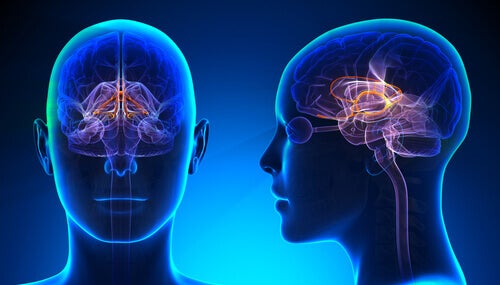
(Exploring Your Mind) In order to describe the neuroanatomy of emotions, Paul Broca first described the limbic system in 1878. It wasn’t until later, in the 1930s, that James Papez finally named it the limbic system, and suggested that it participated in the neural circuit of emotional expression (Kolb and Whishsaw, 2003).
Related The MAJOR Astrological Transformation Happening This Weekend
by Staff Writer, March 20th, 2020
The limbic system corresponds to a functional concept including several neural structures and networks, which play a prominent role in emotional aspects. And since it involves emotional manifestations, it’s also related to motivation. More concretely, it’s related to action, learning, and memory-oriented motivation. In fact, it’s easier to remember or learn something that has a high emotional value (Cardinali, 2005).
The neuroanatomy of emotions: beyond brain structures
Several authors suggest that emotional responses not only involve the nervous system. In fact, experts believe that other systems, such as the immune and endocrine systems, participate in this process. For instance, Damasio (2008) introduced the somatic marker hypothesis, which states that what makes an experience valuable isn’t just cognitive evaluation but a certain somatic state as well.
A somatic state is a result of the activation of complex subcortical neurohumoral circuits that give emotional value and relevance to a certain thought.
The limbic system and other command systems
Some important research studies have defined more specific systems than the limbic system. For example, in his studies on affective neurosciences, Jaak Panksepp (2001) conceptualized systems based on primary emotions: sadness, fear, and rage, among others. The main ones are:
Seeking/expectancy system
This system motivates the pursuit of pleasure; it activates a person’s interest in the world. It’s circuits run on dopamine. Furthermore, some neuroscientists believe it’s similar to Freudian libido and lust (Bleichmar, 2001; Solms and Turnbull, 2005).
The expectancy system is part of the mesolimbic/mesocortical system, which operate simultaneously and affect each other, forming the so-called extended amygdala (Cardinali, 2005).
Natural pleasurable stimuli (such as food or sex) and addictive drugs promote dopamine release, which takes place in the ventral tegmental area (VTA) neurons. These send projections to the nucleus accumbens and finally translate into euphoria and behavior reinforcement. When this system is highly stimulated, an individual will seek pleasurable sensations (Leira, 2012).
Book The Big Lie: Exposing the Nazi Roots of the American Left
Rage/anger system
- Originates due to frustration toward an object, person, or situation.
- Physical manifestations include “fight” motor programs, such as jaw clenching or yelling.
- In addition, the activity originates in the amygdala toward the stria terminalis and the hypothalamus.
Fear/anxiety system
- It mainly involves the amygdala.
- Responses such as “fight” and “escape” stem from the amygdala’s lateral and central nuclei, which respectively send projections to the medial and anterior part of the hypothalamus.
Panic/sadness system
- Associated with feelings of loss and sadness.
- It’s seemingly related to social interactions and bonding and especially with the maternity process and attachment behaviors.
- Endogenous opioids take part in this system. Separation or loss of something with affective value leads to reduced concentration of the endogenous opioids, which determine a painful experience.
- Biological foundation. The anterior cingulate gyrus and its projections to the thalamus and hypothalamus toward the ventral tegmental area.

Inhibition and regulation of the prefrontal cortex emotional responses
The previous command systems need experiences in order to develop. Thus, with voluntary actions, the external world information coming through association areas goes to the prefrontal cortex, which then connects with the motor system. As per involuntary actions in which there are emotional reactions, subcortical areas mediate actions (such as the command systems we mentioned above).
In the neuroanatomy of emotions, the prefrontal cortex regulates emotional responses. It takes place in the ventral medial area, acting as an inhibitor, and in the lateral area. The latter has more of a controlling function of conscious thoughts. It’s the protagonist in the learning, planning, and decision-making processes.
Therefore, childhood experiences will shape the inhibitory system in formation, which also explains the differences in emotional regulation in children and adults.
Stillness in the Storm Editor: Why did we post this?
The news is important to all people because it is where we come to know new things about the world, which leads to the development of more life goals that lead to life wisdom. The news also serves as a social connection tool, as we tend to relate to those who know about and believe the things we do. With the power of an open truth-seeking mind in hand, the individual can grow wise and the collective can prosper.
– Justin
Not sure how to make sense of this? Want to learn how to discern like a pro? Read this essential guide to discernment, analysis of claims, and understanding the truth in a world of deception: 4 Key Steps of Discernment – Advanced Truth-Seeking Tools.
Stillness in the Storm Editor’s note: Did you find a spelling error or grammatical mistake? Send an email to [email protected], with the error and suggested correction, along with the headline and url. Do you think this article needs an update? Or do you just have some feedback? Send us an email at [email protected]. Thank you for reading.
Source:
https://exploringyourmind.com/the-neuroanatomy-of-emotions-the-limbic-system/
Leave a Reply