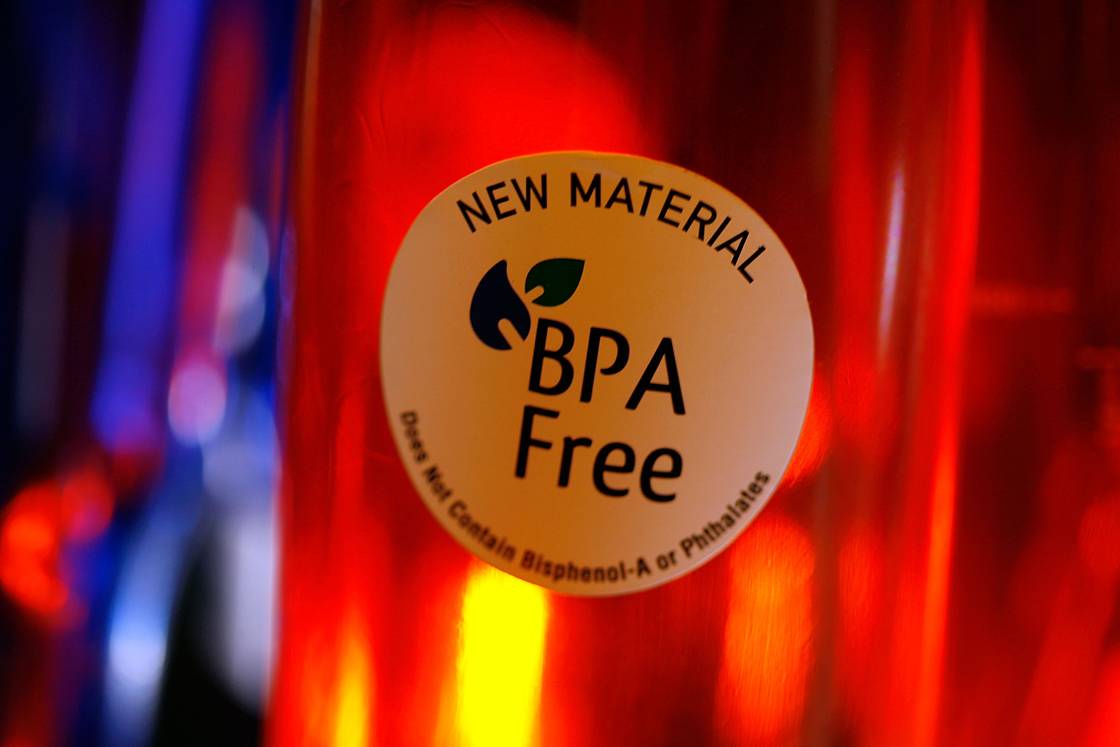
(Kalee Brown) Whenever we see “free” labelled on a product, it tends to trick our brains into thinking, “Hey, that must be good for me!” Seriously, think about it. When you see a cereal box label that reads “gluten-free,” do you immediately assume it’s healthy? When you read “paraben-free” on the front of a shampoo bottle, do you just assume it’s all-natural?
Related Study finds BPA Levels in Humans Dramatically Underestimated
by Kalee Brown, March 6th, 2020
Although sometimes these labels can indicate that something is healthier or better suited for your dietary needs, they can also act as sources of misinformation or false advertising. For example, just because something’s labelled as “all-natural” doesn’t actually mean that it’s 100% natural.
We saw this trend within the plastics industry as well when restrictions started to be imposed on BPA and public awareness surrounding the health risks of BPA increased. Now, it’s very common to see “BPA-free” on the labels of water bottles and plastic containers.
Yes, this was a victory for human health, as BPA can harm our bodies. However, if BPA isn’t in our plastic, what exactly is, and how can that affect us?
BPA Alternatives in Plastic Could Be Just as Dangerous as BPA
A study published in Environmental Health Perspectives suggests that the chemicals used to replace BPA may be just as harmful as BPA itself, posing the same risks on the human body, ie. hormone disruption.
The researchers studied two different BPA alternatives: Bisphenol S and F, referred to as BPS and BPF. These alternatives were chosen because they perform similarly to BPA; however, it seems they also pose the same health risks. Although further research needs to be conducted to figure out how much these compounds could truly affect the body, this study suggests that there is some cause for concern.
“According to pretty much all the literature there is on these two substitutes, they are hormonally active in ways similar to BPA – similar mechanisms, similar potencies,” explained study author Johanna Rochester, a researcher for the Endocrine Disruption Exchange.
Book Changing Faces: The Consequences of Exposure to Gene and Thyroid Disrupting Toxins
Interestingly enough, BPS and BPF have been found in tons of other products including personal care products like shampoos and body wash, paper products, and even food products including meat, dairy, and canned goods.
This isn’t the first study to show how BPA alternatives could be just as bad as BPA itself, either. In fact, one study conducted by the University of Calgary showed how BPS could negatively affect brain development.
You can read more about that study below in our CE article:
Study Shows Regularly Used BPA Alternative BPS Could Be Just As Dangerous

Final Thoughts
To be clear, I’m not telling you just to revert back to buying regular plastic! There are tons of issues with plastic, only one of which is BPA. BPA has been linked to behavioural problems, endocrine and reproductive disorders, obesity, cancers, and immune deficiency disorders, which you can read more about in our CE article here.
A great alternative to plastic bottles is glassware! You can purchase glass containers at practically any home store and they’re even more durable than plastic, as many of them are oven-safe.
It’s important that we educate one another on potential health risks, not to scare one another, but to progress as a healthier and more educated society!
About The Author
Stillness in the Storm Editor: Why did we post this?
Health is an important human value. Almost everyone, regardless of political affiliation, national origin, or religious association, values being healthy, free of disease and able to pursue their dreams and values. The preceding information discuses health in some capacity, either by alerting the public to poor health choices or suggesting better ways of living for optimum health. With health freedom in hand, which is a primary survival need of all living creatures, the individual can be liberated from fear of personal suffering. This leads to the capacity for holistic thinking, playfulness, and inspired living—activating our capacity to thrive.
– Justin
Not sure how to make sense of this? Want to learn how to discern like a pro? Read this essential guide to discernment, analysis of claims, and understanding the truth in a world of deception: 4 Key Steps of Discernment – Advanced Truth-Seeking Tools.
Stillness in the Storm Editor’s note: Did you find a spelling error or grammatical mistake? Send an email to [email protected], with the error and suggested correction, along with the headline and url. Do you think this article needs an update? Or do you just have some feedback? Send us an email at [email protected]. Thank you for reading.
Source:
Leave a Reply