
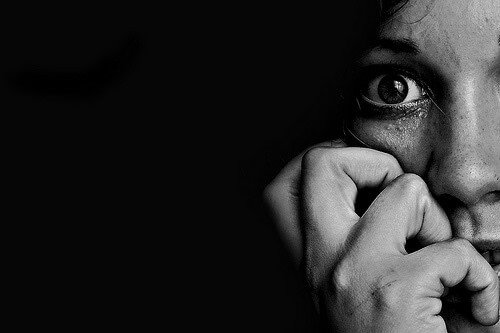
(Exploring your Mind) The body language of fear manifests especially in facial micro-expressions. Slightly raised eyebrows, a taut brow, and a half-open mouth are unmistakable signs that someone is scared.
Related Body Language: State Of The Union SOTU 2019
by Staff Writer, February 18th, 2019
Although feeling scared is normal and perfectly valid, there are situations in which making it obvious isn’t in our best interest. Unfortunately (or fortunately, depending on how you see it), the body language of fear may sometimes reveal how we’re feeling inside.
Although there’s no dictionary of the body language of fear, humans have a special radar that allows them to read those signs. It’s obviously not a completely rational interpretation. We simply sense that someone is scared. Consequently, we don’t tend to trust those who aren’t confident or we may feel superior when we see another person’s vulnerability.
Buy Book Awakened Empath: The Ultimate Guide to Emotional, Psychological and Spiritual Healing
It’s important to know the body language of fear. If you do, you’ll have more control over it. This can benefit you in two ways. First of all, it’ll allow you to detect signs of fear in others, even if they don’t express it openly. Second of all, it’ll help you manage your emotions to ensure that you don’t let your fear show through if you don’t want it to.
“A timid person is frightened before a danger, a coward during the time, and a courageous person afterward.”
-Jean Paul-
Facial microexpressions
The face is the first part of our body that reflects fear. Sometimes the gestures are really evident and other times not so much. However, there’s always a small change in the face. On the other hand, these gestures will depend on the intensity of the emotion.
Nonetheless, there are gestures that are very easy to identify. The first is when a person raises their eyebrows. If fear comes after surprise, the eyebrow movement will be more evident. If it’s a situation that generates only fear, the person will definitely furrow their brow.
Usually, the lower eyelids remain tense. Then, the person will open their mouth halfway. In general, it’s as if something was pulling the fearful person’s face and they’re trying to fight it.
Posture and the body language of fear
Posture is also a very important element in the body language of fear. In general, your muscles tense up when you’re scared. The first thing that happens is that you begin to slouch (your body does this to occupy less space). This is an expression of the desire to protect yourself and take refuge in your own body.
Insecurity, nervousness, and anxiety are manifestations of fear. Those three states tend to come to the surface when you make quick and sudden movements. A person who isn’t able to stay still isn’t calm. When fear is overpowering you, you’re more likely to make more clumsy or sudden movements.
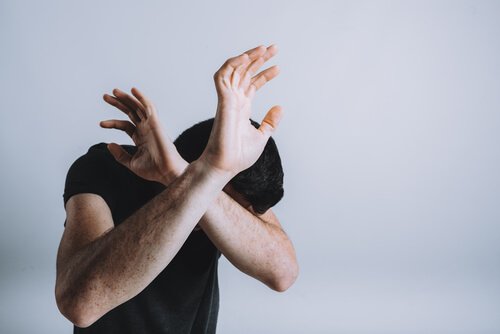
Similarly, it’s very common for a scared person to cross their arms. This is a defense signal. The person does this to create a barrier that protects them and keeps them away from the external world. This barrier can also be a sign of rejection of the outside world.
Buy Book Mind-Reach: Scientists Look at Psychic Abilities (Studies in Consciousness) by Russell Targ
Other signs of fear
There are other gestures and expressions that are part of the body language of fear. For example, your eyes can give away that you’re scared.Nervousness makes your eyes wander and blink more. But if you’re feeling a deep and strong fear, you may even not blink as much. The goal of this last mechanism is to keep the threat in sight.
On the other hand, your hands are also vital in the communication and expression of your emotions. Fear isn’t an exception. When someone is scared, they usually move and twist their hands, make fists, or hide their hands. Not letting people see your limbs is an instinctive act of self-defense.
In general, when someone is scared, they tend to make short, quick, and erratic movements. And if they’re truly terrified, the opposite happens: they freeze. In the first case, the person can’t sit still. In the second, they stay very still and slouch. This is basically how the body language of fear works.
Buy Book Unmasking the Face: A Guide to Recognizing Emotions From Facial Expressions

Buy Book Micro-Expressions: Reading Anyone’s Hidden Thoughts

Stillness in the Storm Editor: Why did we post this?
Psychology is the study of the nature of mind. Philosophy is the use of that mind in life. Both are critically important to gain an understanding of as they are aspects of the self. All you do and experience will pass through these gateways of being. The preceding information provides an overview of this self-knowledge, offering points to consider that people often don’t take the time to contemplate. With the choice to gain self-awareness, one can begin to see how their being works. With the wisdom of self-awareness, one has the tools to master their being and life in general, bringing order to chaos through navigating the challenges with the capacity for right action.
– Justin
Not sure how to make sense of this? Want to learn how to discern like a pro? Read this essential guide to discernment, analysis of claims, and understanding the truth in a world of deception: 4 Key Steps of Discernment – Advanced Truth-Seeking Tools.
Stillness in the Storm Editor’s note: Did you find a spelling error or grammar mistake? Send an email to [email protected], with the error and suggested correction, along with the headline and url. Do you think this article needs an update? Or do you just have some feedback? Send us an email at [email protected]. Thank you for reading.
Source:
https://exploringyourmind.com/body-language-fear/
Leave a Reply