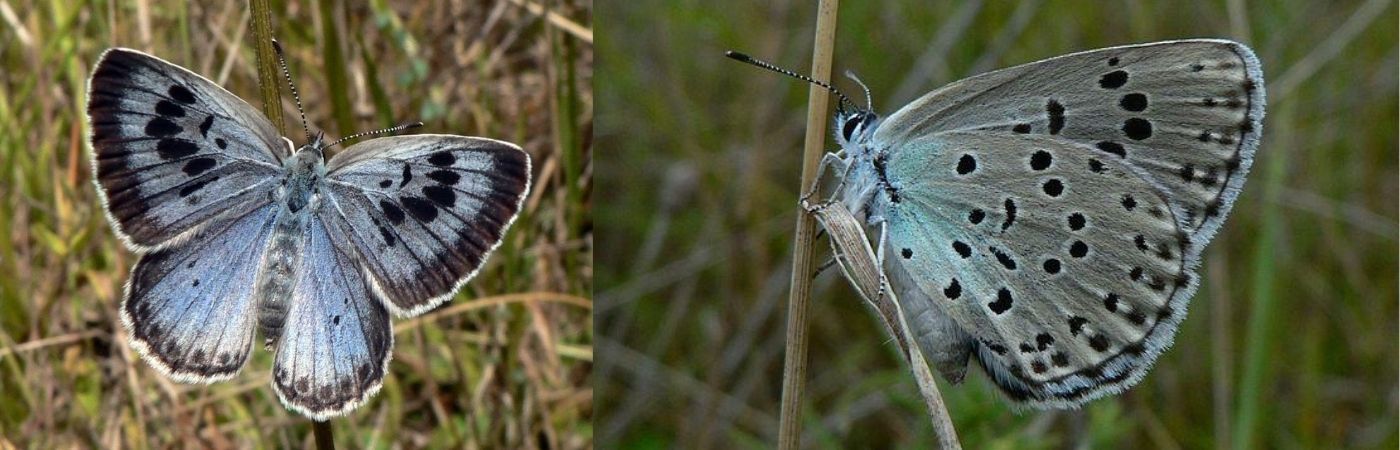
(Andy Corbley) After a 150-year absence, 750 of the aptly-named large blue butterflies have successfully emerged from their cocoons to repopulate parts of their historic habitat in South West England.
Related Good News For Earth’s Lungs As Indigenous Amazon Group Wins Illegal Tree Logging Case
by Andy Corbley, August, 14th, 2020
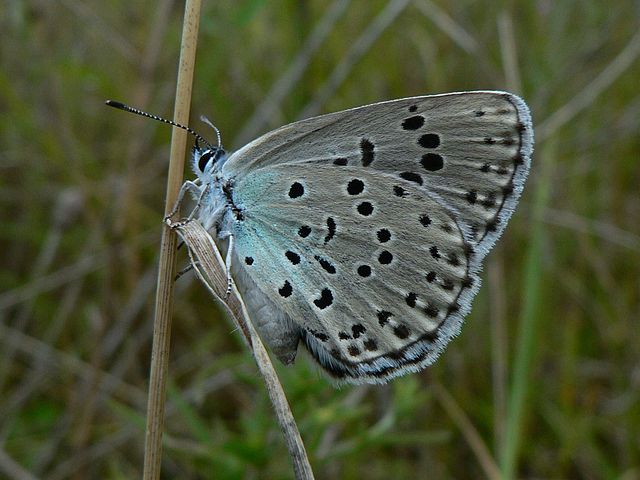
Most conservation dollars don’t get past elephants, pandas, and tigers, but English biologists—notoriously proud and connected to the natural life on their island—needed only five years to begin repopulating part of the country with the largest of England’s nine blue butterfly species: an unmistakable creature thanks to the row of black spots on its upper forewings.
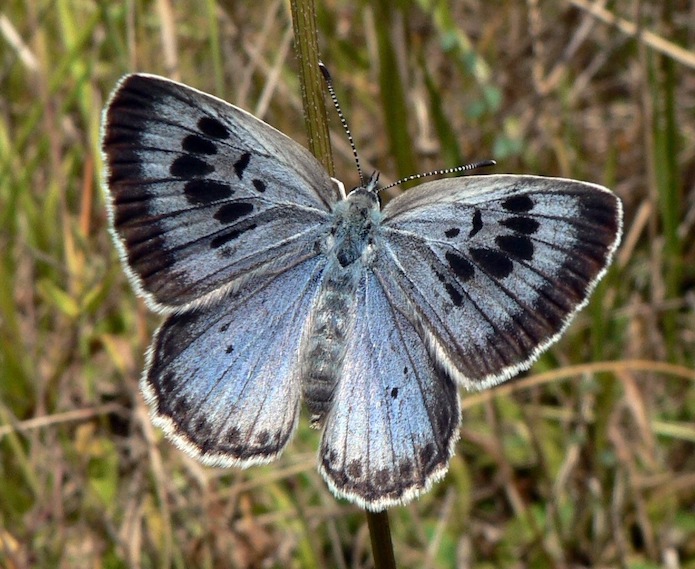
Phengaris arion, which is called the ‘large blue’, was officially declared extinct in Britain in 1979, but efforts from private trusts and ecological associations created the world’s largest and most successful insect conservation program in the world, and from 1984 to 2008, it saw the large blue return to 30 previously occupied and new breeding sites.
The most recent project in Minchinhampton and Rodborough Commons in Gloucestershire is where conservationists recorded the rousing success, with 750 butterflies emerging after 1,100 larvae had been released in the area. None of these creatures had been seen in the area for 150 years.
Furthermore, they have confirmed these butterflies to be laying eggs in the wild.
“Creating the right conditions for this globally endangered butterfly to not only survive but to hopefully thrive has been the culmination of many years work,” said Richard Evans, area ranger for the Commons.
Large blue’s small friends
The large blue’s recovery is a classic ‘web of life’ example of how animals and plants rely on one another to survive. It’s not enough to protect the butterflies, and scientists—like those working at the Butterfly Conservation Trust—have had to organize protection for wild thyme and red ants, two species that are integral parts of the large blue’s world.
Wild thyme and marjoram are the large blue caterpillar’s primary food source, and red ants work symbiotically to protect the caterpillars from danger.
David Simcox, research ecologist and co-author of the Commons management plan, noted this importance in a statement: “In the summer when the ants are out foraging, nature performs a very neat trick—the ants are deceived into thinking that the parasitic larva of the large blue is one of their own and carry it to their nest.”
“It’s at this point that the caterpillar turns from herbivore to carnivore, feeding on ant grubs throughout the autumn and spring until it is ready to pupate and emerge the following summer,” he added.
In 2014, the Butterfly Conservation Trust finished a massive restoration of large blue habitat in the Polden Hills in Somerset, including the planting of over 100,000 wild thyme plants on seven different sites, as well as enhancing 10 hectares (30 acres) of scrub habitat for the red ants.
Book Spygate: The Attempted Sabotage of Donald J. Trump
The project resulted in three re-colonizations, as well as one entirely new breeding site, and by 2019 there were 10 large blue breeding sites altogether, a jump up from six in 2017, according to an article in the magazine, Butterfly.
As a pollinator, the large blue’s recovery paints an encouraging sign for biodiversity strength in England and for the world. Cheers to that.
About The Author
Andy Corbley is the founder and editor of World At Large, a small environment, travel, and lifestyle focused journal that stresses integrity, nuance, and honesty which launched in early March 2019.
Stillness in the Storm Editor: Why did we post this?
The news is important to all people because it is where we come to know new things about the world, which leads to the development of more life goals that lead to life wisdom. The news also serves as a social connection tool, as we tend to relate to those who know about and believe the things we do. With the power of an open truth-seeking mind in hand, the individual can grow wise and the collective can prosper.
– Justin
Not sure how to make sense of this? Want to learn how to discern like a pro? Read this essential guide to discernment, analysis of claims, and understanding the truth in a world of deception: 4 Key Steps of Discernment – Advanced Truth-Seeking Tools.
Stillness in the Storm Editor’s note: Did you find a spelling error or grammatical mistake? Send an email to [email protected], with the error and suggested correction, along with the headline and url. Do you think this article needs an update? Or do you just have some feedback? Send us an email at [email protected]. Thank you for reading.
Source:
https://www.goodnewsnetwork.org/english-conservationists-see-750-large-blue-butterflies-survive/
Leave a Reply