
(Elias Marat) For people who reside in the West, few countries are as fascinating as Japan. With its unique and striking blend of modernity and ancient culture, natural beauty and urbanism, the country has long beguiled foreigners.
Related Forego Today’s Pleasure for Tomorrow’s Advantage | Jordan B Peterson (Video)
by Elias Marat, August 4th, 2020
From its storied feudal traditions to its contemporary quirks, Japan is a nation that has been thoroughly romanticized and idealized in the Western imagination.
However, beyond the superficial and orientalist mythology about the so-called “Land of the Rising Sun,” Japan is a captivating and multifaceted culture quite unlike others.
It’s a diverse country where traditions dating back millennia stand strong while fads and trends come and go, and its cutting-edge technological development hasn’t stamped out the time-honored customs of the East Asian nation.
One well-known Japanese art form that has fascinated the West is bonsai, which is the technique of producing tiny trees that mimic the attributes of fully-grown trees. Yet bonsai trees are only the tip of the iceberg of Japanese horticultural and arbor mastery.
Another striking example is daisugi, a technique that shares certain features of the art of bonsai but yields vastly different results.
https://youtu.be/YDXR_qU2UmM
The forestry technique dates back to the 14th century and focuses on the Kitayama cedar tree or kitayama sugi, which densely populate the verdant and picturesque mountains of Northern Kyoto.
Book The Hidden Life of Trees: What They Feel, How They Communicate―Discoveries from A Secret World
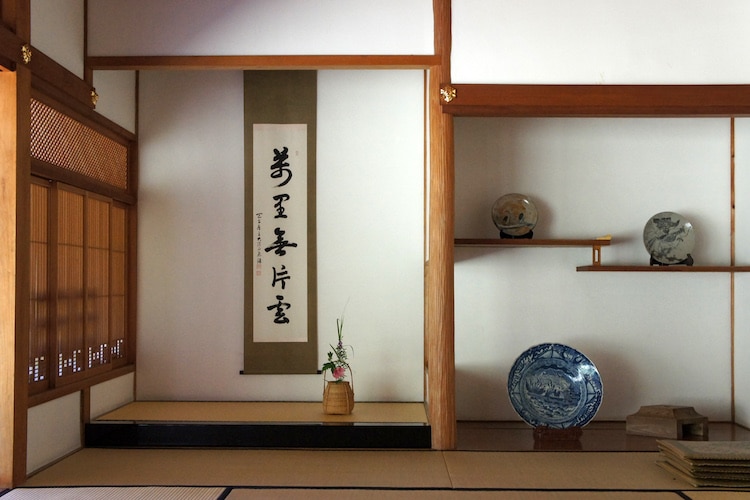
The wood from these immaculate cedars has long been a staple of Japanese architecture, from traditional wood roofs and beams to the famous tea rooms of Kyoto.
What makes the daisugi technique so compelling, however, is the fact that Kitayama cedars stand completely straight and don’t have the knots of your typical wild trees.
This is because the daisugi technique, like bonsai, involves the forester heavily pruning the mother tree which allows narrow saplings to shoot upwards.
What results from these striking and ancient trees is a distinct Japanese cedar that is squat and knotted up like a candelabra and is teeming with smaller trees – almost like a forest on top of a large cedar tree.
The daisugi looks very peculiar, so even when demand for the lumber dropped off in the 16th century demand for them in ornamental gardens kept the forest wardens busy. pic.twitter.com/YxDreHP0mc
— Wrath Of Gnon (@wrathofgnon) April 15, 2020
The method makes exceptional sense due to the absence of flat land in the Kitayama region, which allowed arborists to use this method to grow and harvest a large amount of wood in an area where suitable land is extremely scarce.
This also lets local masters of arboriculture harvest the cherished daisugi cedar every twenty years while the base tree lasts centuries.
Sustainable forestry: lumber without cutting down trees. Daisugi is a Japanese forestry technique where specially planted cedar trees are pruned heavily (think of it as giant bonsai) to produce "shoots" that become perfectly uniform, straight and completely knot free lumber. pic.twitter.com/5ULYOmCkLp
— Wrath Of Gnon (@wrathofgnon) April 15, 2020
Over the generations, woodcutters harvested mature lumber from these trees while promoting newer shoots, resulting in gorgeous and strange cedars that look wholly unique.
However, in recent centuries the demand for daisugi cedar has waned as new architectural and building techniques became less reliant on lumber.
Since then, the cedars have grown on their own, creating an amazing display of enormous trunks and gnarled limbs that cover Kyoto’s northern hillscape.
The result is an almost otherworldly forest shaped by the economic needs of imperial Japan’s thriving ancient capital, which mastered nature in a sustainable manner that was also consistent with the aesthetic brilliance of Japanese culture.
About the Author
Stillness in the Storm Editor: Why did we post this?
The news is important to all people because it is where we come to know new things about the world, which leads to the development of more life goals that lead to life wisdom. The news also serves as a social connection tool, as we tend to relate to those who know about and believe the things we do. With the power of an open truth-seeking mind in hand, the individual can grow wise and the collective can prosper.
– Justin
Not sure how to make sense of this? Want to learn how to discern like a pro? Read this essential guide to discernment, analysis of claims, and understanding the truth in a world of deception: 4 Key Steps of Discernment – Advanced Truth-Seeking Tools.
Stillness in the Storm Editor’s note: Did you find a spelling error or grammatical mistake? Send an email to [email protected], with the error and suggested correction, along with the headline and url. Do you think this article needs an update? Or do you just have some feedback? Send us an email at [email protected]. Thank you for reading.
Source:
These trees are very pretty. I think it is important to remember that as much as they respect this art form in their own country, in the 1960’s, 70’s and 80’s the Japanese were illegally purchasing huge tracks of our beautiful forests to pulp and turn into PAPER! Entire trees turned into paper The scars on the Pacific Northwest can easily be seen today.