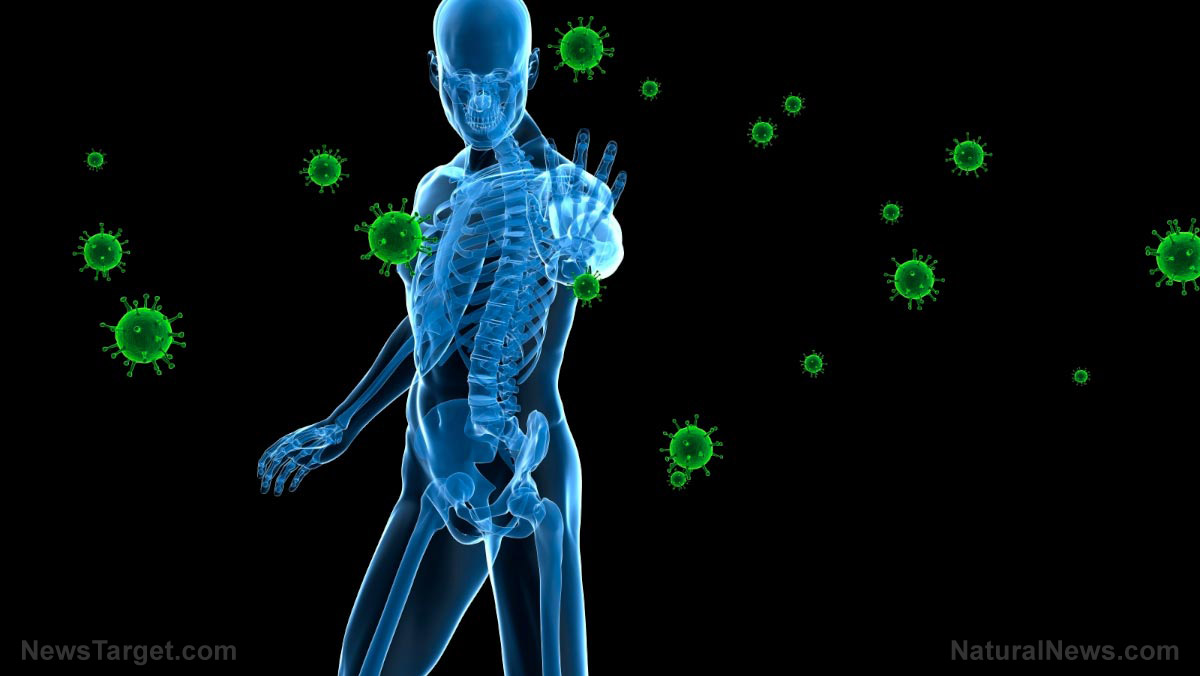
(Arsenio Toledo) Researchers from the University of Freiburg have found evidence to suggest that the immune system could distinguish between self and non-self molecules through interacting with them. This team, led by biologists Wolfgang Schamel and Wilfried Weber, provided data that supported a hypothesis scientists have long held concerning how T cells differentiate between pathogens and the body’s cells.
Related The Night Gardeners: Immune Cells Rewire, Repair Brain While We Sleep — And Stress Turns Them OFF
by Arsenio Toledo, January 13th, 2020
One of the immune system’s primary responsibilities is to protect against harmful pathogens. To do this, it must distinguish the foreign invaders from the body’s cells. In order to act as the body’s security system, it must destroy these pathogens without harming the body’s own cells. T cells are an important component of the immune system. However, via their T cell receptor, they are known to bind not only to foreign pathogens, but also to non-pathogenic molecules, causing unnecessary damage to the body.
Cracking the immune system code
Exactly how the immune system is able to differentiate between self and non-self molecules remains a difficult question to answer. Many hypotheses are abound, such as one that believes T cells recognize invaders by reacting to the presence of damaged cells. In other words, they respond to the damage that the invaders have done to the host.
But since 1995, many scientists have held onto the belief that T cells differentiate between pathogens and non-pathogens by measuring how long the molecule interacts with the receptor. If the molecule binds with the T cell for a long time, the cell classifies it as a pathogen. If it binds for only a brief moment, it is a self molecule. While this theory was compelling for many scientists, they haven’t been able to prove it due to their inability to regulate the duration of the binding in controlled experiments.
Fortunately, a group of German and Dutch researchers from Freiburg was able to do exactly that. The team did this through bioengineering, or the use of engineering tools and principles to construct biological systems. (Related: Fast food makes your immune system hyperactive – and research shows the aggressive inflammatory response remains long term, promoting disease.)
Bioengineering produced accurate results
The researchers, whose findings were published in the journal eLife, constructed a hybrid system that combined components from humans, plants, jellyfish and bacteria in order to equip their system with their desired properties. Through their work, they were able to precisely control how long cells would bind to T cell receptors and a synthetic ligand, a photoprotein they took from plants. The researchers used red light as a remote control. Their use of photosensitive proteins as a molecular switch is known as optogenetics.
With optogenetics in mind, the researchers built a platform known as OptoRobot, which helped them perform experiments on a vastly large number of T cell samples simultaneously. This aided in their desire to gain as much data as possible to obtain the accurate results they need to provide data-driven conclusions and suggestions for further research.
Schamel, Weber and their team found that if they used light conditions to make the photoprotein react only briefly with the T cell receptor, the T cells did not activate and register it as an invader. In light conditions that allowed a prolonged interaction with the ligand, the T cells activated and classified the cells as pathogens. Therefore, Schamel and Weber’s experiment provided evidence for the theory that T cells distinguish between pathogenic and non-pathogenic molecules on the basis of their interaction time.
This study provides scientists with a better understanding of how the immune system functions. It just goes to show how dangerous it is for the body to take in foreign pathogens, as it can also result in damage to healthy, self molecules.
Book Water: For Health, for Healing, for Life: You’re Not Sick, You’re Thirsty!
Stillness in the Storm Editor: Why did we post this?
Health is an important human value. Almost everyone, regardless of political affiliation, national origin, or religious association, values being healthy, free of disease and able to pursue their dreams and values. The preceding information discuses health in some capacity, either by alerting the public to poor health choices or suggesting better ways of living for optimum health. With health freedom in hand, which is a primary survival need of all living creatures, the individual can be liberated from fear of personal suffering. This leads to the capacity for holistic thinking, playfulness, and inspired living—activating our capacity to thrive.
– Justin
Not sure how to make sense of this? Want to learn how to discern like a pro? Read this essential guide to discernment, analysis of claims, and understanding the truth in a world of deception: 4 Key Steps of Discernment – Advanced Truth-Seeking Tools.
Stillness in the Storm Editor’s note: Did you find a spelling error or grammatical mistake? Send an email to [email protected], with the error and suggested correction, along with the headline and url. Do you think this article needs an update? Or do you just have some feedback? Send us an email at [email protected]. Thank you for reading.
Source:
https://www.naturalnews.com/2020-01-13-immune-system-works-similar-to-speed-dating.html
Leave a Reply