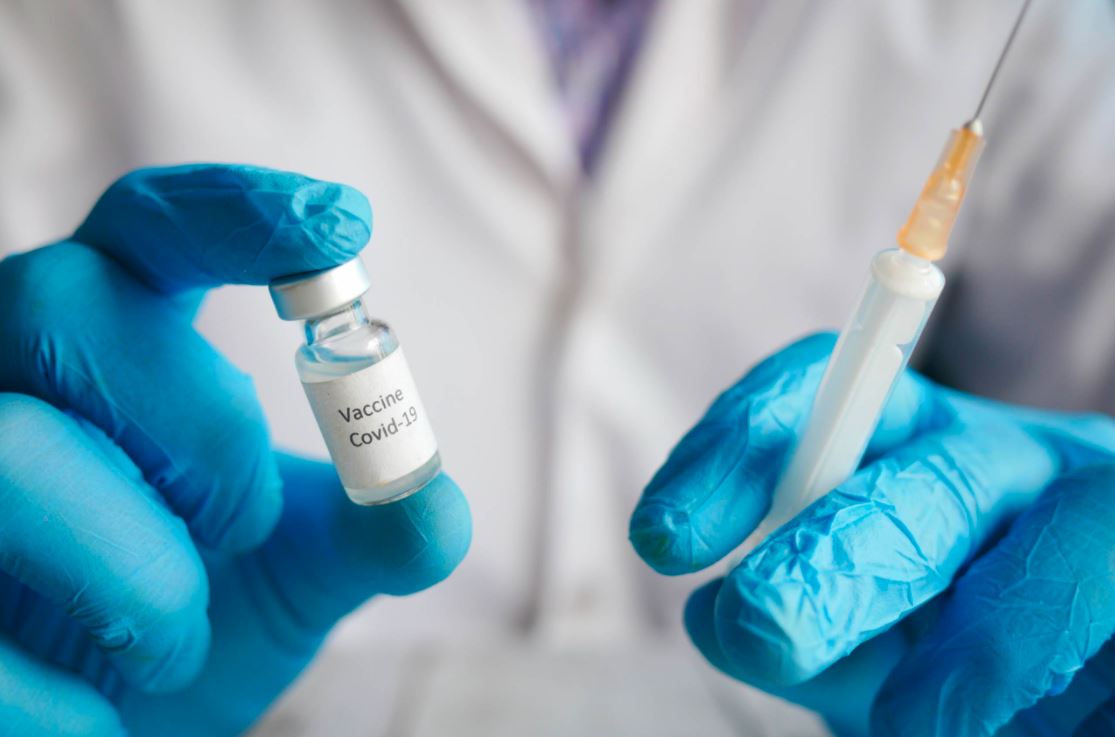
(Jim Hoft) The Centers for Disease Control and Prevention (CDC) COVID response team published a study on medRxiv – a collaborative project jointly run by Cold Spring Harbor Laboratory, Yale University, and BMJ, a global healthcare knowledge provider – concluded that there is no significant difference in transmission potential of vaccinated and unvaccinated persons infected with the COVID-19 “Delta variant” in federal prison during an outbreak between July to August 2021.
by Jim Hoft, November 28th, 2021
Dr. Jordan Peterson, a clinical psychologist shared this on his Twitter account :
Read it and draw your own conclusions re vaccination and Covid transmissibility pic.twitter.com/5DIBObrf7a
— Dr Jordan B Peterson (@jordanbpeterson) November 27, 2021
The study showed that there is “no significant differences were detected in duration of RT-PCR positivity among fully vaccinated participants (median: 13 days) versus those not fully vaccinated (median: 13 days; p=0.50), or in duration of culture positivity (medians: 5 days and 5 days; p=0.29)” among the 95 eligible participants out of 190, of whom 78 were fully vaccinated and 17 were not fully vaccinated.
The findings showed that “prevention and mitigation measures should be applied without regard to vaccination status for persons in high-risk settings or those with significant exposures.”
In line 336 of the study, it states:
In this investigation, we found no statistically significant difference in transmission potential between vaccinated persons and persons who were not fully vaccinated. Therefore, our findings indicate that prevention and mitigation measures should be applied without regard to vaccination status for persons in high-risk settings or those with significant exposures. In congregate settings, and correctional and detention facilities in particular, post-exposure testing and quarantine remain essential tools to limit transmission when cases are identified, in addition to other recommended prevention measures. Our data add to a growing body of evidence characterizing transmission potential from vaccinated persons. Future studies of transmission potential from vaccinated persons with infection, incorporating similar laboratory-based markers as well as evidence of transmission from secondary attack rates and network analysis, may help to further describe the contributions of vaccinated persons in chains of transmission as the pandemic evolves and new variants emerge.
The study confirmed that vaccinated individuals are still at risk of widespread outbreaks when the virus is introduced into congregate settings, even when vaccination coverage is high.
The evidence that vaccinated persons can transmit SARS-CoV-2 to others suggests that there is continued risk of widespread outbreaks when the virus is introduced into congregate settings, even when vaccination coverage is high. In particular, because of the potential for rapid transmission and high prevalence of underlying health conditions in incarcerated populations, persons living or working in correctional facilities should quarantine after exposure to SARS-CoV-2, regardless of vaccination status.
Line 313 of the study states:
This report is subject to several limitations. Due to the small proportion of participants who were not fully vaccinated (17), statistical comparisons on the basis of vaccination status were underpowered, and negative findings reported here warrant cautious interpretation. To increase the sample size of this group, two partially vaccinated participants were included, potentially diluting the characteristics of unvaccinated participants. However, our conclusions did not change when analyses were performed excluding these two participants. Similarly, only four participants had known prior infection, of which a higher proportion occurred in those not fully vaccinated; therefore, these participants may appear to have slightly greater immunological protection than those without prior infection. On average, unvaccinated participants enrolled earlier in the outbreak and later in their course of infection than vaccinated participants; we utilized Turnbull estimation in survival analyses to account for the possibility of interval censoring in this population. All symptom data was self-reported and collected at the end of the specimen collection period, which may have impacted the accuracy of participants’ recall related to the date of symptom onset.
This article is a preprint and has not been peer-reviewed but the same authors published a similar report on Delta variant infections among incarcerated persons in a Federal Prison — Texas, July–August 2021 with similar findings posted on the CDC website.
During a COVID-19 outbreak involving the Delta variant in a highly vaccinated incarcerated population, transmission rates were high, even among vaccinated persons. Although attack rates, hospitalizations, and deaths were higher among unvac- cinated than among vaccinated persons, duration of positive serial test results was similar for both groups. Infectious virus was cultured from vaccinated and unvaccinated infected persons.
What are the implications for public health practice?
Even with high vaccination rates, maintaining multicomponent prevention strategies (e.g., testing and masking for all persons and prompt medical isolation and quarantine for incarcerated persons) remains critical to limiting SARS-CoV-2 transmission in congregate settings where physical distancing is challenging.
A similar study from Lancet showed that fully vaccinated people in UK are just as likely to spread the Delta variant of Covid within households as unvaccinated.
“Households are the site of most SARS-CoV-2 transmission globally.19 In our cohort of densely sampled household contacts exposed to the delta variant, SAR was 38% in unvaccinated contacts and 25% in fully vaccinated contacts. This finding is consistent with the known protective effect of COVID-19 vaccination against infection.8, 9 Notwithstanding, these findings indicate continued risk of infection in household contacts despite vaccination.” the study said.

About The Author
Jim Hoft is the founder and editor of The Gateway Pundit, one of the top conservative news outlets in America. Jim was awarded the Reed Irvine Accuracy in Media Award in 2013 and is the proud recipient of the Breitbart Award for Excellence in Online Journalism from the Americans for Prosperity Foundation in May 2016.
Stillness in the Storm Editor: Why did we post this?
The news is important to all people because it is where we come to know new things about the world, which leads to the development of more life goals that lead to life wisdom. The news also serves as a social connection tool, as we tend to relate to those who know about and believe the things we do. With the power of an open truth-seeking mind in hand, the individual can grow wise and the collective can prosper.
– Justin
Not sure how to make sense of this? Want to learn how to discern like a pro? Read this essential guide to discernment, analysis of claims, and understanding the truth in a world of deception: 4 Key Steps of Discernment – Advanced Truth-Seeking Tools.
Stillness in the Storm Editor’s note: Did you find a spelling error or grammatical mistake? Send an email to [email protected], with the error and suggested correction, along with the headline and url. Do you think this article needs an update? Or do you just have some feedback? Send us an email at [email protected]. Thank you for reading.
Source:
Support our work! (Avoid Big Tech PayPal and Patreon)DIRECT DONATION
Leave a Reply