
(Mac Slavo) Editor’s Note: Stories like this one seriously make you wonder if the film The Island isn’t based on fact after all…
Though it seems like science fiction, it is, in fact, based in reality.
Some of the wealthiest foundations on the planet have sponsored on-going research that dates back to the 1950s where-in scientists attempted to transfuse the vital, healthy blood of young individuals into older, and more fatigued recipients.
And apparently, it has demonstrated considerable positive effects – at least in lab studies with mice.
by Mac Slavo, January 5th, 2017
“There are widespread rumors in Silicon Valley, where life-extension science is a popular obsession, that various wealthy individuals from the tech world have already begun practicing parabiosis, spending tens of thousands of dollars for the procedures and young-person-blood, and repeating the exercise several times a year,” Bercovici reported.[…]The early research is groundbreaking and exciting, he says. But the interest in parabiosis is already getting ahead of the research. He fears that the science will be maligned by a rush to market a “youth serum.” Or worse: A black market for young people’s blood will arise out of the hype.

“Thus, what started as an inquiry into the practicability of using animal plasma as a blood substitute for transfusion purposes, has developed into a program of “mining” blood for its individual substances and for testing these concentrates for therapeutic and prophylactic use.Knowledge gained in a laboratory devoted wholly to problems of pure science has been turned quickly and effectively to meet immediate human needs…”
Parabiosis refers to the transfusing of blood from one subject to another literally combining the circulatory systems of two animals. Some scientific studies have shown reported health and longevity benefits to older mice if paired with younger mice. This came into the mainstream view with headlines about tech billionaires injecting young people’s blood for life extension… Many articles detail the very wealthy’s interest in the process of transfusing the blood of the young for its rejuvenating properties.Any of the recent articles on the subject are carbon copies of each other, all referencing the same report in the journal Nature. Mentioning only the same part of the report entitled Ageing Research: Blood to blood and not considering the deeper implications.In the past few years, however, a small number of labs have revived parabiosis, especially in the field of ageing research. By joining the circulatory system of an old mouse to that of a young mouse, scientists have produced some remarkable results. In the heart, brain, muscles and almost every other tissue examined, the blood of young mice seems to bring new life to ageing organs, making old mice stronger, smarter and healthier. It even makes their fur shinier. Now these labs have begun to identify the components of young blood that are responsible for these changes.
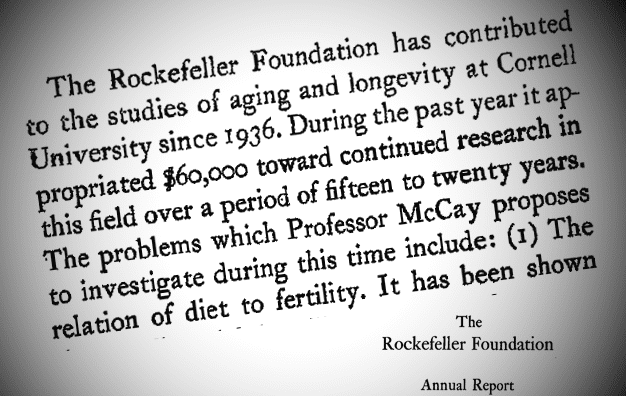
How young is the blood needed for the effects? How is this blood obtained?About the first question, again quoting from the same article in the journal Nature just a few paragraphs down. This part was conveniently left out of the mainstream pieces.Clive McCay, a biochemist and gerontologist at Cornell University in Ithaca, New York, was the first to apply parabiosis to the study of ageing. In 1956, his team joined 69 pairs of rats, almost all of differing ages3. The linked rats included a 1.5-month-old paired with a 16-month-old — the equivalent of pairing a 5-year-old human with a 47-year-old. It was not a pretty experiment.The very young were paired with the old. Not sort of young like an 18-year-old, really young like a 5-year-old!! With humans pairing the equivalent of an 18-year-old with a 47-year-old might be acceptable. Whereas pairing a 47-year-old with a 5-year-old is definitely not. All of this is certainly not good for the young host as it is sucked dry of its vitality. The younger the host the more vitality there is to be had.In McCay’s first parabiotic ageing experiment, after old and young rats were joined for 9–18 months, the older animals’ bones became similar in weight and density to the bones of their younger counterparts…McCay’s experiments were originally funded by the Rockefeller Foundation. Scroll down the sample page and note the study was done with grants from the Office of Naval Research in conjunction with none other than the Rockefeller Foundation. It seems this organization has it’s fingers in every little pie.
_________________________
Stillness in the Storm Editor’s note: Did you find a spelling error or grammar mistake? Do you think this article needs a correction or update? Or do you just have some feedback? Send us an email at [email protected]. Thank you for reading.
Leave a Reply