
(Ocean Robbins) The 1986 film Little Shop of Horrors starred Audrey II, a Venus flytrap that feasted on human flesh and incited a flower shop clerk to murder two people to satisfy its ravenous appetite.
Related Healthy Starters and Appetizers for All Occasions
Source – Food Revolution Network
by Ocean Robbins, April 27th, 2022
And the roots of the idea (pun semi-intended) go back much further. Science fiction writer Arthur C. Clarke penned “The Reluctant Orchid” in 1956, a story about a houseplant that tries to murder and consume its owner. H.G. Wells’ 1894 short story “The Flowering of the Strange Orchid” imagines a jungle plant that grows spider-like tentacles and emits an intoxicating fragrance that almost lures an adventuring orchid collector to his death.
In short, literature has sometimes convinced us that plants are out to get us.
Phytoestrogens as Antinutrients
And there has been no shortage of contemporary nutrition writers who have, in their own way, also advanced that narrative. They point to what they consider harmful compounds in the plants we eat, which they ominously term “antinutrients.” Phytates, lectins, and oxalates often get such negative press.
But the reigning plant-derived nutritional villain, going back decades now, is phytoestrogens. While these compounds are in many plants, the main concern has always been about soy. From cancer to male feminization, nutrient deficiencies to female infertility, some would have us believe that the soybean and its phytoestrogens pose a grave threat to any population that embraces soy products as plant-based alternatives to meat and dairy.
But is it true that the phytoestrogens in soy are harmful? Is soy a real-life analog of Audrey II and the human-destroying orchids imagined by Clarke and Wells? Should you avoid phytoestrogens at all costs? Or is the hype overblown, and might phytoestrogens actually benefit your health as part of a balanced, whole-food-based diet?
What are Phytoestrogens?
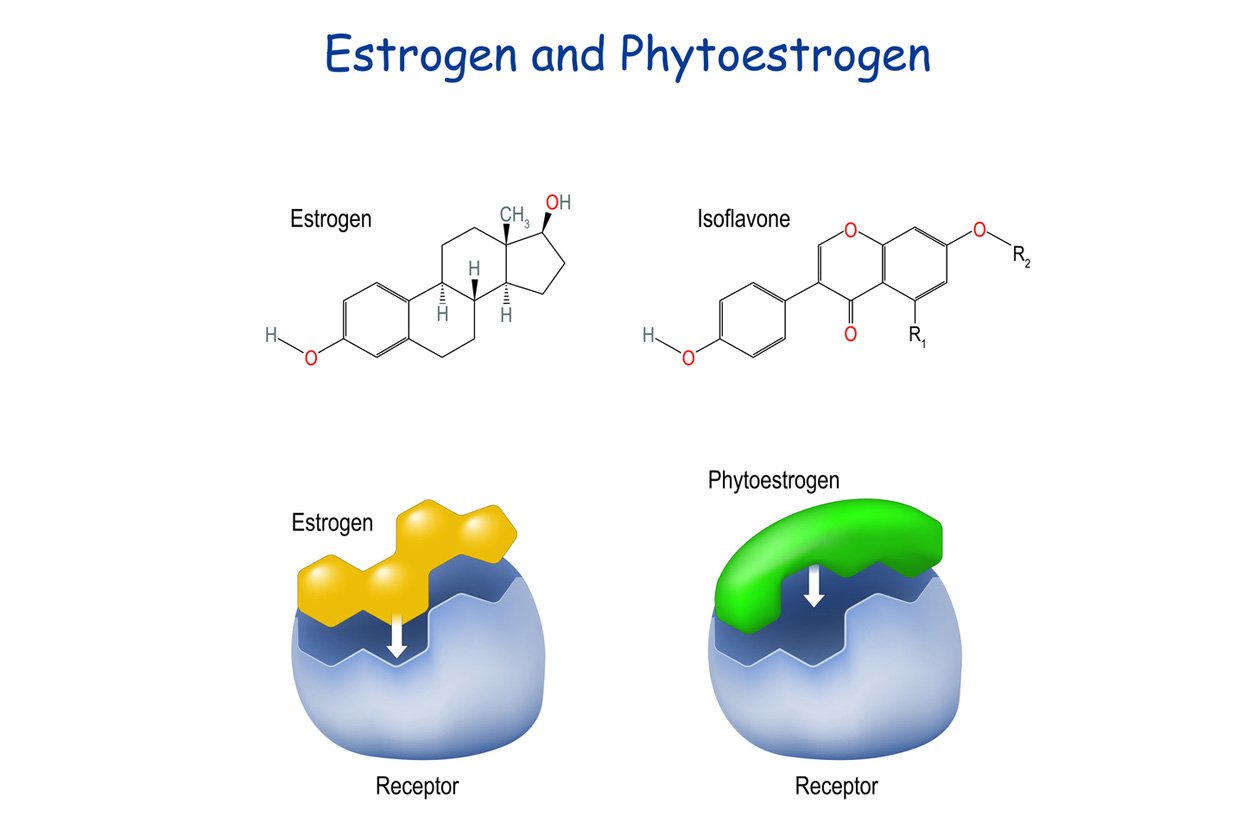
Phytoestrogens — literally “estrogens from plants” — are a type of polyphenol found in plant-based foods. There are two main types: flavonoid and non-flavonoid. The difference, as I just discovered when I looked it up, is that non-flavonoids have one phenol ring while flavonoids have two. (I’ll see you on Jeopardy! — “I’ll take ‘mesomeric effect of hydroxyl groups’ for 200, Mayim!”)
Some of the more prevalent flavonoids include isoflavones, coumestans, and prenylflavonoids, among others. The non-flavonoids we tend to hear the most about include lignans and resveratrol. These and other phytoestrogens occur in over 300 different plant species.
Here’s the thing about all phytoestrogens — their structure is close to that of estrogens, a class of human hormones with myriad effects on male and female reproduction, and estradiol, in particular. Because of this similarity, the plant compounds can mimic or otherwise affect the action of estrogens in the body. Sometimes phytoestrogens act just like estrogen and at other times they can actually block estrogenic effects.
If that were the whole story, it’s easy to see why you might be wary of consuming foods high in phytoestrogens. But it turns out that plant estrogens are weaker than estrogens from other sources.
Xenoestrogens
In the interest of comprehensiveness, I’ll mention in passing that there’s another form of estrogens, in addition to the ones produced by the human body (by both women and men) and the ones you get from plants: xenoestrogens. They’re what you get when you add the Greek prefix for “foreign” — xeno.
Xenoestrogens are entirely synthetic chemicals that you can ingest from industrial chemicals such as solvents and lubricants, as well as their byproducts, including plastics, plasticizers, and flame retardants. You can also get exposed to xenoestrogens from pesticides and pharmaceutical agents.
The thing about xenoestrogens is, well, avoid them if you can. They don’t do a body good, and there’s a huge body of evidence that they can disrupt healthy functioning on many levels.
And now back to our regularly scheduled article about phytoestrogens.
Foods That Contain Phytoestrogens
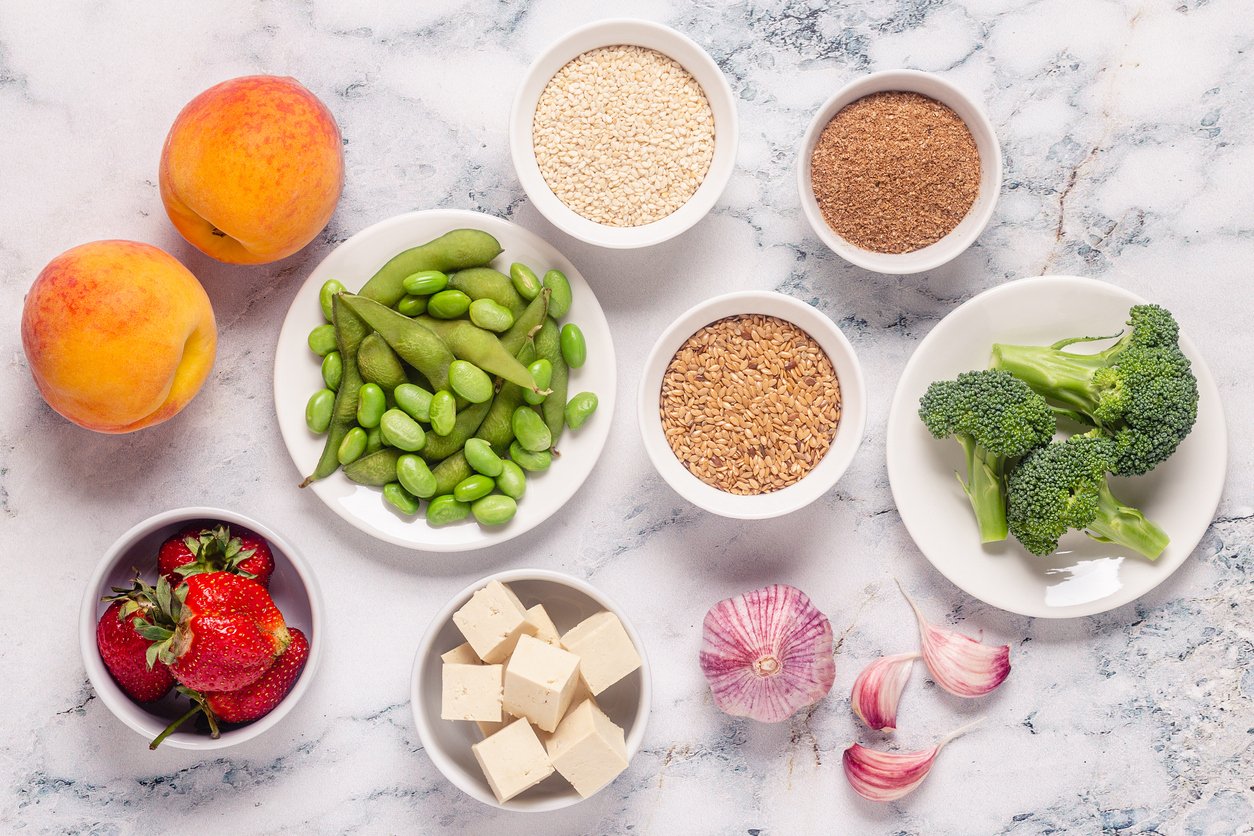
Here’s a not-so-fun article with tables showing the amount of phytoestrogens, in micrograms (abbreviated μg which means one-millionth of a gram), in various plant foods. When you study these tables, perhaps in preparation for your Jeopardy! appearance (“I’ll take ‘fascinating things you didn’t know about cabbage’ for 400, Ken”), you’ll quickly discover that while soy may be the poster child for phytoestrogens in food, it’s far from the only source.
Soy
Among plant foods, fermented and whole soybeans contain the highest concentrations of phytoestrogens, and those appear to be the healthiest ways to consume soy. Fermented soy products include miso and tempeh (the latter boasts whole soybeans). Edamame and tofu are also generally healthy ways for most people to enjoy soy. To avoid GMOs, choose organic soy products. (For more on why, read our article on GMOs.).
Legumes
In addition to soy, other legumes also tend to be high in phytoestrogens — especially garbanzos and green beans.
Sprouted Foods
You’ll also find phytoestrogens in many commonly sprouted plants, including alfalfa, clover, soybean (there it is again!), and mung bean sprouts.
Nuts and Seeds
Nuts and seeds are also foods with phytoestrogens. Pound for pound (or kilogram for kilogram, if you want to get all metric about it), flaxseeds are actually higher in phytoestrogens than soybeans. Also scoring high on the list of foods with phytoestrogens are pistachios, chestnuts, walnuts, hazelnuts, and cashews.
Whole Grains
You can get phytoestrogens from some popular whole grains, including oats, wheat, barley, and rice.
Alliums
Representing the allium family, garlic and onion are no phytoestrogen slouches either.
Vegetables
That’s also true for winter squash, as well as the cruciferous family, including broccoli, cabbage, and many leafy greens.
Fruit
You can also find phytoestrogens in fresh fruit, including blueberries, peaches, strawberries, raspberries, and dried fruit such as dates and apricots.
Why Do People Think Phytoestrogens are Bad?
So what’s going on here? I mean, that list of foods containing significant amounts of phytoestrogens is also a list of some of the healthiest foods on the planet. Are they good for us in spite of their phytoestrogen content? Or is it possible that the phytoestrogens in food may offer benefits? Let’s first explore the widespread idea that phytoestrogens are bad for us and we should avoid them whenever possible.
Estrogen vs Phytoestrogens
Phytoestrogens are structurally similar to estradiol, the main form estrogen takes in the human body. As such, they can bind to estrogen receptors in our cells and thus have the potential to increase or block estrogenic activity.
Because of this, critics tell us that phytoestrogens disrupt endogenous hormones and keep them from working properly in the body. In particular, critics argue that people with hormonal cancers, and specifically estrogen-sensitive ones, should avoid the estrogen-boosting effects of phytoestrogens.
That’s one of the reasons soy has been singled out for demonization. Eating large quantities of soy-based veggie burgers or downing gallons of soy milk, the theory goes, can trigger breast cancer in women, and can cause men to grow breasts.
That would all be pretty alarming if it was true. But there’s almost no evidence to support it.
In fact, the opposite appears to be true.
How can that be? Estrogen vs phytoestrogen studies show that while phytoestrogens do bind to estrogen receptors in the body, their estrogenic activity is much weaker than true estrogen, and they may actually block or even oppose the effects of estrogen in some tissues.
Think of a piece of gum fitting into a keyhole; as you cram it in, it takes on something of the shape of the key, but it doesn’t open the door. And it makes it harder for a real key to open the door, too. Phytoestrogens, which are about 1,000 times less potent than the estrogen your body produces, can bind with estrogen receptors and thereby prevent actual estrogen from exerting its effects.
Are There Any Health Benefits of Phytoestrogens?
In study after study, we find that the foods that are highest in phytoestrogens tend to also be good for heart health and brain health, help to fight obesity and cancer, and promote longevity.
Heart Disease and Phytoestrogens
It’s known that low estrogen levels are a risk factor for the development of cardiovascular disease (CVD) in women. Phytoestrogen consumption — particularly that of isoflavones — has been associated with lower CVD incidence in both Dutch and Japanese women.
Isoflavones appear to reduce CVD risk by, among other things, helping to dilate blood vessels and thereby lower blood pressure in hypertensive women. And soy and alfalfa extracts, combined with acerola cherry extract, can reduce the harmful effects of “bad” LDL cholesterol.
Phytoestrogens and Cancer
While trials conducted in the 1990s focused on the question of whether phytoestrogens increased breast cancer risk, later studies reversed the hypothesis and began asking whether diets rich in soy could actually prevent the disease. A 2014 meta-analysis found that soy isoflavones lowered the risk of breast cancer in both pre- and postmenopausal women. The twist was that the researchers found this effect only in Asian populations — women in Western countries did not appear to benefit. Whether this is due to the fact that Asian women eat a lot more soy than Western women is still an open question.
Breast cancer surgeon Kristi Funk, MD, is the author of Breasts: The Owner’s Manual. She examined the extensive research about soy consumption in humans and concluded: “Not only is soy safe, it literally drops breast cancer rates by 60% for soy consumers. And if you have breast cancer, it drops recurrence by 60%.”
Soy consumption has also been shown to suppress the development of prostate cancer. Two soy phytoestrogens, in particular, genistein and daidzein, are being studied for their effects on cancer development.
Other studies have found that consuming soy may also reduce your risk of developing lung, thyroid, ovarian, endometrial, and colorectal cancer.
Alleviating Menopause Symptoms with Phytoestrogens
Some of the most uncomfortable symptoms of menopause occur as a woman’s body decreases the production of estrogen. In addition to hot flashes and sweating, menopause is also linked to an increased risk of obesity and osteoporosis.
Because phytoestrogens can increase estrogenic activity, they have been shown to reduce symptoms of menopause, including decreases in bone density that can lead to osteoporosis. And they have the added benefit, unlike synthetic hormone replacement therapy, of not contributing to blood clots.
Weight Management and Phytoestrogens
There’s a robust body of evidence that phytoestrogens can help people achieve and maintain a healthy weight. This is at least in part because phytoestrogens inhibit the life cycle of fat-storing adipocyte cells and can lower concentrations of adipose (fatty) tissue in the body. They can also help you lose weight by reducing the levels of the “starvation” hormone leptin in your body, so you can lose fat without triggering that “OMG I need a giant donut this very minute or something terrible is going to happen!” feeling. This conclusion was supported by a 2013 study that confirmed soy’s appetite-suppressing ability in estrogen-deficient female mice. (Our view on the use of animals in medical research is here.)
Phytoestrogen Impact on Skin Health
Phytoestrogens also appear to confer anti-aging benefits on the skin. They have been shown to increase the body’s production of collagen production and other compounds that are crucial to skin health. They also block some of the damaging effects of UVB radiation and increase blood flow to skin tissue. Clinical trials have shown that oral phytoestrogen supplementation increased both dermal (skin) thickness and collagen production in postmenopausal women.
Immune System Support
Science is just beginning to explore the role phytoestrogens might play in supporting immune function. Genistein, from soy, appears to keep hypersensitive immune systems from overreacting in unhelpful and potentially dangerous ways.
Phytoestrogen Impact on Cognitive Function and Alzheimer’s
The phytoestrogen resveratrol, found in abundance in red grapes, appears to protect against Alzheimer’s by triggering the destruction of certain proteins in the brain that can form plaques. It has also been shown, in mouse models, to inhibit the development of Parkinson’s Disease. And several observational studies of humans have found that consumption of lignans is associated with higher cognitive functioning.
Who Should Avoid or Limit Phytoestrogens?
As I hope the above section makes clear, the bulk of evidence suggests that phytoestrogens in whole plant foods are beneficial for most people when eaten as part of a balanced diet. But there are still some situations where some people may want to limit their intake.
In the past, it was thought that people with estrogen-positive breast cancer should avoid phytoestrogen, but a growing body of research indicates that the opposite may be true. In fact, many studies show that soy isoflavones are protective against breast cancers because the phytoestrogens attach to the estrogen B cells, blocking the A cells that cause cancer.
Some researchers urge caution, however — especially about the consumption of processed soy protein products, as these have not been studied as extensively as the whole soy foods traditionally eaten in Asian cuisines. Additional unknowns include the cumulative effect of all the phytoestrogens a person has eaten over their lifetime, and how early these foods were introduced.
People with the rare lung disease LAM may also want to limit phytoestrogens, since the LAM cells have estrogen receptors on them, and may proliferate in the presence of high levels of the hormone and potentially of estrogen mimickers, as well.
Another group that may potentially be harmed by excess phytoestrogens is people who have iodine deficiency with hypothyroidism. While the impact of phytoestrogens may vary based on the person’s age, soy isoflavones, in particular, may negatively affect thyroid function in people with hypothyroidism in the absence of sufficient iodine. This is still largely theoretical, however. Small clinical trials haven’t produced a clear association.
Increasing and Decreasing Phytoestrogens in Food
In addition to eating more or fewer of the plant foods that contain phytoestrogens, you can ramp your consumption up or down depending on how those foods are processed.
Fermentation alters the chemical makeup of soy, which can significantly reduce the level of isoflavones. Prolonged cooking, simmering, or soaking can also reduce phytoestrogen content. Steaming causes less phytoestrogen loss than boiling or frying.
And on a different but related note, your gut microbiota play a key role in the bioactivity and bioavailability of phytoestrogens, as they are the entities that decide what to turn phytoestrogens into.
Recipes with Phytoestrogen Foods
Not only will you get plenty of phytonutrients from each of the dishes below, but you’ll also get lots of nutrition overall, like fiber, protein, vitamins, and minerals.
Ocean’s Savory Oatmeal is super tasty and brimming with nutrition, including phytonutrients from the flax and pumpkin seeds. Crunchy Kale Slaw makes a fun, fresh, and crispy snack, condiment, or side and contains a huge amount of nutrition, including phytonutrients from the kale, cabbage, and tahini. And Tofu and Broccoli Stir-Fry is an absolutely delicious, phytonutrient-rich meal with its tofu, broccoli, and garlic. It may seem like lots of ingredients and steps, but each of the three sections is pretty simple to create!
1. Ocean’s Savory Oatmeal
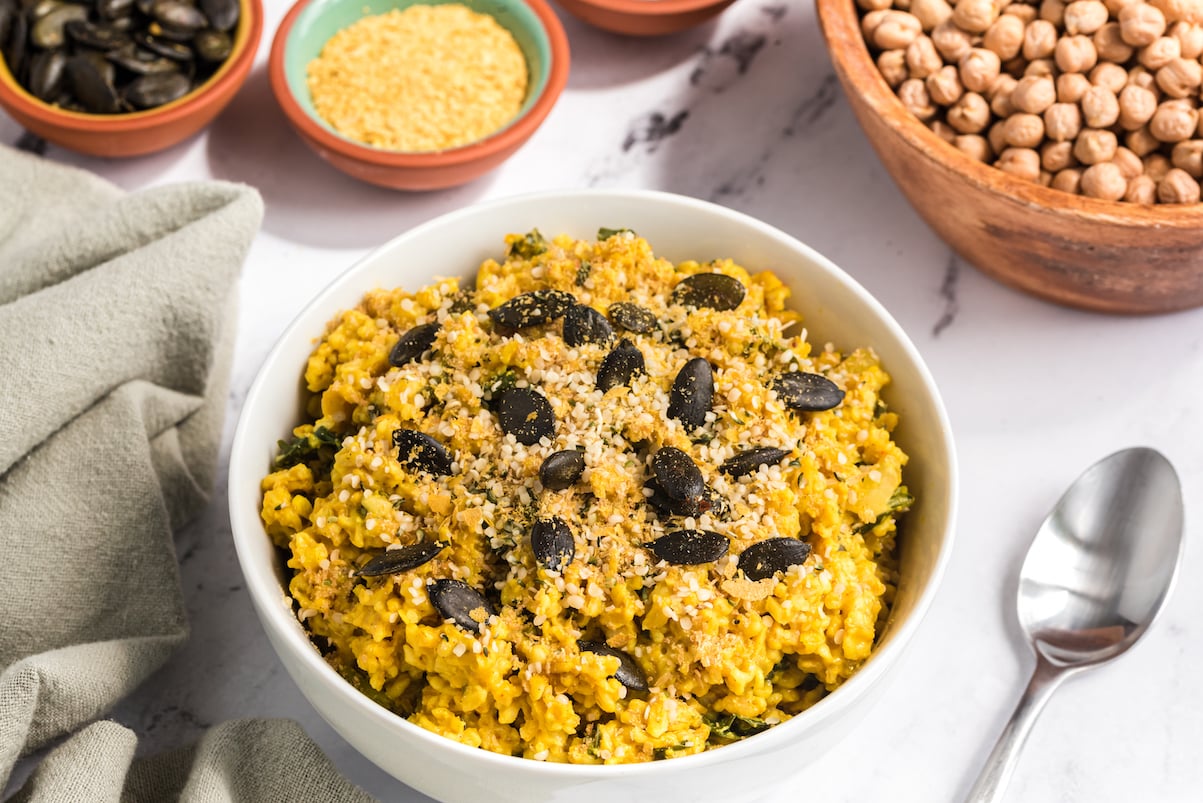
A favorite of mine, and perhaps an about-to-be new favorite of yours, this savory oatmeal will leave you feeling satisfied, energized, and nourished. It’s filled with fiber, protein, and phytonutrients, including phytoestrogens in the flax and pumpkin seeds. It’s also a great way to use that Instant Pot! Don’t own an Instant Pot? No problem! Be sure to check out the stovetop directions in the Chef’s Notes.
2. Crunchy Kale Slaw
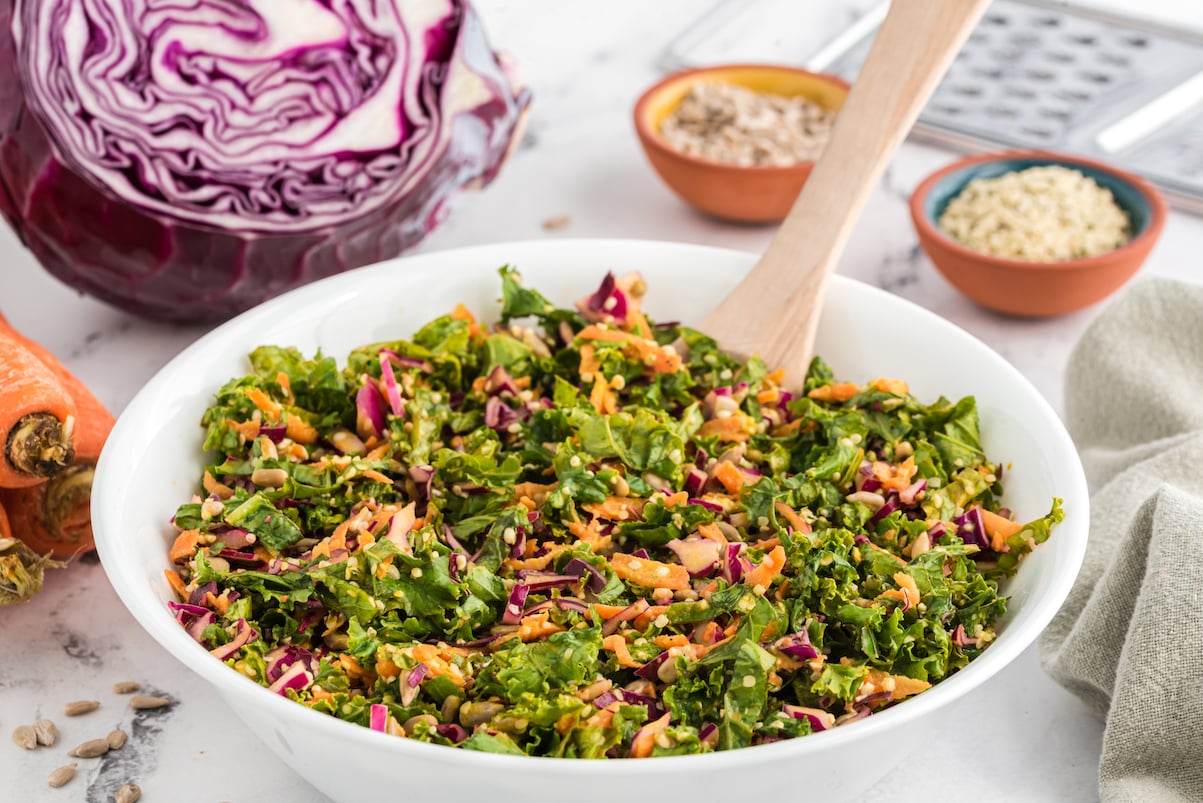
This crunchy and tasty slaw offers lots of nutrition in exchange for very little time since it requires only a little shredding and zero cooking. Kale, cabbage, and tahini are three plant-based foods that are rich in many nutrients including phytoestrogens. Enjoy this slaw solo as a crunchy snack, as a side dish to your main meal, or as a condiment on top of tacos and wraps.
3. Tofu and Broccoli Stir-Fry
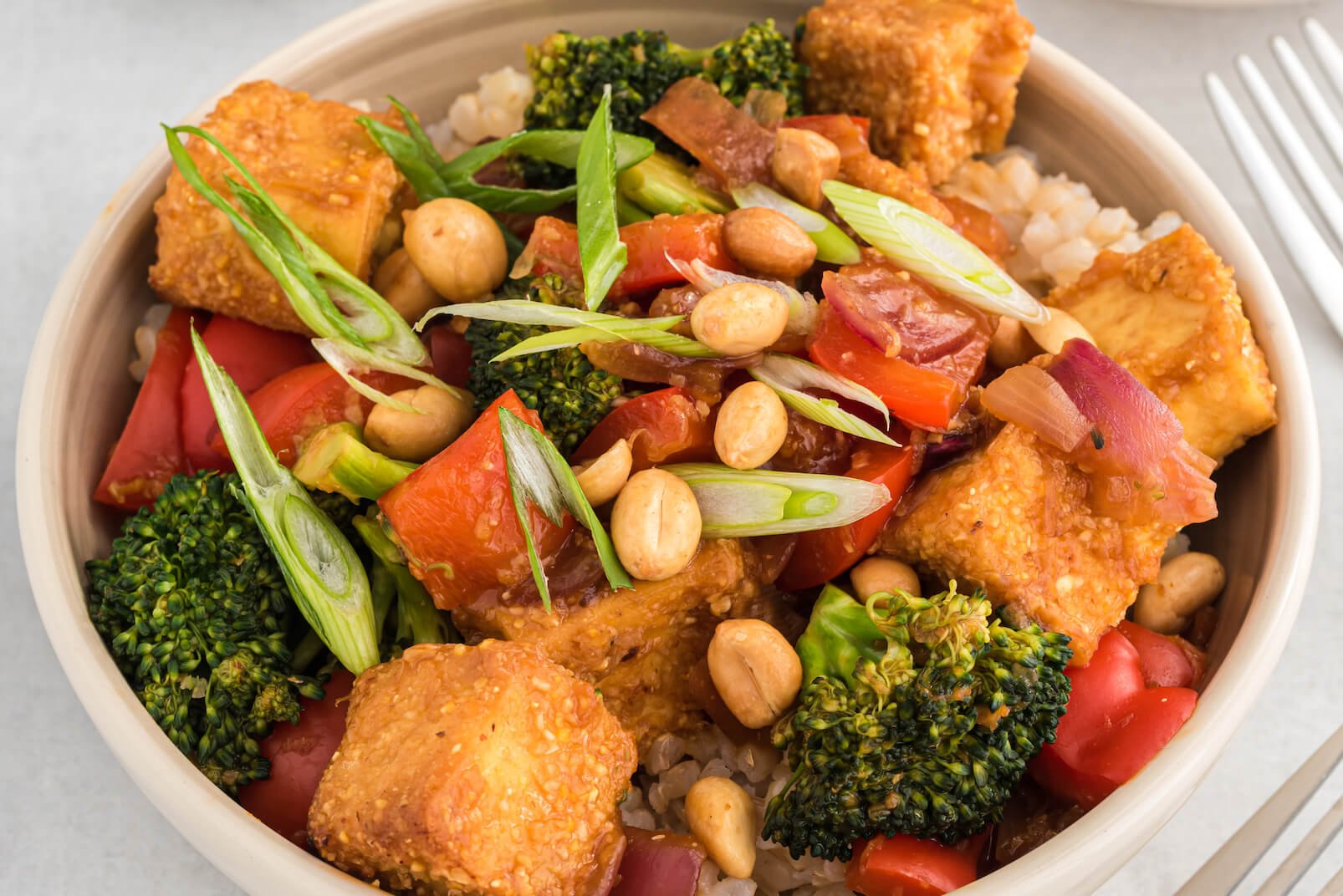
This phytonutrient-rich recipe may look like lots of steps, but if you break up each component (tofu, sauce, and veggies) into individual sections, it will come together easy-peasy. First, prepare your tofu and place it in the oven. Next, prepare your sauce while the tofu is cooking (it only takes a few minutes!). Finally, make your veggies, also while the tofu is cooking. Once the tofu is ready, your meal will be ready for simple assembling! If you’re wondering, tofu, broccoli, and garlic are the phytonutrient superstars in this dish.
Say Yes to Plant-Based Phytoestrogenic Foods
Phytoestrogens are found in a number of plant foods. Sometimes they mimic estrogen activity in the body, and sometimes they suppress it, which makes for a lot of curious (and confused) scientists. Although there’s long been a question over whether phytoestrogens are bad for you — especially in regards to cancer — the research shows they are, in fact, beneficial in many ways. For most people, whole plant-based foods that may contain phytoestrogens are healthy when consumed as part of a healthy and balanced diet.
Support this site so we can continue to tell you the truth.DONATE HERE
Stillness in the Storm Editor: Why did we post this?
The news is important to all people because it is where we come to know new things about the world, which leads to the development of more life goals that lead to life wisdom. The news also serves as a social connection tool, as we tend to relate to those who know about and believe the things we do. With the power of an open truth-seeking mind in hand, the individual can grow wise and the collective can prosper.
– Justin
Not sure how to make sense of this? Want to learn how to discern like a pro? Read this essential guide to discernment, analysis of claims, and understanding the truth in a world of deception: 4 Key Steps of Discernment – Advanced Truth-Seeking Tools.
Stillness in the Storm Editor’s note: Did you find a spelling error or grammatical mistake? Send an email to [email protected], with the error and suggested correction, along with the headline and url. Do you think this article needs an update? Or do you just have some feedback? Send us an email at [email protected]. Thank you for reading.
Source:
https://foodrevolution.org/blog/phytoestrogen-foods-good-or-bad/
Support our work! (Avoid Big Tech PayPal and Patreon)DIRECT DONATION
Leave a Reply