U.S., Russia agree on Syria U.N. chemical arms measureCredit: Reuters/Eric Thayer
By John Irish and Michelle Nichols
U.S. Secretary of State John Kerry speaks to the media after a meeting of the foreign ministers representing the permanent five member countries of the United Nations Security Council, including Germany, at the U.N. Headquarters in New York September 26, 2013.
UNITED NATIONS | Thu Sep 26, 2013 7:46pm EDT
(Reuters) – Ending weeks of diplomatic deadlock, the United States and Russia reached an agreement on Thursday on a draft U.N. Security Council resolution aimed at ridding Syria of its chemical weapons arsenal…
…A U.S. State Department official hailed the deal as a “breakthrough…”
“…The Russians have agreed to support a strong, binding and enforceable resolution that unites the pressure and focus of the international community on the Syrian regime to ensure the elimination of Syria’s chemical weapons,” the official said….
….A senior U.S. official said earlier that the United States and China – another permanent Security Council member – strongly agreed on the need for the council to quickly adopt a binding resolution on eradicating Syria’s chemical arsenal, a remark that appeared aimed at putting pressure on Russia to accept the measure….
“…China follows Russia on Syria,” a Western diplomat said on condition of anonymity….
URL to full article: http://www.reuters.com/article/2013/09/26/us-un-assembly-syria-resolution-idUSBRE98P1AJ20130926?feedType=RSS&feedName=topNews
If Republicans Want To Shut Down Washington, They’ll Have To Ask China’s Permission First
by Eamonn Fingleton

Forbes
Sept. 29, 2013
In their never-say-die efforts to defeat Obamacare, Tea Party Republicans brought the federal government a giant step closer to shutdown last night. What they seem not to have considered is how America’s foreign creditors will react.
Although China, Japan, and other major creditor nations have no dog in the Obamacare fight, they have a strong interest in preserving America’s basic financial, economic, and social stability. From their point of view, the Tea Party contingent is not following the script and a corrective may prove necessary.
If the creditor nations were to sell just a small proportion of their American assets, they could send Wall Street into a tailspin, with unpleasant implications for many Republicans.
URL to full article: http://www.forbes.com/sites/eamonnfingleton/2013/09/29/if-republicans-want-to-shut-down-washington-theyll-have-to-ask-chinas-permission-first/?partner=yahootix
Rand Paul: It’s Obama Who’s Shutting Down Government
CBS News
September 29, 2013
Wall Street braces for volatility as shutdown seems likely
September 29th, 2013
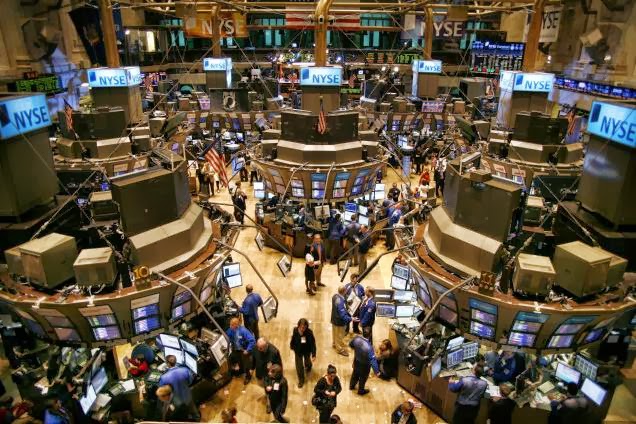
NEW YORK (Reuters) – As a last-minute deal to resolve spending negotiations in Washington appeared less likely, U.S. stock investors braced for what had previously seemed remote: a shutdown of the U.S. government that could spark a major equity decline.
The House of Representatives early on Sunday voted for an emergency spending bill that includes a delay of President Barack Obama’s signature healthcare reform law despite veto threats from the White House.
While a deal could be reached before the government’s fiscal year ends at midnight on Monday, the unanimous passage of a bill to continue paying U.S. soldiers in the event the government runs out of money was viewed as a sign that there would be no agreement between Republicans, who hold a majority in the House, and the Democrats, who control the White House and Senate.
More fear injection into mass consciousness, there is always a ‘battle to overt government shutdowns” right before they just magically approve another debt ceiling increase.
Too Big To Fail Is Now Bigger Than Ever Before
September 21, 2013 @ 7:20 am
Michael Snyder
Economic Collapse
September 21, 2013
The too big to fail banks are now much, much larger than they were the last time they caused so much trouble. The six largest banks in the United States have gotten 37 percent larger over the past five years. Meanwhile, 1,400 smaller banks have disappeared from the banking industry during that time. What this means is that the health of JPMorgan Chase, Bank of America, Citigroup, Wells Fargo, Goldman Sachs and Morgan Stanley is more critical to the U.S. economy than ever before. If they were “too big to fail” back in 2008, then now they must be “too colossal to collapse”. Without these banks, we do not have an economy. The six largest banks control 67 percent of all U.S. banking assets, and Bank of America accounted for about a third of all business loans by itself last year. Our entire economy is based on credit, and these giant banks are at the very core of our system of credit. If these banks were to collapse, a brutal economic depression would be guaranteed. Unfortunately, as you will see later in this article, these banks did not learn anything from 2008 and are being exceedingly reckless. They are counting on the rest of us bailing them out if something goes wrong, but that might not happen next time around.
Ever since the financial crisis of 2008, our politicians have been running around proclaiming that they will not rest until they have fixed “the too big to fail problem”, but instead of fixing it those banks have rapidly gotten even larger. Just check out the following figures which come from the Los Angeles Times…
Just before the financial crisis hit, Wells Fargo & Co. had $609 billion in assets. Now it has $1.4 trillion.Bank of America Corp. had $1.7 trillion in assets. That’s up to $2.1 trillion.
And the assets of JPMorgan Chase & Co., the nation’s biggest bank, have ballooned to $2.4 trillion from $1.8 trillion.
We are witnessing a consolidation of the banking industry that is absolutely stunning. Hundreds of smaller banks have been swallowed up by these behemoths, and millions of Americans are finding that they have to deal with these banking giants whether they like it or not.
Even though all they do is move money around, these banks have become the core of our economic system, and they are growing at an astounding pace. The following numbers come from a recent CNN article…
-The assets of the six largest banks in the United States have grown by 37 percent over the past five years.
-The U.S. banking system has 14.4 trillion dollars in total assets. The six largest banks now account for 67 percent of those assets and the other 6,934 banks account for only 33 percent of those assets.
-Approximately 1,400 smaller banks have disappeared over the past five years.
-JPMorgan Chase is roughly the size of the entire British economy.
-The four largest banks have more than a million employeescombined.
-The five largest banks account for 42 percent of all loans in the United States.
As I discussed above, without these giant banks there is no economy. We should have never, ever allowed this to happen, but now that it has happened it is imperative that the American people understand this. The power of these banks is absolutely overwhelming…
One third of all business loans this year were made by Bank of America. Wells Fargo funds nearly a quarter of all mortgage loans. And held in the vaults of JPMorgan Chase is $1.3 trillion, which is 12% of our collective cash, including the payrolls of many thousands of companies, or enough to buy 47,636,496,885 of these NFL branded toaster ovens. Thanks for your business!
A lot of people tend to focus on many of the other threats to our economy, but the number one potential threat that our economy is facing is the potential failure of the too big to fail banks. As we saw in 2008, when they start to fail things can get really bad really fast.
And as I have written about so many times, the number one threat to the too big to fail banks is the possibility of a derivatives crisis.
Former Goldman Sachs banker and best selling author Nomi Prins recently told Greg Hunter of USAWatchdog.com that the global economy “could implode and have serious ramifications on the financial systems starting with derivatives and working on outward.” You can watch the full video of that interview right here.
And Nomi Prins is exactly right. Just like we witnessed in 2008, a derivatives panic can spiral out of control very quickly. Our big banks should have learned a lesson from 2008 and should have greatly scaled back their reckless betting.
Unfortunately, that has not happened. In fact, according to the OCC’s latest quarterly report on bank trading and derivatives activities, the big banks have become even more reckless since the last time I reported on this. The following figures reflect the new information contained in the latest OCC report…
JPMorgan Chase
Total Assets: $1,948,150,000,000 (just over 1.9 trillion dollars)
Total Exposure To Derivatives: $70,287,894,000,000 (more than 70 trillion dollars)
Citibank
Total Assets: $1,306,258,000,000 (a bit more than 1.3 trillion dollars)
Total Exposure To Derivatives: $58,471,038,000,000 (more than 58 trillion dollars)
Bank Of America
Total Assets: $1,458,091,000,000 (a bit more than 1.4 trillion dollars)
Total Exposure To Derivatives: $44,543,003,000,000 (more than 44 trillion dollars)
Goldman Sachs
Total Assets: $113,743,000,000 (a bit more than 113 billion dollars – yes, you read that correctly)
Total Exposure To Derivatives: $42,251,600,000,000 (more than 42 trillion dollars)
That means that the total exposure that Goldman Sachs has to derivatives contracts is more than 371 times greater than their total assets.
How in the world can anyone say that Goldman Sachs is not being incredibly reckless?
And remember, the overwhelming majority of these derivatives contracts are interest rate derivatives.
Wild swings in interest rates could set off this time bomb and send our entire financial system plunging into chaos.
After climbing rapidly for a couple of months, the yield on 10 year U.S. Treasury bonds has stabilized for the moment.
But if that changes and interest rates start going up dramatically again, that is going to be a huge problem for these too big to fail banks.
And I know that a lot of you don’t have much sympathy for the big banks, but remember, if they go down we go down too.
These banks have been unbelievably reckless, but when they fail, we will all pay the price.
URL to article: http://theeconomiccollapseblog.com/archives/too-big-to-fail-is-now-bigger-than-ever-before
Obama’s “I Am Not a Crook” Moment
Washington’s Blog
September 21, 2013
America’s top liberal communications expert is George Lakoff. Professor Lakoff (who we’ve previously interviewed) points out that when a politician says “Not X”, people usually think of X:
I wrote a book called, Don’t Think of an Elephant! The title made a basic point: Negating a frame activates that frame. If you activate the other side’s frame, you just help the other side, as Nixon found out when he said, “I am not a crook,” which made people think of him as a crook.
President Obama just said:
This is the United States of America — we’re not some banana republic, this is not a deadbeat nation, we don’t run out on our tab.
***
We can’t just not pay our bills.”
What Lakoff and other political psychologists explain is that what most Americans – and people all over the world – will hear is:
But the focus of this post is on Obama’s Nixon moment … invoking the exact image which he is trying to avoid.
Obama has failed to learn the most basic concept from the psychology of politics.
URL to article: http://www.washingtonsblog.com/2013/09/obamas-i-am-not-a-crook-moment.html
New York Times corrects AR-15 Navy Yard story, still misses the mark
September 22, 2013

Police block off the M Street, SE, as they respond to a shooting at the Washington Navy Yard in Washington, September 16, 2013. (Reuters/Joshua Roberts) – See more at: http://www.thenation.com/blog/176280/did-navy-yard-shooter-aaron-alexis-try-buy-ar-15-virginia#sthash.XevHgnwc.dpuf
Emily Miller
The Washington Times
September 22, 2013
After two days, the New York Times finally corrected its story claiming Virginia state law blocked Aaron Alexis from buying an AR-15 rifle before his rampage at the Navy Yard. The article, however, still is not accurate.
On Tuesday, I wrote that the Times was part of the widespread effort in the liberal media to tie the AR-15 rifle to the mass murder or 12 innocent people in Washington on Monday.
The headline was — and is — “State Law Stopped Gunman From Buying Rifle, Officials Say.”
It said that the gunman was stopped from buying an AR-15 “because state law there prohibits the sale of such weapons to out-of-state buyers, according to two senior law enforcement officials.”
In fact, there is no residency requirement in federal or state law for purchase of shotguns or rifles.
URL to full article: http://www.washingtontimes.com/news/2013/sep/20/new-york-times-corrects-ar-15-navy-yard-story-stil/
First unmanned QF-16 takes flight in Florida
By Brian Everstine Staff writer Sep. 24, 2013 – 06:00AM
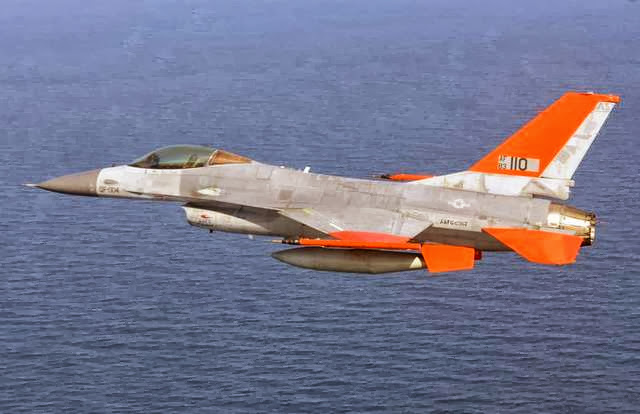
A QF-16 full-scale aerial target takes off on its first unmanned flight at Tyndall Air Force Base, Fla. Beginning in 2014, the QF-16s will be used as targets during fighter pilot training. (Master Sgt. Scott Wilcox/Air Force)
The first unmanned F-16 took flight over the Gulf of Mexico last week, in a one-hour flight that tested the Viper’s ability to fly at supersonic speeds and perform evasive maneuvers under the control of a pilot on the ground.
The QF-16 will be used for full-scale targeting practice for fighter pilots.Once tests are completed at Tyndall, the six Vipers that have been configured will be sent to Holloman Air Force Base, N.M., for testing on an air-to-ground control system and live-fire testing.
The 82nd Aerial Targets Squadron and the Boeing Co. on Sept. 19 controlled the first unmanned QF-16 targeting drone flight at Tyndall Air Force Base, Fla. The QF-16, an optionally manned F-16 that was brought out of retirement and outfitted for unmanned flight, is on schedule to replace the QF-4 Phantom drone currently in use.
“The QF-4 did a good job for many years, but it’s time to turn the page in the aerial target program,” Lt. Col. Ryan Inman, commander of the 82nd ATRS, said in a release. “This program will bring us into the 4th generation aircraft. And will provide us with a mission capable, very sustainable aerial target to take us into the next 10 to 20 years.”
For the initial flight, a pilot performed all pre-flight checks and climbed out of the jet. Thomas Mudge, an 82nd ATRS pilot controller, flew the plane from a control room on base, the Air Force said this week.
“The flight itself went very well,” Mudge said. “Its performance and abilities are great and we’re looking forward to this airplane.”
The Air Force expects to fly 210 of the unmanned jets, which are Block 15, 25 and 30 variants. They are expected to be fielded beginning in 2014.
URL to article: http://www.militarytimes.com/article/20130924/NEWS04/309240030
‘Homeland’ to Test Facial Recognition System
Rawlson King biometricupdate.com
September 21, 2013
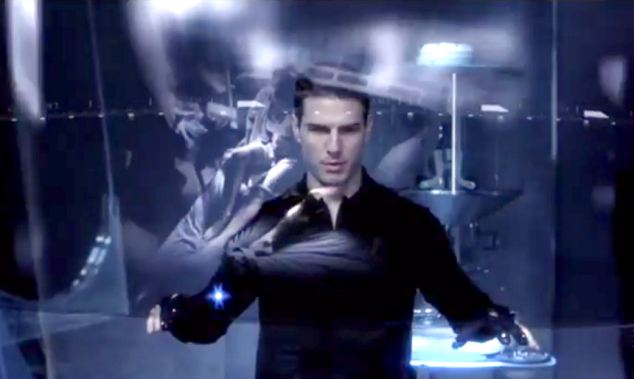
The U.S. Department of Homeland Security will test its crowd-scanning facial recognition system, known as the Biometric Optical Surveillance System, or BOSS, at a junior hockey game this weekend.
The cameras transfer the pair of images to the remote matching system by way of fiber optic or wireless technology. The system then processes and stores the two images into a 3-D signature, which is the mathematical representation of the stereo-pair images that the system uses for matching.



Leave a Reply