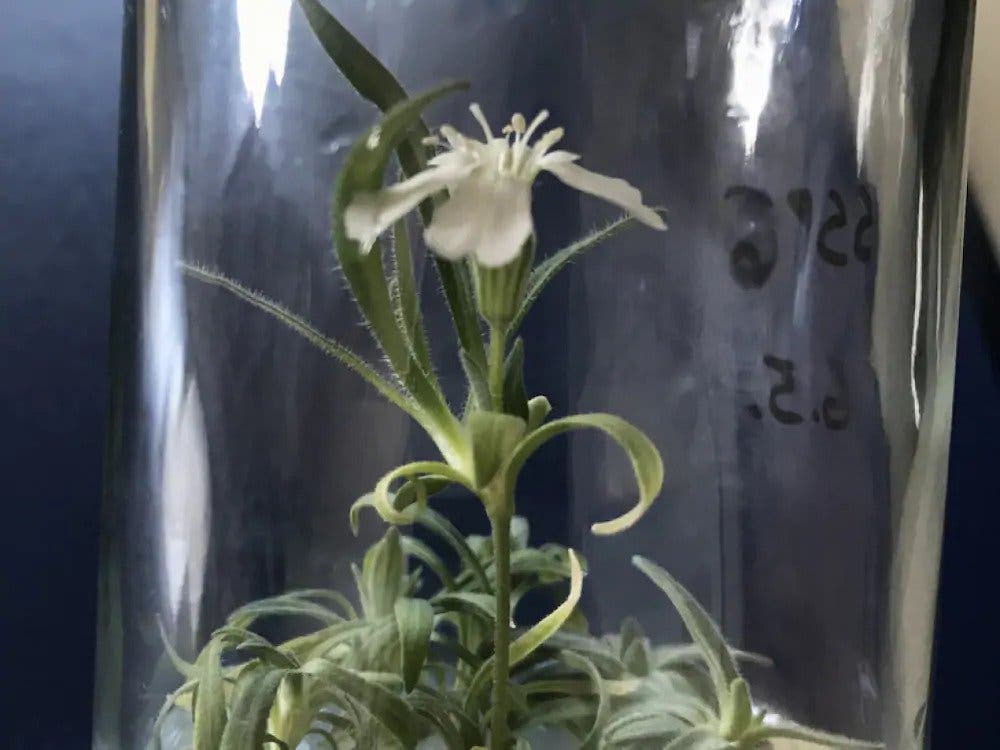
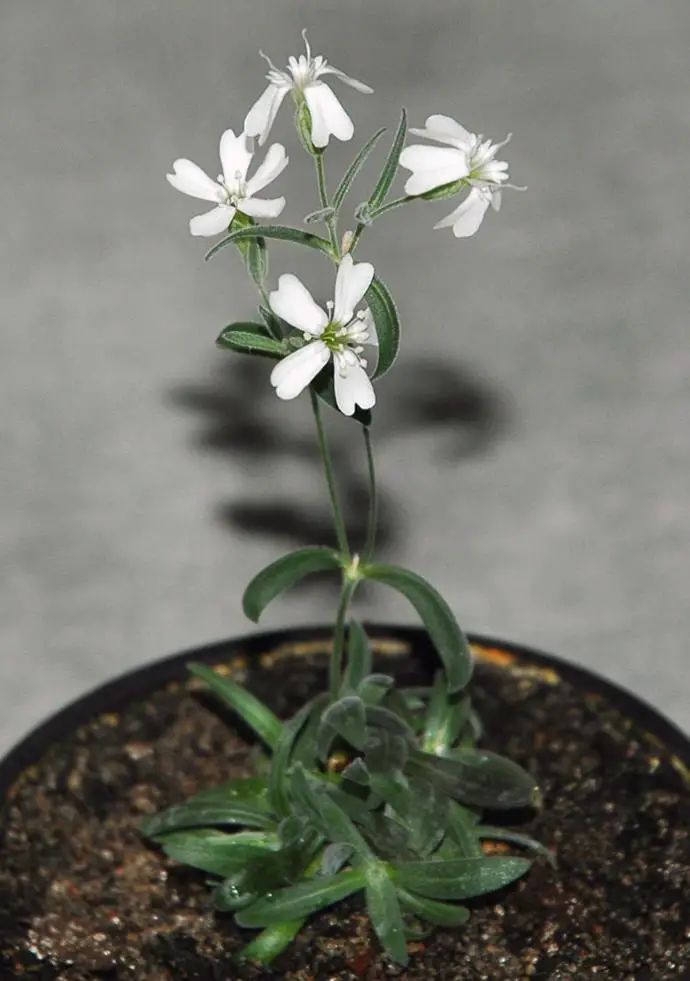
(Mayukh Saha) A group of scientists back in 2012 managed to successfully revive a 32,000-year-old plant from its fruit, which was buried in the Siberian permafrost. This team from the Institute of Cell Biophysics and the Institute of Physicochemical and Biological Problems in Soil Science, Russian Academy of Sciences published a study in the Proceedings of the National Academy of Sciences, where they explained how the fruit tissues of Silene stenophylla from the Late Pleistocene Age were used to regenerate the ancient plant. Clonal micropropagation techniques and in vitro tissue culture were the techniques used for this purpose.
Related Study Suggest That Intellectually Humble People Possess Superior General Knowledge
by Mayukh Saha, July 1st, 2020
Commonly known as the narrow-leafed campion, this 32,000-year-old plant is an extant species of the Caryophyllaceae flowing plant family.
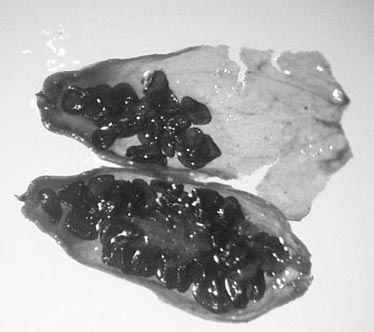
Fully encased in ice, both the mature and immature seeds were unearthed from 124 feet, about 38 meters, below the permafrost. Layers surrounding the seeds included mammoth, bison, and even woolly rhinoceros bones. The seeds were discovered from the fossil burrows of an Arctic species of ground squirrel. Radiocarbon dating put the seeds to be exactly 31,800 years old.
The placental tissue of three immature uninjured fruits of S. stenophylla were used to grow 36 of these ancient plants.
Book The Secret Life of Plants
The scientists then tested those regrown plants for their sexual fertility:
“It should be noted that S. stenophylla is allogamous and requires cross-fertilization for sexual reproduction to occur. Flowers of the ancient plants were pollinated artificially using pollen from other ancient plants, pollination of extant plants was performed similarly. The time from artificial pollination of flowers to ripening of first seeds took 8–9 weeks. Laboratory germination of seeds taken from regenerated ancient plants was 100 %.”
Taxonomic identification helped to identify both the ancient and extant plants as distinct phenotypes of S. stenophylla.
According to scientists, the 32,000-year-old plants that are now regenerated are currently the most ancient, multicellular living organisms. The next one in line is a date palm revived from a 2000 years old seed found in the ancient fortress of Masada, Israel.
About The Author
Hey! Message me. I am Mayukh. I help people and websites with content, videos, design, and social media management. I am an avid traveler and I started living as a digital nomad in Europe since 2019. I am currently working on www.noetbook.com – a creative media company. You can reach out to me anytime: justmayukh@gmail.
Stillness in the Storm Editor: Why did we post this?
The news is important to all people because it is where we come to know new things about the world, which leads to the development of more life goals that lead to life wisdom. The news also serves as a social connection tool, as we tend to relate to those who know about and believe the things we do. With the power of an open truth-seeking mind in hand, the individual can grow wise and the collective can prosper.
– Justin
Not sure how to make sense of this? Want to learn how to discern like a pro? Read this essential guide to discernment, analysis of claims, and understanding the truth in a world of deception: 4 Key Steps of Discernment – Advanced Truth-Seeking Tools.
Stillness in the Storm Editor’s note: Did you find a spelling error or grammatical mistake? Send an email to [email protected], with the error and suggested correction, along with the headline and url. Do you think this article needs an update? Or do you just have some feedback? Send us an email at [email protected]. Thank you for reading.
Source:
Leave a Reply