| Structure of an atom’s electron Orbit (according to accept theory) |
When I see this image of the Hydrogen atom, there are so many meanings which come to mind. I see a donut or Torus, I see a wave pattern rippling, I see a circle with a center point, a galaxy, our solar system, etc. This image is also an arch-type or primal symbol, which is used in many places because it also happens to be an extremely efficient system of energy organization. As the film Thrive covers, Torus Energy systems are everywhere we look in the Universe; as above so below.
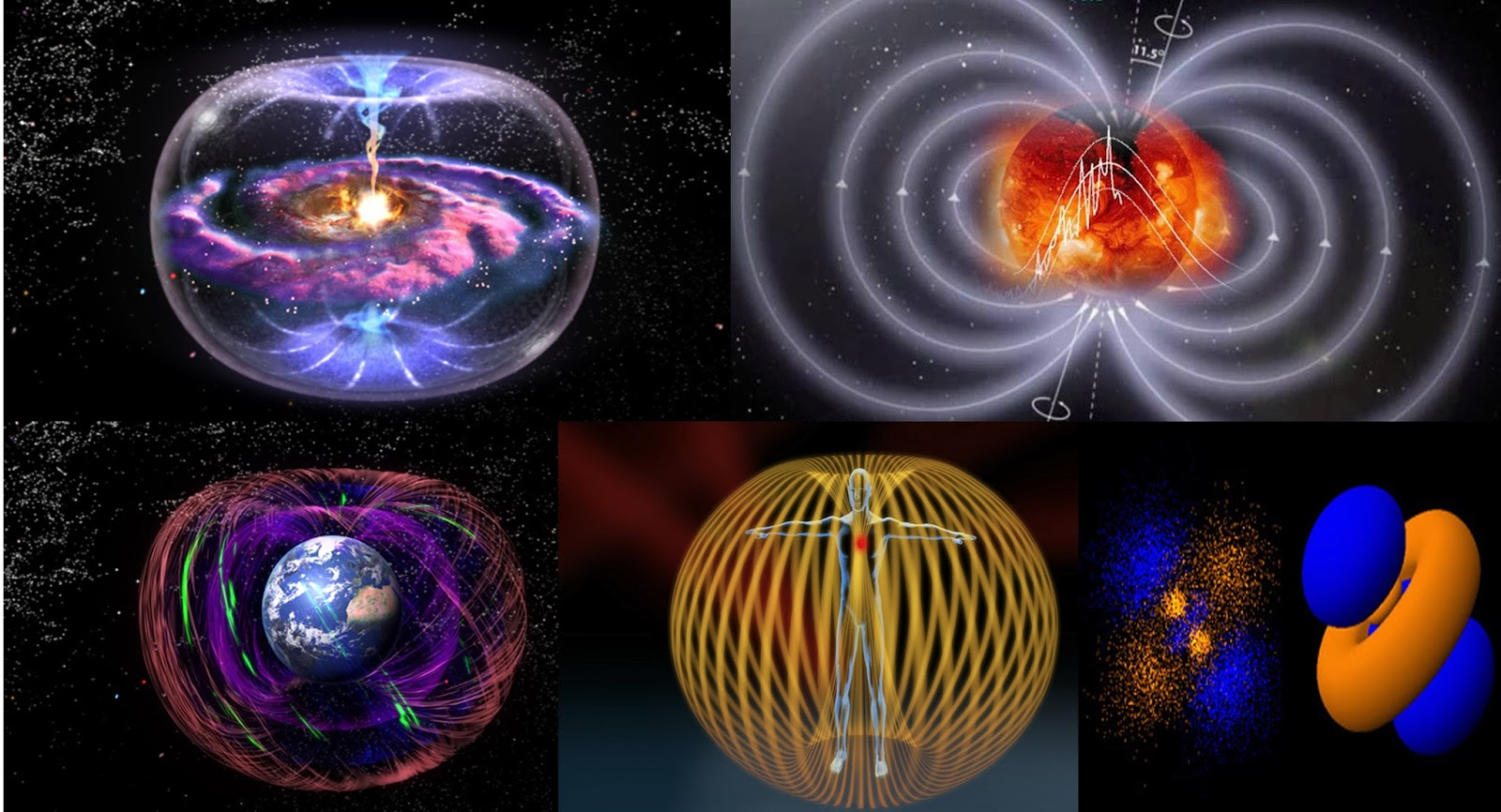 |
| Torus shape Re-Presented everywhere |
This also reminds me of the explanations of the universe described in the Law of One and Urantia Book, amongst many other works that discuss this material. The depictions below are inspired by the Book, and I offer them not because I hold the Urantia book as some pinnacle of absolute truth, but because the data in it is reflected in many works throughout human history; which do in fact reflect the truth. We as conscious beings naturally gravitate towards the truth. Like all things, there is always truth woven in to our experience.
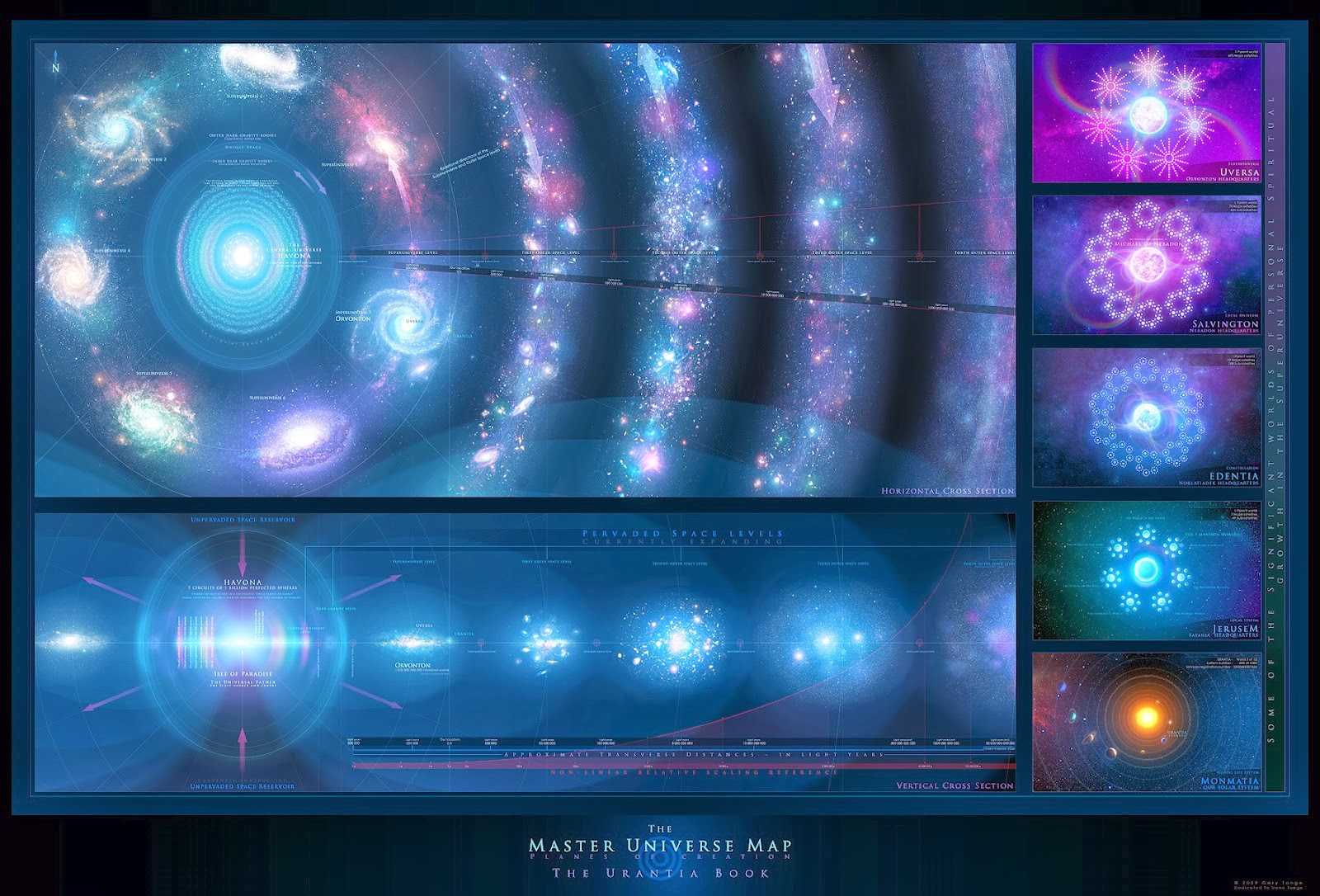 |
| Inspired by the Urantia Book: Master Universe Map (Notice how the Torus structure also presents itself in a lens flare form) |
 |
| Inspired by the Urantia Book: the Billion Perfect Spheres of Havona |
 |
| Inspired by the Urantia Book: the 7 Spheres of the Father, Son and Spirit |

What you’re looking at is the first direct observation of an atom’s electron orbital — an atom’s actual wave function! To capture the image, researchers utilized a new quantum microscope — an incredible new device that literally allows scientists to gaze into the quantum realm.
An orbital structure is the space in an atom that’s occupied by an electron. But when describing these super-microscopic properties of matter, scientists have had to rely on wave functions — a mathematical way of describing the fuzzy quantum states of particles, namely how they behave in both space and time. Typically, quantum physicists use formulas like the Schrödinger equation to describe these states, often coming up with complex numbers and fancy graphs.
Up until this point, scientists have never been able to actually observe the wave function. Trying to catch a glimpse of an atom’s exact position or the momentum of its lone electron has been like trying to catch a swarm of flies with one hand; direct observations have this nasty way of disrupting quantum coherence. What’s been required to capture a full quantum state is a tool that can statistically average many measurements over time.
But how to magnify the microscopic states of a quantum particle? The answer, according to a team of international researchers, is the quantum microscope — a device that uses photoionization microscopy to visualize atomic structures directly.
Writing in Physical Review Letters, Aneta Stodolna of the FOM Institute for Atomic and Molecular Physics (AMOLF) in the Netherlands describes how she and her team mapped the nodal structure of an electronic orbital of a hydrogen atom placed in a static (dc) electric field.

After zapping the atom with laser pulses, ionized electrons escaped and followed a particular trajectory to a 2D detector (a dual microchannel plate [MCP] detector placed perpendicular to the field itself). There are many trajectories that can be taken by the electrons to reach the same point on the detector, thus providing the researchers with a set of interference patterns — patterns that reflected the nodal structure of the wave function.
And the researchers managed to do so by using an electrostatic lens that magnified the outgoing electron wave more than 20,000 times.

Image: Examples of four atomic hydrogen states. The middle column shows the experimental measurements, while the column at right shows the time-dependent Schrödinger equation calculations — and they match up rather nicely.
Looking ahead, the researchers plan on using the same technology to look at how atoms react within a magnetic field.
You can read the entire study at Physical Review Letters: “Hydrogen Atoms under Magnification: Direct Observation of the Nodal Structure of Stark States.”
Supplementary sources: Physics World, American Physical Society.
Images: APS/Alan Stonebraker.
Source:
http://io9.com/the-first-image-ever-of-a-hydrogen-atoms-orbital-struc-509684901
Leave a Reply