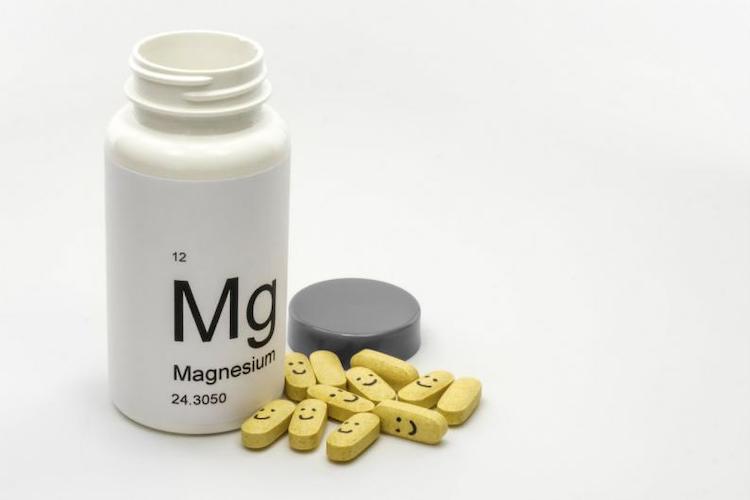
(Dr. Mercola) Magnesium1 is involved in hundreds of biochemical reactions in your body,2,3 and deficiency can contribute to significant health problems. Two common pathologies associated with magnesium deficiency are Type 2 diabetes4,5 and heart disease.
Related Antibiotics: Even Low Use in Children can Have a Negative Impact on Health – New Research
by Dr. Mercola, November 19th, 2019
According to one scientific review,6 low magnesium may actually be the greatest predictor of heart disease, and other recent research7 published in Open Heart journal suggests even subclinical magnesium deficiency can compromise your cardiovascular health.
As noted in a 2018 scientific review8,9 published in Open Heart journal, a “vast majority of people in modern societies are at risk for magnesium deficiency” due to “chronic diseases, medications, decreases in food crop magnesium contents, and the availability of refined and processed foods.”
According to this review, most fail to meet the recommended daily allowance (RDA) for magnesium; 48% of Americans do not get sufficient magnesium from their diet. Among postmenopausal women with osteoporosis, the rate of magnesium deficiency is 84%.10
Type 2 diabetics also tend to be more prone to magnesium deficiency, and magnesium depletion has been found in 75% of patients with poorly controlled Type 2 diabetes, the review states.11
Magnesium Protects Your Heart Health
Low magnesium has been linked to a higher risk for high blood pressure,12 stroke13 and sudden cardiac death.14 According to the Open Heart study authors,15 “most people need an additional 300 mg of magnesium per day in order to lower their risk of developing numerous chronic diseases,” and this includes heart disease and diabetes. Magnesium supports healthy heart function and helps prevent heart disease by:16
- Combating inflammation, thereby helping prevent hardening of your arteries
- Normalizing blood pressure
- Improving blood flow by relaxing your arteries and preventing your blood from thickening, allowing it to flow more smoothly
Magnesium Status Impacts Diabetes and Blood Pressure
Magnesium also plays an important role in diabetes, and this is not nearly as recognized as it needs to be. Low magnesium levels have been linked to a higher risk of insulin resistance, a precursor to Type 2 diabetes,17 as it impairs your body’s ability to regulate blood sugar, which is important for the prevention of Type 2 diabetes.18,19,20,21
In one study,22 prediabetics with the highest magnesium intake reduced their risk for blood sugar and metabolic problems by 71%, compared to those with the lowest intake. High levels of insulin in the blood, common with insulin resistance, also lead to further loss of magnesium.23
Most recently, a study24 published in October 2019 in the online issue of Diabetes Research and Clinical Practice again linked low magnesium levels with both diabetes and high blood pressure, both of which are risk factors for heart disease. As reported by the authors:25
“Across the quartiles of serum magnesium from high to low, the prevalence ratios for diabetes were 1.00, 1.35, 1.88, and 2.70, respectively. The presence of hypertension significantly increased the probability of diabetes along a wide range of low serum magnesium. A low intake of MRDP [magnesium related dietary pattern] was also positively associated with diabetes and high HbA1c.”
Buy Book The pH Miracle: Balance Your Diet, Reclaim Your Health
Other Studies Linking Magnesium Status to Diabetes Risk
An earlier meta-analysis,26 published in 2007, also found that magnesium intake was inversely associated with Type 2 diabetes incidence. This analysis included seven cohort studies looking at magnesium from either food or diet and supplements combined. According to the authors:
“All but one study found an inverse relation between magnesium intake and risk of Type 2 diabetes, and in four studies the association was statistically significant.
The overall relative risk for a 100 mg day increase in magnesium intake was 0.85. Results were similar for intake of dietary magnesium and total magnesium. There was no evidence of publication bias.”
Magnesium supplementation not only can lower your risk of Type 2 diabetes, but also has been shown to improve your condition if you already have full-blown diabetes. This was demonstrated in a 2018 study27 in the journal Nutrients.
Type 2 diabetics who took 250 milligrams (mg) of magnesium per day for three months saw a significant improvement in insulin levels and HbA1C (hemoglobin A1c, which is a marker of long-term glucose control) compared to controls.
As noted by the authors,28 “The results of this study matched previous studies that concluded that daily oral Mg supplementation substantially improved insulin sensitivity by 10% and reduced blood sugar by 37%.”
Are You Deficient in Magnesium?
The best way to ascertain your magnesium status is to do an RBC magnesium test, which measures the amount of magnesium in your red blood cells, along with tracking any signs and symptoms of magnesium deficiency, such as:29,30
| Seizures; muscle spasms, especially “charley horses” or spasms in your calf muscle that happen when you stretch your leg, and/or eye twitches |
| Numbness or tingling in your extremities |
| Insulin resistance |
| High blood pressure, heart arrhythmias and/or coronary spasms |
| Increased number of headaches and/or migraines |
| Low energy, fatigue and/or loss of appetite |
| The Trousseau sign31 — To check for this sign, a blood pressure cuff is inflated around your arm. The pressure should be greater than your systolic blood pressure and maintained for three minutes.By occluding the brachial artery in your arm, spasms in your hand and forearm muscles are induced. If you are magnesium deficient, the lack of blood flow will cause your wrist and metacarpophalangeal joint to flex and your fingers to adduct (illustrated in the video below). |
A more exhaustive list can be found in Dr. Carolyn Dean’s blog post, “Gauging Magnesium Deficiency Symptoms,”32 which will give you a checklist to go through every few weeks. This will also help you gauge how much magnesium you need to resolve your deficiency symptoms.
Buy Book Blood Pressure: 40 Super-food that will naturally lower your blood pressure
Get Tested Today
GrassrootsHealth, which is conducting consumer-sponsored research into vitamin D and omega-3, has now added magnesium to its nutrient research.
Their Vitamin D, Magnesium and Omega 3 PLUS Elements test kit is an excellent and cost-effective way to check the status of several vital nutrients, along with the essential minerals selenium, zinc and copper and the harmful heavy metals cadmium, lead and mercury.
Each kit contains instructions for how to collect your blood sample. You then mail in your sample and fill out a quick online health questionnaire through GrassrootsHealth.
Your participation in this research project will enable GrassrootsHealth researchers to provide accurate data about the magnesium status in the population, the level at which disease prevention is actually obtained, and guidance on dosing to achieve optimal levels.
All of this is crucial information that can go a long way toward improving public health. As explained by GrassrootsHealth, questions about magnesium that this particular project aims to provide answers for include:33
- What specific health outcomes are associated with this nutrient for me, for the total group?
- How can I figure out how much to take? What’s the dose-response relationship for all? For me?
- Does it matter if I’m also taking vitamin D? Omega-3?
- Does it matter what compound of this nutrient I take? What time of day? How often?
- What are the demonstrated health outcomes used to create this nutrient’s recommended range?
Your test results will be emailed to you in about 10 to 20 days after your samples are received. Your health data are used anonymously. Please note that 100% of the proceeds from the kits go to fund the research project. I do not charge anything extra as a distributor of these test kits.
Why Most People Need More Magnesium
One of the reasons why magnesium insufficiency or deficiency is so common, both among adults34 and teens,35 is in part due to the fact that most people don’t eat enough plant foods. Magnesium is actually part of the chlorophyll molecule responsible for the plant’s green color.
If you frequently eat processed foods, your risk of deficiency is magnified. That said, even if you eat plenty of greens you might still need to take a supplement, as most foods are grown in mineral-depleted soils and are thus much lower in magnesium than they have been historically.
Magnesium absorption is also dependent on having sufficient amounts of selenium, parathyroid hormone and vitamins B6 and D, and is hindered by excess ethanol, salt, coffee and phosphoric acid in soda.
Buy Book Eat, Treat, and Beat Gout Naturally: Natural Gout Management Include 68 recipes
Sweating, stress, lack of sleep, excessive menstruation, certain drugs (especially diuretics and proton-pump inhibitors) also deplete your body of magnesium.36 For these reasons, most people probably need to take supplemental magnesium. Taking a magnesium supplement is particularly advisable if you:37
| Experience symptoms of insufficiency or deficiency38 |
| Have high blood pressure |
| Engage in strenuous exercise on a regular basis — Research39 shows just six to 12 weeks of strenuous physical activity can result in magnesium deficiency, likely due to increased magnesium demand in your skeletal muscle |
| Are taking diuretics or medication for high blood pressure, especially thiazides, which have been shown to induce undetectable magnesium deficiency40 (while patients may have normal or even high serum magnesium, their bodies are actually depleted of magnesium) |
| Have had or are planning heart transplant or open heart surgery |
| Are at risk for or have had a heart attack, or if you experience ventricular arrhythmia |
| Have congestive heart failure |
| Are insulin resistant or diabetic (as this increases magnesium depletion) |
Eat More Magnesium-Rich Foods
The recommended dietary allowance for magnesium is around 310 to 420 mg per day depending on your age and sex,41 but many experts believe you may need 600 to 900 mg per day.42
Personally, I believe many may benefit from amounts as high as 1 to 2 grams (1,000 to 2,000 mg) of elemental magnesium per day, as most of us have electromagnetic field exposures that simply cannot be mitigated, and the extra magnesium may help lower the damage from that exposure.
If your veggie consumption is low to begin with, consider including more magnesium-rich vegetables in your daily diet. Dark-green leafy vegetables lead the pack when it comes to magnesium content, and juicing your greens is an excellent way to boost your intake.
Other foods that are particularly rich in magnesium include natto, raw cacao nibs, unsweetened cocoa powder, avocados, pumpkin and sesame seeds, and herbs like chives and basil.43 One way to check your daily magnesium intake from foods is to use a free online nutritional tracker such as Cronometer.
Other Ways to Boost Your Magnesium Level
If your magnesium intake from food is found lacking, it would certainly be wise to supplement, either orally or topically. For oral supplementation, my personal preference is magnesium threonate, as it appears to be the most efficient at penetrating cell membranes, including your mitochondria and blood-brain barrier.
As a general rule, I recommend starting out on a dose of 200 mg of oral magnesium citrate per day, gradually increasing your dose until you develop slightly loose stools. To use this method, you need to use magnesium citrate, as it’s known for having a laxative effect. Once you know your cutoff, you can switch to other forms if you like. Other effective ways to boost your magnesium level include:
•Taking Epsom salt (magnesium sulfate) baths, as the magnesium will effectively absorb through your skin.
•Using a topical solution — I prepare a supersaturated solution of Epsom salt by dissolving 7 tablespoons of the salt into 6 ounces of water and heating it until all the salt has dissolved. I pour it into a dropper bottle and then apply it to my skin and rub fresh aloe leaves over it to dissolve it.
This is an easy and inexpensive way to increase your magnesium and will allow you to get higher dosages into your body without having to deal with its laxative effects.
Magnesium can be taken with or without food. If you’re also taking calcium, take them together. If you exercise regularly, consider taking your calcium and magnesium in a ratio of one part calcium to two parts magnesium with your pre-workout meal.
While the ideal ratio of magnesium to calcium is thought to be 1-to-1, most people get far more calcium than magnesium from their diet; hence, your need for supplemental magnesium may be two to three times greater than calcium.
found on Waking Times
Stillness in the Storm Editor: Why did we post this?
Health is an important human value. Almost everyone, regardless of political affiliation, national origin, or religious association, values being healthy, free of disease and able to pursue their dreams and values. The preceding information discuses health in some capacity, either by alerting the public to poor health choices or suggesting better ways of living for optimum health. With health freedom in hand, which is a primary survival need of all living creatures, the individual can be liberated from fear of personal suffering. This leads to the capacity for holistic thinking, playfulness, and inspired living—activating our capacity to thrive.
– Justin
Not sure how to make sense of this? Want to learn how to discern like a pro? Read this essential guide to discernment, analysis of claims, and understanding the truth in a world of deception: 4 Key Steps of Discernment – Advanced Truth-Seeking Tools.
Stillness in the Storm Editor’s note: Did you find a spelling error or grammatical mistake? Send an email to [email protected], with the error and suggested correction, along with the headline and url. Do you think this article needs an update? Or do you just have some feedback? Send us an email at [email protected]. Thank you for reading.
Source:
https://www.wakingtimes.com/2019/11/19/low-magnesium-linked-to-diabetes-and-high-blood-pressure/
Leave a Reply