
| Image Source. |

Dr. Jordan B Peterson is a clinical psychologist and professor of psychology at the University of Toronto, in Canada. In 2016, he began speaking out against draconian legal policies put forth by radical social justice groups that are calling for what is known as an equity standard of social policy. This would replace equal opportunity with equality of outcome—a goal that seeks to ensure everyone can accomplish the same thing, regardless if they have the skills or desire to do so. But this policy seems to be contradictory of reality itself.
It seems relatively innocuous to suggest that we should have a social policy that provides guarantees for people—that someone should expect the same outcome as their peers. But the problem with this view is that it discounts personal work and seems to suggest that the benefits of labor, determination, and industriousness should be given to people who have not worked for them.
Is this even a valid concept? Should people expect accomplishment from things they didn’t work for?
Consider that life skills are developed through the fires of determination and dedication. A musician becomes better via practice. An artist learns to paint via trial and exploration. Accomplishment, in this sense, comes from personal growth, which not only imparts skill but feels satisfying. And with this skill, a person can produce abundance for others to enjoy. In fact, if one looks at how goods and services have been produced in history, an individual is always found at the source of the innovation.
Almost all inventions in the modern world flowed through an inspired person who wasn’t afraid to fail, working with passion to realize their vision. Furthermore, society is founded on the fact people are well springs of creativity and abundance. But if the concept of work, strife, and trial are now coming under fire—who will innovate the inventions of tomorrow? Who will be willing to fail, sometimes many times over, before the sweetness of success is savored?
All reward comes with risk. All successes are usually preceded by many failures.
The focus shouldn’t be on creating a system that leads people to believe failure should be avoided—the focus should be on teaching people how to embrace challenges so they can grow in wisdom and life skill. Instead of finding ways to encourage people to be less productive, we should be teaching them how to face life with grace so as to improve their productivity. If everyone received this kind of love and support most likely the world would be a much more happy and abundant place.
It is foundational that individuals in a society develop themselves so as to contribute to it productively. If everyone does this well enough, all people benefit from the abundance produced accordingly. This suggests that the more personal skill and development increase in a population, so do standards of living.
But to claim that a person can be “given” accomplishment from society—as some kind of guarantee independent of skill developed—is a dangerous thing. It takes entitlement to a whole new level and it dissolves the foundation upon which society is built—an aggregate of individual contributions to a social whole.
The hard truth that some seem to have trouble facing is that what we spend our time on determines who or what we become. Time, in this sense, is one of our greatest resources. But via escapism, most people in the modern world spend what little time they do have on entertainments that impart no life skill.
If you fail to develop yourself, you won’t have accomplishment—no amount of legal policies can change that.
But, a policy can give someone a false sense of accomplishment, which actually prevents real development from taking place. And if this false sense is all anyone has ever known, they’ll confuse it for real accomplishment.
Additionally, People tend not to work hard at developing themselves when they feel that they have already accomplished something—after all, necessity is the mother of invention.
But there is more to this policy.
The policy also requires a person to take an Implicit Association Test, which is designed to measure your unconscious biases, specifically for determining racial prejudice. If such a test identifies prejudice, the individual would be required to undergo a process to alter their biases.
In other words, unconscious attitudes—which are by definition beyond perception—are now recognized as actual racist leanings, subject to treatment using some kind of subconscious manipulation process. Translation: If you don’t think the way the State wants, you have to get a “tune up”—you have to go through mind-altering treatment. This is actually codified in the legal policy, according to Dr. Peterson.
Side note: Racism is not unconscious, although one can unconsciously act in ways that are associated with racism due to social conditioning. That is to say, a person who consciously believes that one race is inferior to another (racism) is different than someone who was raised in a racist environment and unwittingly acts with prejudice—the latter person may not consciously hold racist beliefs. The difference seems immaterial from an external perspective, as both people might act in a way that can be viewed as racist. But the cultural racist is much more likely to alter their stance because, ultimately, they don’t consciously hold a racist ideology. Such persons should be handled differently than overt racists, as the below article suggests.
Related Meet The Black Man Who Made Hundreds Of Racists Quit The KKK By Befriending Them
Trying to treat someone without a racist view as if they were a racist (based on unconscious biases) is clearly an unjust situation, and will likely lead to more problems than good.
The scary part is that the policy seeks to mandate mind alteration programs for those with “racial biases,” based on factors that don’t consider what racism truly is. Given this, it appears the covert goal of this legislation is to acclimate the public to thought policing—a very disturbing thing to consider when one of the last bastions of freedom—the mind—is coming under assault.
Combine this equity policy with the growing radicalization of social justice, and a perfect storm situation seems to be brewing.
Related 5 Things You Should Know About Social Justice & Universities
Peterson’s position of speaking out against this policy is founded on a deep understanding of psychology and how the human psyche works, owing to the fact he actually helps people psychologically.
Without this critical knowledge in hand, such policies can seem fair and beneficial. Furthermore, when one considers the destruction of critical thinking in educational systems, then newer generations can be easily conscripted into radical ideologies, largely founded on a half-wits comprehension of what is at play.
For those capable of recognizing the socially destructive potential of equity policies, it is very important to continue to gain knowledge so as to speak clearly with others who do not know. And to learn non-confrentational methods of engaging with others so that real change can take place.
Intolerance for those who act intolerantly only breeds more intolerance.
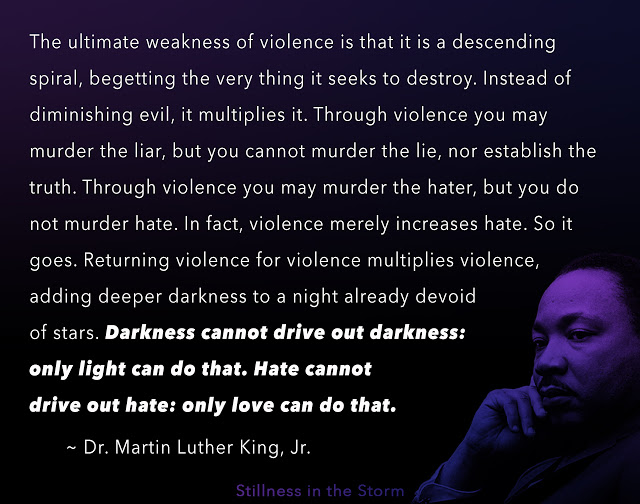
Ultimately, it appears that psychology and political correctness have become weapons in the war for control over the mind. And such battles cannot be won if those with knowledge and wisdom remain idle or wield their insights like weapons.
In an age of deception, seeking truth and sharing it with others is an act of self-preservation and loving altruistic service.
What do you think? How should we discuss this issue of equality? Share your thoughts below.
Published on Mar 2, 2017
A few weeks ago, Dr. Oren Amitay, who has been defending me in online discussions hosted by the Ontario Psychological Association, invited me to address his psychology class (to which other students were invited). We discussed freedom of speech, ideological possession, unconscious bias and the Implicit Association test, and other issues germane to psychology and the modern world.
Also see:
The preceding text is a Stillness in the Storm original creation. Please share freely.
About The Author
Justin Deschamps is a truth seeker inspired by philosophy and the love of wisdom in all its forms. He was formally trained in physics and psychology, later discovering the spiritual basis of reality and the interconnected nature of all things. He strives to find the path of truth while also walking it himself, sharing what he knows with others so as to facilitate cooperative change for a better future. He is a student of all and a teacher to some. Follow on Twitter @sitsshow, Facebook Stillness in the Storm, and steemit @justin-sits.
Like our work? Support this site with a contribution via Paypal.
This article appeared first on Stillness in the Storm.
This article (University Professor Speaks Out Against Anti-Free Speech Laws — Weaponized Psychology and Political Correctness ) by Justin Deschamps originally appeared on StillnessintheStorm.com and is free and open source. You have permission to share or republish this article in full so long as attribution to the author and stillnessinthestorm.com are provided. If you spot a typo, email [email protected].
_________________________
Stillness in the Storm Editor’s note: Did you find a spelling error or grammar mistake? Do you think this article needs a correction or update? Or do you just have some feedback? Send us an email at [email protected] with the error, headline and url. Thank you for reading.
Leave a Reply