(Andrew Joyce, Ph.D) “Being children of this world, pompous, cunning, fake, self-seeking, etc., it is certain that they fit religious life very badly and that it is impossible to maintain union with them. If those of this blood are made superiors, they employ almost all their government in external things: they promote genuine mortification and solid virtues very little, and seem to be merchants, seeking first seats and being called rabbis; they are hardly eager to seek perfection that is described in the parts 5 and 6 of the Constitutions; and readily admit others of the same blood who are very unworthy.”- Manuel Rodrigues, Jesuit curia in Rome.
Related Forbidden Archeology the Very Ancient History of Humankind
Source – TheOccidentalObserver
by Andrew Joyce, Ph.D, December 27th, 2017
The Racial Struggle for the Jesuit Order
The complaints of native Spanish members of the Society of Jesus, regarding the crypto-Jewish Jesuit elite, are remarkably uniform. Predominant among their concerns was the Jewish tendency towards monopoly, nepotism, arrogance, aggressive ambition, and an air of insincerity in the practice of Christianity. Of particular concern was the fact that the Spanish Jesuit Order was becoming an exclusive enclave of influential Jews that stretched out even into the heart of Rome.
The epigraph above, from Manuel Rodrigues, highlights all of these themes, some of which have been empirically demonstrated. For example, the body of research compiled by Maryks and other scholars, and discussed in Part 1, more than provides sufficient evidence in support of the accusation that crypto-Jews were “readily admitting others of the same blood.” Moreover, Benedetto Palmio, an Italian assistant to two native European Jesuit Superior Generals (Francisco de Borja and Everard Mercurian), complained of the “multitude and insolence of Spanish neophytes,” whom he described as a “pestilence (133).” Stressing that “where a New Christian was found, it was impossible to live in peace,” he added that “those who governed in Rome were almost all neophytes. … This sort of people and almost no other were being admitted in Spain (133).” King Phillip II of Spain had by the 1570s taken to describing the Jesuits as a “Synagogue of Hebrews.” (133)
The method of leadership employed by this crypto-Jewish elite was further described by Palmio as despotic. The crypto-Jewish elite in Rome was behaving “not as fathers but as masters (135).” Reflecting age-old Jewish ethnic networking, there were gross ethnic disparities in promotions to high office, with Palmio stressing that “the neophytes want to dominate everywhere and this is why the Society is agitated by the tempest of discords and acrimonies (138).” Conversos were “overly ambitious, insolent, Janus-faced, pretentious, despotic, astute, terrible, greedy for power, and infamous.” (142) Lorenzo Maggio, an Italian Jesuit curia in Rome, complained that “those from the circumcision subverted the entire house of the Society.” (117)
Regardless of the actual origins of the Jesuit Order, which were heavily Jewish and intertwined with the search for political influence from the beginning, many native European members seem to have perceived the Society of Jesus as an essentially good religious movement that had been founded on idealist and pious terms, but had been corrupted along the way by the infiltration of power-seeking crypto-Jews. It is of course essential to note that such perceptions were not unique to the Society of Jesus. Around the same time that agitation was building within the Jesuit Order, Bishop Diego de Simancas of Zamora urged his parishioners to combat the machinations of the conversos and their activities in “deceiving the pope and his ministers (31).” Simancas, like Rodrigues, Palmio, and Hoffaeus, concluded that conversos were prone to “ambition, conspiracy, and greed for power” as demonstrated by the fact they had “infiltrated the offices of importance in the Church of Toledo.” (34–5)
In order to combat crypto-Jewish nepotism and extensive ethnic networking, native European Jesuits developed very interesting counter-strategies that in many respects mirrored their Jewish counterparts. Again, the patterns seen here should be regarded as broadly supportive of Kevin MacDonald’s analysis of the reactive nature of anti-Semitism in Separation and Its Discontents, where one of the key chapters concerns National Socialism as a mirror image strategy. What non-Jewish Jesuits essentially did in the early stages of the revolt from below, was, like their crypto-Jewish opponents, to establish their own secretive networks based on racial exclusion, and the selection of their own preferred candidates based on ethnic preference.
The stage for this clash was set following the death of the third Superior General, Francisco de Borja, in 1572. Until this date, non-Jewish Jesuits had endured the philo-Semitic leadership of Loyola and the rampant ethnic nepotism of the converso Diego Laínez. Borja was himself described as a “protector of conversos” during periods of rising tension (115). After Borja’s death, it was readily apparent that the crypto-Jewish Jesuit elite had already contrived to select the converso Juan Alphonse de Polanco as his successor. (xxv) Polanco had already been appointed Society secretary by Loyola in 1547, before becoming senior administrator in the general curia in Rome. Incredibly influential, and “the most prominent figure in the Society of Jesus,” his selection should have been “open and shut.” However, as Maryks discusses, by this date “a close-knit anti-converso party [composed mainly of the Jesuit representatives from outside Spain] gained ground within the society.” (xxv)
In spite of the significant pro-converso presence at General Congregation 3 [General Congregations are “the supreme legislative body of the Society of Jesus consisting of major (‘provincial’) superiors and locally elected representatives”], the close-knit Italo-Portuguese lobby gained ground in the assembly and was crafty enough to successfully conspire against Polanco’s election and his pro-converso supporters. (120)
As well as forming a close-knit group based on ethnicity, the counter-strategy mirrored Jewish tactics by appealing for support from elites. The Portuguese delegation led by Leão Henriques “secretly carried to Rome a letter that Henriques’s penitent, Cardinal Infant Henry of Portugal (1512–80), had written to Pope Gregory XIII on 22 January 1573. In it, the Grand Inquisitor of Portugal and future king (1578–80) demanded that neither a converso nor a pro-converso candidate be elected superior general of the Society of Jesus, and he warned that if no measure against the converso evil is taken, the Society would risk destruction.” (121)
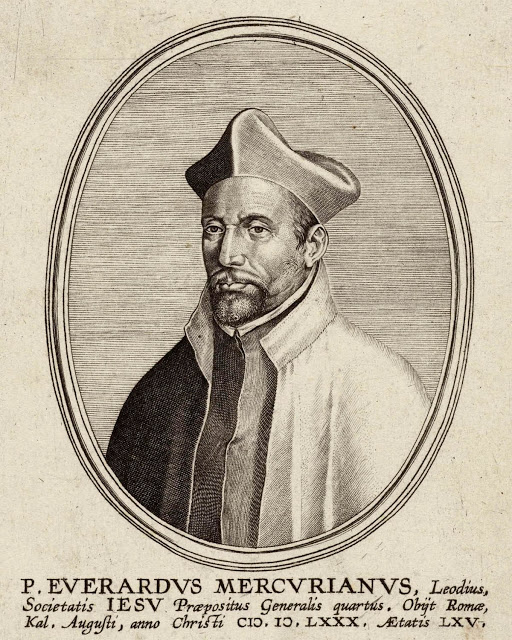
Pope Gregory XIII soon disclosed his support for a non-Spanish alternative to Polanco, who, in turn, indicated that he would step aside but refused to prohibit other “Spanish” candidates from being elected superior general. After the congregation opened, Gregory XIII inquired about the procedures of the congregation, about the number of Spaniards among the voters, and about the national background of the previous superiors general. Gregory “remarked that somebody should be chosen from a nation other than Spain, and, in spite of Polanco’s protest against limiting freedom of conscience of the electors, the pope specifically suggested the name of the Walloon Everard Mercurian, then dismissed the delegation with his blessing (122).” Consequently, while the converso Antonio Possevino was “addressing the congregation with an opening discourse, Cardinal Gallio of Como arrived and informed the congregation that he was representing the pope’s will to prevent the election of any Spanish candidate.” (122) The next day the assembly chose Everard Mercurian as the next superior general on the first ballot by a majority of 27 votes.
From the very first years of his office Mercurian proceeded, in his own words, to “cleanse the house.” He “removed from Rome (and possibly from Italy or even Europe) many converso Jesuits.” (123) Polanco, after almost three decades in office, “was moved away from Rome and sent to Sicily, a measure that seemed too harsh even to his major enemy, Benedetto Palmio.” (123)
However, in the aftermath of the removal of crypto-Jews from influence throughout the upper echelons of the Society of Jesus, a new movement emerged within the Spanish Jesuits called the memorialistas or memorialists. The group got its name from ‘memorial,’ which was a literary genre consisting of a written statement of facts presented in conjunction with a petition to a royal or religions authority. The memorialistas gained their name by sending “secret memorials to the Spanish Court and Inquisition, and the Holy See, asking for the reform of the Jesuit Institute, and, especially, for the autonomy of the Spanish Jesuit provinces.” (125–6) These memorials were highly divisive and destructive, seeking essentially to fracture the Society and to allow the conversos to recoup their power base in Spain.
This movement was little more than a damage-limitation exercise by the crypto-Jewish elite. Ousted from Rome, and suspected by the Portuguese, the goal was to consolidate their power in Spain and prevent further anti-converso measures from encroaching on their long-held power positions. As Maryks points out, “it must be admitted that many of its members, if not the majority, were of converso background.” (125) The memorialist movement was certainly widely perceived by contemporaries as a Jewish revenge movement, and Maryks clearly agrees with this perception. One of their key leaders was the converso Dionisio Vázquez, and Maryks remarks that “one could argue that Vázquez’s active role in the memorialistas movement was a sort of revenge for the discriminatory policy of Mercurian.” (126).” The anti-converso Benedetto Palmio “never doubted that conversos were behind the vindictive memoralistas movement.” (128)
As the struggle began to intensify, in 1581 another Italian anti-converso, Claudio Acquaviva, was elected as Mercurian’s successor. Acquaviva appointed a number of leading anti-converso Jesuits (including Manuel Rodrigues, Lorenzo Maggio, and the Rhinelander Paul Hoffaeus) to key positions in Rome, tasked with extending the anti-converso measures employed by Mercurian beyond the Roman power structure and into the wider Jesuit network. Maryks writes that the decade-long activities of Hoffaeus, Maggio, and Rodrigues, “effectively led to gradual restrictions in the admission into the Society of candidates of Jewish ancestry.” (146)
It is particularly interesting that much of this activity was carried out in a cryptic and secretive manner in which the ethnic aspect of the struggle was always kept just out of view — again mirroring the nature of the converso strategies to gain and extend influence. For example, in 1590 Acquaviva sent “secret instructions” to Spanish provincials operated by native Spanish, or ‘Old Christian,’ Jesuits in which he made clear the necessity of secrecy:
In regards to the offices of government, we should be careful not to give them to these people [conversos] in certain key places.… In what regards the admission of this people in order not to give occasion of bitterness to many in the Society, we have judged to be inappropriate to prohibit universally the admission of those who somehow have this defect. It is necessary to use more selectivity and diligence in the admission.… At any rate, [genealogical investigations] should be done quietly and when somebody has to be excluded, it would be convenient to give some other apparent causes and reasons for his dismissal, so that it could not be understood or affirmed with certainty that a person is barred from admission because of his lineage (147).
Faced with bitter responses from within the Spanish Jesuit Order, a few years later Acquaviva’s stance had hardened further, prompting him to issue a decree that those
who are descendants from parents who are recent Christians, routinely and habitually inflicted a great deal of hindrance and harm on the Society (as has become clear from our daily experience)…The entire congregation then decided to decree, as is affirmed by this present decree, that in no case may anyone of this sort, that is to say, one of Hebrew or Saracen stock, be admitted to the Society in the future. And if by error any such person is admitted, he should be dismissed as soon as the impediment is revealed, at whatever time before profession this occurs, after first notifying the superior general and awaiting his reply. (149)
Maryks states that at this point “the lineage-hunting season began,” and the removal of all persons of Jewish ancestry from the Society of Jesus commenced in earnest.
Early Modern Jewish Apologetics
Defeated and marginalized, the crypto-Jewish elite turned to issuing a long series of memorials that in many respects resemble prototypes of modern Jewish apologetics/propaganda of the kind issued by the ADL. For example, in a previous essay I noted the importance of the modern tactic of rhetorically displacing ‘foreignness’ away from Jews and onto the hostile movement itself:
Jews have regularly relied upon a fall-back tactic of presenting the troublesome movement as a foreign import…An excellent example of this, of course, would be Hillary Clinton’s ludicrous claim that the Alt Right has somehow been spawned by Putin’s Russia. Since most of her speech originated with the SPLC, we may assume that this particular accusation may be traced to a Hebraic hand. Another bizarre theory of the Alt Right’s foreign origins originating with the SPLC: Mark Potok has weighed in with the strange contention that the Alt Right “began as an anti-Muslim movement in Europe and has been spreading in this country since about 2008.”
And the list goes on. UK-based Jewish journalist Jonathan Freedland, who has a long history of activism against Whites, has penned an article titled “Donald Trump’s achilles heel is that he is truly un-American.” Freedland argues that America’s founding principle is “the belief that national identity did not reside in blood or soil, but in loyalty to the nation’s constitution and its bill of rights”—a clear indication that he has little acquaintance with American history. He continues that, “these moves by Trump are not just reactionary or bigoted or dangerous. They contradict the ideals that all Americans are meant to regard as sacred. Perhaps this is the way to attack Trump: as truly un-American. He says he wants to make America great again. The truth is, he would stop America being America.”
Further Jewish participants in the effort to portray Trump as un-American include but are not limited to: the editorial board of the Washington Post led by the Jewish Martin Baron; the Jewish journalist Franklin Foer; and Jewish talk show host Jerry Springer. Jewish businessman Josh Tetrick also purchased a number of expensive full-page ad spaces in the New York Times aimed at pushing the ‘Trump as un-American’ meme…In all cases, both Trumpism and the Alt Right are portrayed by Jews as a foreign incursion into American political life. As with other tactics, these have a long lineage. Kevin MacDonald writes that “Jewish organizations in Germany in the period 1870–1914 argued that anti-Semitism was a threat to all of Germany because it was fundamentally ‘un-German.’’”[1] In nineteenth-century Germany, anti-Semitism was often described by Jews as a French import. Conversely, Paula Hyman writes that, faced with a rise in anti-Jewish feeling in nineteenth-century France, Jews spread the message that anti-Semitism was “un-French” and a “German import.”[2] Thorsten Wagner reports that it was a common refrain among Jews in Denmark that anti-Semitism there was “a German import — without autochthonous roots and traditions.”[3]
There are countless more examples from countless other countries. The tactic therefore relies on convincing the population that Jews are not the foreign threat but rather that it is the growing volkisch movement that is the foreign entity threatening the nation. Although it’s an absurdly perverse claim, and hard to imagine as being successful, Jews are able to spread the message because of their superior media and political power (as seen with Tetrick’s efforts). This power has ensured that portrayals of nationalist movements as ‘foreign’ have been tactically effective in the past.
Crypto-Jewish Jesuit responses to the European counter-strategy are strikingly similar to these modern instances in that they also heavily relied on attempts to displace the sense of foreign threat away from themselves and onto the movement hostile to their interests. For example, the most ferocious and prolific written responses to the ousting of the conversos were penned by the converso and high-ranking Italian diplomat Antonio Possevino, who had been removed from office by Mercurian and sent to remote Sweden. Isolated and powerless in the cold north, Possevino declared that it was figures like Benedetto Palmio who were truly ‘un-Christian’ and in fact little more than “pagans (164–5).” Remarkably, and with much chutzpah, Possevino attributed all of the disruption within the Society of Jesus to the “overweening ambition of the Portuguese Jesuits (171–2).” Possevino blatantly lied in his propaganda about the nature of the memorialistas, suggesting the movement was part of a “Portuguese conspiracy” to undermine Jesuit unity (171–2). Maryks comments bluntly on Possevino’s text that the majority of memorialists were in fact “undeniably conversos.” (172) Finally, Possevino’s apologetics also contain another aspect that prefigures modern propaganda — the idea that Jews are a natural and moral elite, typically combined with contempt for the rural masses. Possevino blamed “envious and talentless men from poor, rural backgrounds” (168) for the agitation against the conversos, while asserting that “in terms of their virtue and dedication, [conversos] represent an elite within the Society.” (172)
Conclusion
The Jesuit Order as a Synagogue of Jews is an important contribution to the study of religion and ethnic conflict in early modern Spain. Although not suited for beginners to any of the themes under discussion, the book is concise, and its four chapters are filled with new information sure to fascinate the reader with some prior knowledge of the Jesuits, Spanish history, or the Jewish Question in Europe.
My only real criticisms rest on matters of style and structure. Maryks’ writing style is often mechanical, and one sometimes feels that, while the material lends itself to a dramatic narrative, that potential is lost amid bland observations and repetitive recourse to lamenting the “bias” and “discrimination” of the “Old Christians.” Certainly this is a book in which the facts, rather than the author’s analysis, lead the way. As regards structure, the text has an irritating habit of repetition, particularly in terms of persistently re-introducing characters we would already be familiar with. I found this especially disappointing because of a normally high quality of editing from Brill.
These minor irritations aside, The Jesuit Order as a Synagogue of Jews was a page-turner. Perhaps best of all, it’s now been made available to download for free as part of Brill’s open source initiative. Enjoy.
_________________________
Stillness in the Storm Editor’s note: Did you find a spelling error or grammar mistake? Do you think this article needs a correction or update? Or do you just have some feedback? Send us an email at [email protected] with the error, headline and url. Thank you for reading.
Leave a Reply