
(Exploring Your Mind) The prevalence of depression is higher in women. However, according to several studies, this psychological condition may have worse consequences in men.
Related Existential Depression in Highly Intelligent People
by Staff Writer, August 17th, 2021
Men and women experience depression differently. In fact, although suffering, anguish, and emotional pain are the same in both sexes, the way of managing the symptoms, and even of acting in the face of this condition, usually differs. We know, for example, that the probability of suicide in men is higher.
Our knowledge of how depression develops is now greatly improved. When it tended to be largely associated with women, many men were reluctant to seek help. In fact, there are still many who internalize discomfort or seek to camouflage it with counterproductive behaviors, like drinking alcohol.
Nowadays, clinicians are able to identify the symptoms of depression in each sex. This allows them to better understand the disorder and to act more effectively. However, the most important thing, without a doubt, is that people themselves become aware of their problem and take the step of requesting support.
On average, men show symptoms of depression through increased irritability and moodiness. They even have a tendency to somatize their symptoms much more.
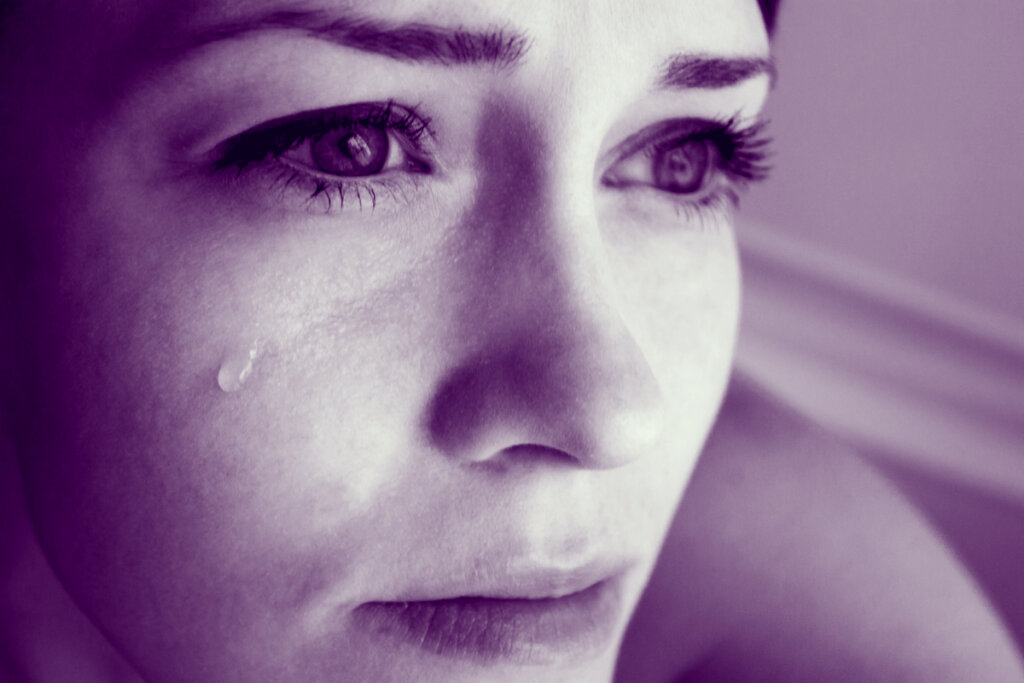
Depression is different in men and women
In the first place, we might say that it’s social and cultural factors that have caused depression to be experienced differently by each sex. As a matter of fact, although it’s true that the assessment of mental health is gradually becoming widely accepted in our society, there are still areas where it continues to be a taboo subject. Where shame, fear of criticism, and misunderstanding are still very present.
However, if depression is different in men and women, is the origin always social? Is it men’s reluctance to ask for help that sets them apart? The answer is no. There are, in fact, biological factors.
Depression is more prevalent in women
The University of Ottawa (Canada) conducted research in this regard. The study indicated that the incidence of depression in women is 5.8 percent, compared to 3.5 percent in men. This difference is significant. Furthermore, it’s important to point out that, during childhood, depressive disorders are more common in boys than in girls. While in old age, the incidence is more equal.
However, what explains the higher rate of depression in women? The causes are usually the following:
- The higher prevalence of depression in women is often correlated with hormonal changes.
- Experts believe that there may be a confluence of particular hormonal and neurodevelopmental changes during the transition to puberty. These may predispose the female to a greater likelihood of suffering from depression.
- Factors such as pregnancy, miscarriages, fertility problems, post-natal depression, and other changes linked to perimenopause and menopause are extremely important factors.
Triggers, another peculiarity
It’s important to clarify that each person is unique and that the triggers of depression aren’t always clear. Usually, there are social, environmental, personal, and genetic variables. However, on average it’s usually observed that internalizing factors abound in women. However, externalizing factors are more common in men.
What do we mean by internalizing and externalizing variables? Internalizing variables are linked to interpersonal relationships. For example, bad relationships with family, partners, work colleagues, or children are often the cause of depression in women. On the other hand, the incidence of violence within a couple is another impacting factor.
With regards to men, externalizing factors might be job loss, financial problems, not being able to achieve their proposed objectives, or being unable to develop in their professional careers.
The different symptoms that men and women experience
The University of Wisconsin (USA) conducted research concerning gender differences in depression. Knowing how the symptoms vary between the sexes, helps us understand how men and women experience depression differently.
Here are the findings of the study:
- Women tend to exhibit greater apathy, anguish, and sadness. However, men experience more bad moods and irritability.
- Men show greater “escapist” behaviors. For example, they might go to the gym to avoid thinking. Or, they resort to risky behaviors to feel strong emotions.
- Women are more likely to seek help and support from their environment. Nevertheless, they may tend to deny their situation and mood changes. On the other hand, it’s common for men with depression to engage in addictive behaviors.
Ronald Levant, former president of the American Psychological Association (APA), coined the term male alexithymia to define the difficulty that some men often have when it comes to understanding their state of mind and expressing it. This factor may be a common trigger in depression.

Men have higher suicide rates
The most problematic factor is undoubtedly the high suicide rate in males. In fact, it’s a reality that we should be far more aware of. Usually behind these kinds of people are untreated, unidentified, or poorly treated major depression. For this reason, adequate awareness and prevention measures should be developed.
Mental health campaigns should also be targeted towards men. They should seek to normalize the disorder of depression and emphasize the importance of seeking expert help. Indeed, we need primary care professionals to identify this reality early. That’s because it often hides behind other symptoms like headaches, digestive problems, or sleep disturbances. Work environments should also address the need to create multidisciplinary occupational health departments and teams.
In essence, although we know that depression is different in men and women, it’s men who generally experience the most extreme symptoms. Women tend to need more assistance in those aspects related to pregnancy, gestational losses, and the post-natal period, etc.
If we know how depression manifests itself in people’s lives and we attend to the particularities of each gender, we’ll surely develop more effective care strategies. Indeed, that’s the ultimate goal.
Support this site so we can continue to tell you the truth.DONATE HERE
Stillness in the Storm Editor: Why did we post this?
The news is important to all people because it is where we come to know new things about the world, which leads to the development of more life goals that lead to life wisdom. The news also serves as a social connection tool, as we tend to relate to those who know about and believe the things we do. With the power of an open truth-seeking mind in hand, the individual can grow wise and the collective can prosper.
– Justin
Not sure how to make sense of this? Want to learn how to discern like a pro? Read this essential guide to discernment, analysis of claims, and understanding the truth in a world of deception: 4 Key Steps of Discernment – Advanced Truth-Seeking Tools.
Stillness in the Storm Editor’s note: Did you find a spelling error or grammatical mistake? Send an email to [email protected], with the error and suggested correction, along with the headline and url. Do you think this article needs an update? Or do you just have some feedback? Send us an email at [email protected]. Thank you for reading.
Source:
https://exploringyourmind.com/men-and-women-experience-depression-differently/
Support our work! (Avoid Big Tech PayPal and Patreon)DIRECT DONATION
Leave a Reply