
(Exploring Your Mind) The blue of the sea can reduce anxiety and depression. In fact, your brain becomes more balanced when you see this color.
by Staff Writer, June 17th, 2021
The effect of the color blue on your brain is probably more significant than you realize. In fact, this color of our summer skies and seas is widely used in the field of advertising and marketing. Furthermore, it’s been proven that blue has a relaxing effect on the mind. It also improves your physical and psychological health.
Pablo Picasso used to say that colors are the reflection of our emotions imprinted on nature. He wasn’t wrong. In fact, every few years or so, the psychology of color comes up with some interesting data concerning the impact of color in our lives.
Andrew Elliot and Markus Maier’s studies are a benchmark in this field. They showed that color isn’t only a valuable communication tool. In fact, they claimed that some colors, like red and blue, can change your mood, raise or lower your blood pressure, change your metabolism, or even cause visual fatigue.
“There’s no blue without yellow and without orange.”
-Vincent Van Gogh-
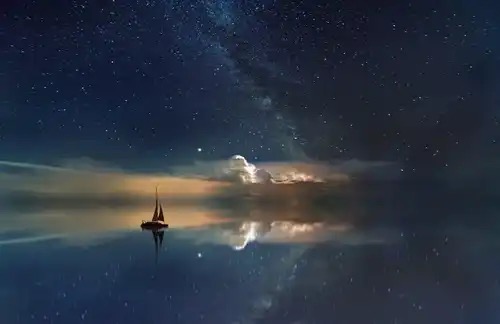
Blue changes the brain
There are approximately 11 shades of blue. Among them, you find Chagall blue and Vermeer blue. Yves Klein, an artist of the Neo-Dada movement, actually invented a shade of blue, which he patented as International Klein Blue. The most expensive blue of all time was ultramarine blue. This was because they originally made it from lapis lazuli.
The color blue has always fascinated the art community for one specific reason: the impact it has on us. For example, Wassily Kandinsky used to say that the deeper the blue on a canvas, the more it made the viewer think of infinity. Indeed, it does seem that the color blue provokes in us a strange kind of sense of purity and sensitivity.
However, what does science have to say on the subject? Does blue really alter mood?
The psychology of the color blue
Eva Heller has written one of the most interesting books on the impact of color. It’s called Psychology of Color: How Colors Work on Feelings and Reason. Thanks to her extensive studies, she drew the following conclusions about the color blue:
- It’s the favorite color of the whole population.
- People consider it a peaceful, relaxing, and non-threatening color.
- The advertising world uses it extensively. This is because it makes the buyer feel calm, confident, and secure.
- It can sometimes make people feel sad or estranged.
- It’s used to decorate workspaces. According to several studies, it improves creativity and productivity.

The benefits of the color blue come from nature
In recent years, many scientific studies have been conducted concerning the psychology of color. In fact, researchers have discovered that the color blue can reduce the impact of depression. Psychologists Dr. Joanne K. Garrett and Dr. Matthew P. White from the University of Exeter Medical School conducted research in conjunction with several universities in Hong Kong. They concluded that:
- People who frequently visited natural spaces where the blue light is more intense (seas, lakes, and rivers where the sky is reflected in the water, etc.) enjoyed better mental health.
- Furthermore, depression rates are lower in people who frequently visit these kinds of places.
Other studies conducted by Trinity College in Dublin, Ireland yielded the same conclusions. In addition, their studies demonstrated sea views were associated with lower rates of depression in the elderly.
Another interesting fact is that stress and anxiety rates are reduced when we spend time with people we love in these open spaces where the color blue is present. For this reason, something as simple as a walk along the beach with your partner, children, or friends is an exercise as cathartic as it is beneficial.

Conclusion
Rafael Alberti dedicated a poem to the color blue. In this poem, he praised the shade of the Mediterranean Sea. He described it as the same color that the Greeks adored and that the artists of the Middle Ages venerated. In fact, the divine color that they gave to the cloaks of their heavenly virgins.
The effects of the color blue are deep and evocative. Even our planet Earth, with its huge amount of water, plays a part. Because, when seen from a distance, and suspended in infinity, it resembles the cherished “pale blue dot” that Carl Sagan wrote about.
The color blue is cathartic, relaxing, and healthy. Embrace it, let its light caress you when you’re by the sea, lakes, and rivers.

Stillness in the Storm Editor: Why did we post this?
The news is important to all people because it is where we come to know new things about the world, which leads to the development of more life goals that lead to life wisdom. The news also serves as a social connection tool, as we tend to relate to those who know about and believe the things we do. With the power of an open truth-seeking mind in hand, the individual can grow wise and the collective can prosper.
– Justin
Not sure how to make sense of this? Want to learn how to discern like a pro? Read this essential guide to discernment, analysis of claims, and understanding the truth in a world of deception: 4 Key Steps of Discernment – Advanced Truth-Seeking Tools.
Stillness in the Storm Editor’s note: Did you find a spelling error or grammatical mistake? Send an email to [email protected], with the error and suggested correction, along with the headline and url. Do you think this article needs an update? Or do you just have some feedback? Send us an email at [email protected]. Thank you for reading.
Source:
https://exploringyourmind.com/the-color-blue-and-its-effect-on-your-mind/
Support our work! (Avoid Big Tech PayPal and Patreon)DIRECT DONATION
Leave a Reply