(The Organic Prepper) During times like these, keeping close tabs on events unfolding is critical. It’s always more productive for the pragmatic, though, to be aware and knowledgeable about such events’ developments.
Related CLAIM: The Hidden Agenda Behind The Planned Destruction of America
by Fabian Ommar, February 19th, 2021
One of the best ways to do so is by learning from history. For the most part, natural events are unpredictable, random in impact and reach, and localized. Economic collapses, on the other hand, follow a more cyclical dynamic and have all-embracing consequences.
Because consumption, finance, and economy are in great part determined by psychology and behavior (mainly fear and greed), and because humankind always reacts the same to abundance and scarcity, history tends to repeat itself with reasonable consistency and similarity in these areas.
Even though crashes can’t be forecast with accuracy, brewing crises always send warning signs frequently early on. Perhaps even more important (and useful for us), its consequences are well studied and vastly documented.
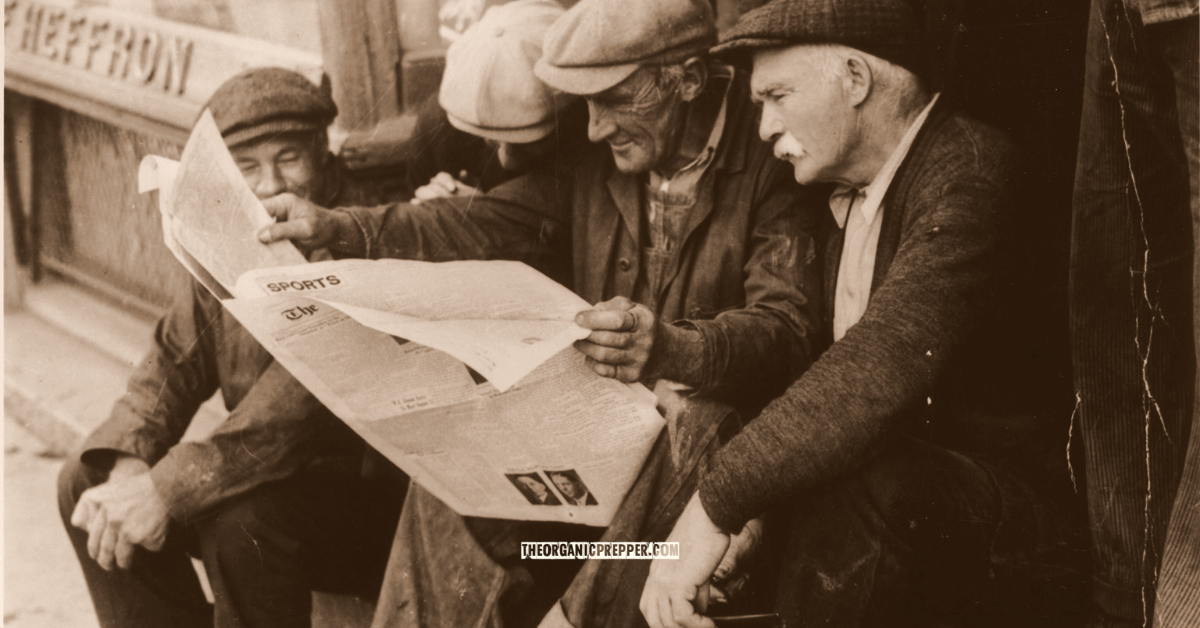
The current crisis is being compared to The Great Depression of the 1930’s
But how these SHTFs compare away from charts and figures, more close to society and people’s lives? Are contemporary fears and (apparently insurmountable) matters of monumental debts, hyperinflation risk, social fragmentation, political animosity, government intervention, and widespread conflicts genuinely unprecedented?
I looked at a few excerpts from “The Great Depression: A Diary” by Benjamin Roth to find out. It’s a personal yet surprisingly dispassionate account of the darkest years of the1930’s big slump, right after the stock market crash of 1929. Written 90 years ago in journal format as events were unfolding, without hindsight or historical distancing. It is a candid and powerful documentation of the depression zeitgeist.
Benjamin Roth was a young lawyer in Youngstown, OH, then an important steel production center of the flourishing Rust Belt. A common, middle-class professional and family man hit directly by the economic devastation, Roth was trying to understand and cope with the craziness going on. All that makes his observations very compelling and his narrations all the more relatable.
Reading through Roth’s diary feels like reading a tweet, blog, or newsfeed today.
Anyone following today’s current events will be amazed at the similarities between that period and now regarding facts and events. But mostly as to how people felt and reacted to those. In that sense, Roth’s book won’t provide direct answers. But it’s filled with great insights and highly entertaining stories.
Likewise, the idea here is not to draw a detailed or factual comparison nor provide a more in-depth analysis. We live in a very different world. The economy is considerably bigger and orders of magnitude more complex, so things are not directly comparable. The excerpts only illustrate parallels and allow for observations, with emphasis on context and human behavior. Hopefully, this will inspire you to grab a copy. It’s great reading.
It also provides a few important lessons to combat the anxiety caused by uncertainty
Many people are battling the anxiety of not feeling better prepared for the evolving situation.
One lesson is that, as the Stoics say, “This too shall pass.” Back then, the whole tribulation seemed to people like the end of times. This sentiment certainly got solidified further by WWII breaking out just a few years later. It sure feels like that today, too, with the endless cascade of bad news and looming threats all over.
In that regard, and not making light of it (crises are a real catastrophe to many), the fact that we’re still here, in an even better situation than ever before in history, should be taken as a sign that we’re learning and improving, as species and civilization. That shows that it’s entirely possible to overcome significant hardships no matter how bad the present feels or how dark the future looks.
Another lesson is that these ordeals take time to pass, and invariably the cost is brutal in various forms. It’s a huge ordeal spreading insecurity, pain, suffering, and causing loss to people, families, and businesses everywhere. (Not to mention that widespread instabilities increase the risk of authoritarianism, hot conflicts, and other worrying developments.)
Let’s see what the Great Depression of the 1930s and Mr. Benjamin Roth have to tell us
(Note: The excerpts aren’t in chronological order).
“January 18, 1933 – I am reading a book written by Claude Bowers entitled The Tragic Era. In it, he describes the panic of 1873 and I am amazed at the similarity to conditions today.”
I couldn’t find a more fitting start than the author looking back to get some insights and answers to his difficulties. That is what we do. People get lost during these periods. It’s hard to know or be sure of much or interpret things correctly when we’re immersed in the chaos, dealing with hardships, changes, and turmoil almost daily.
Takeaway: Looking at current events through the lenses of the past helps achieve a more balanced view. As I said, even though it doesn’t offer much relief in practical terms, it’s Diasomewhat comforting to know that we’ve been through this before many times and survived. Individuals and society.
“August 14, 1932 – The movement back to the farm has grown stronger during the past two years until today it is almost an exodus from the city to the farm.”
Whenever the economy dips, things start to degrade everywhere. But cities get hit harder and faster, making people flock to the country en masse. It’s a recurrent, global phenomenon, though more prevalent and visible in the U.S. and other highly-industrialized and urbanized nations. The reasons are various: spikes in homelessness and crime, tax hikes, diminishing job opportunities, dwindling entertainment, faltering public services. That, and a lot more, haunted the population back then as it does now. In our case, with the added effects of lockdowns, social distancing, and multiple restrictions.
Takeaway: The pendulum is constantly swinging in this city-country movement, and it’s already bringing large-scale and far-reaching changes in lifestyle, the market, and infrastructure at both ends. Everyone must pay attention to these factors and prepare for, whether living in the city or country.
“February 13, 1933 – I have done considerable reading about the depressions of 1837 and 1873 and, I am struck by the similarity to the present crisis. If history repeats itself, then we still have 2 or 3 years of bad times ahead of us.”
The passage above is also about the repetition of situations and events and a warning to those who believe in silver bullets to solve complex issues. For instance, thinking a vaccine or monetary stimulus will make economic, societal, and geopolitical problems go away magically or in the short term. It won’t. In fact, those (as well as others) measures, chiefly ones coming from politics, organizations, and the ruling elites, could potentially trigger further events or have unintended consequences, becoming themselves sources of more unknown unknown”.
Takeaway: How long this crisis will last is impossible to know for sure.” “If history repeat,” we may not even have seen the worse yet. There could be unexpected developments at any point. This next decade is promising to be, at the very least, highly volatile. Being prepared for a few more years of challenges and hardships ahead is a sensible strategy. Don’t expect things to go “back to normal.”
“June 1, 1933 – In looking back over the 3 months since Roosevelt became President it seems that the U.S. has traveled a long way toward some form of socialism or managed economy.”
The intervention in economy and finance took center stage during the 2020 presidential campaign and has been inspiring endless articles by economists and ‘‘experts” everywhere since, well, at least 2008. Today, a lot of people are afraid that the U.S. may turn into the Soviet Union. Or worse, Venezuela. Heck, I don’t live in the U.S., and I dread that myself! Judging by Benjamin Roth’s remarks, this sentiment was prevalent during the turbulent 1930s as well.
Takeaway: Once again, if history is any indication, despite the movement away from the free market, individualism and liberty, and the trend towards higher levels of intervention, collectivism, and safety, the U.S. should remain a free, capitalist nation. At least for the foreseeable future. Which doesn’t mean capitalism and democracy won’t undergo changes, possibly some big ones even. (Here’s more information on that topic.)Being on top of this is a way to keep up, or at least not get caught entirely off guard.
“January 11, 1932 – The war between Japan and China drags along. Threats made by the U.S. are disregarded. Germany announces she cannot and will not pay further reparations and France threatens to collect by force what is coming to her.”
“March 11, 1933 – Los Angeles district in California experiences 13 quakes yesterday. Almost as bad as San Francisco affair! Early reports indicate 150 dead; 2500 hurt; tremendous property loss.”
These two entries only one year from each other remind us that multiple SHTFs can happen concomitantly. A grave economic depression was ravaging the world, and yet parallel disasters and conflicts kept taking place in the U.S. and everywhere else. Hitler became a dictator in military-building Germany. Countries were abandoning the gold standard. Revolutions were breaking out in France and Austria. The shadow of fascism and authoritarianism looming large over Europe and South America. And a lot more events that would change the world indelibly.
Takeaway: Expect geopolitical instability to become even more of a thing soon regardless of the pandemic or crisis, or precisely as a direct result of those. Stay alert for movements and developments in military, trading, alliances. Nature won’t suspend its usual activities just because we’re already going through difficult times of our own cause, either. Be on the lookout for potential simultaneous SHTFs, always trying to imagine how those may impact your life.
“January 6, 1933 – During the boom everybody piled up debts to a dizzy height (…) economists claim that either the debt will have to be cut down or money inflated.”
Studying macroeconomics after the 2008 recession is what brought me into preparedness and survivalism. When I learned about countries’ surreal indebtedness, corporations, families, and individuals, I became worried. It’s a giant iceberg of over USD 250 trillion and growing. And that’s only the more visible part. Likewise, the U.S. (and worldwide) fast-growing deficit and sovereign debt post-WWI and during the depression was a worrying issue, which didn’t escape Roth’s attention.
Takeaway: Debt and leverage have significantly fluctuated throughout history, in cycles between booms and busts, war and peace. That’s how things are. The reduction of indebtedness and cleaning of the system at such levels has rarely (if ever) been a smooth process. Something has to give. Get ready for volatility, inflation/deflation, melt-ups-and-downs, tax hikes, confiscations, poverty. And, of course, the accompanying gamut of social reflexes (unrest, protests, strikes, riots, etc.). All that can impact our lives.
“September 1, 1932 – The stock market (…) tripled its value during August in one of the quickest climbs ever witnessed. I believe this also established a record. Nobody seems to know even yet why the stock market went up because business has gotten worse instead of better.”
It seems the fabled V-shaped recovery and the absolute disconnect between the real economy and the stock market aren’t exactly unprecedented. Almost 90 years have passed since this entry. Yet, it could well have been written yesterday. Or any day since mid-2020, when the stock market rebounded from the March crash with intense vigor. Meanwhile, the real economy has gone from bad to worse, and some would say terminal. Businesses and jobs are still being wiped out in droves due to the COVID-19 pandemic and the faltering economy.
Takeaway: Whatever happens, it’s reasonable to expect any real build back of the economy, production, and jobs should take some time, not to mention tremendous efforts and lots of sacrifices. And things will be a lot different too, an entirely new world for sure.
“August 30, 1932 – It is interesting to note that during the first three years of depression a wave of bankruptcy swept out of existence most of the small independent merchants. Recently the movement has included large national chain stores.”
Then as now: small businesses are always hit the hardest during significant slumps. The current devastation differs in a few ways from the 1930s, though. One is speed: it only took a few months since march 2020 to attain and even surpass the levels of bankruptcy and unemployment reached in the span of a few years during the Great Depression. The second is that we haven’t (yet?) seen larger movements, perhaps due to the massive support programs put in place by governments everywhere. It’s likely that without this much intervention, the wave of bankruptcy would have been, in fact, a monstrous tsunami.
Takeaway: Not entering the merits of validity and/or efficacy of such measures (and potential side effects), an immutable law of the universe states that there’s no free lunch. Fiscal and monetary ‘‘stimulus”, forbearances, moratoriums, and government support have a price that’s piling up and will have to be paid at some point. Since debt, private and public, can only be paid, rolled, deflated, or defaulted, whatever happens, will have its own set of consequences and ripples. Staying informed about the economy, increasing knowledge about finance, building reserves, and investing in some insurance against inflation may be ways to stay prepared.
“August 3, 1933 – Since Roosevelt became President a war-time hysteria of public opinion has been created which makes it unpopular to criticize what he does. Even newspaper editorials have unanimously supported him so and refrained from honest criticism.”
Now as then. Unsurprisingly, political divisiveness was an issue during the Great Depression. Unsurprisingly, it is now, too. At times it seems both sides have irreconcilable agendas and insurmountable differences; that only the complete destruction of the opponent (either through political, social, or economic persecution/destruction, or de facto by civil war) can bring resolution to a deadlock. Apparently, the press (M.S.M.) siding with this or that party, candidate, or agenda was a thing back then, too. For obvious reasons, Big Tech, social media, and cancel culture are unprecedented.
Takeaway: As much as divisiveness and radicalism spread and deepens, and politics, debates, and narratives look like a dead-end, these can dwarf in the face of weightier, real, practical, more immediate, or urgent matters. If that happens, society will have to sit down and talk or start rowing in the same direction together. Looking back in history, this seems to be an American characteristic (though not uncommon in other countries and populations). Perhaps we haven’t reached this point yet. But knowing it has happened before, it’s possible (likely?) people will opt for a common way out. Let’s just hope it’s a pacific and productive exit, not a belligerent and destructive one.
“March 5, 1934 – Roosevelt is as popular today as a year ago. His following with the working class is tremendous. It seems he and the Democrats will be in power for some time. Socialism is now accepted calmly by ministers, professors, etc. and it is amazing to me to see how calmly most people accept drastic government regulation.”
Hold your horses: this is not about Democrats or Republicans, but rather bigger government, centralization, intervention, and regulation becoming more or less accepted in one period or another. When things get hard, larger portions of the population will long for (and depend on) assistance. Whether or not that is a good, useful, or otherwise, policy is beyond the present scope. That’s just how things are. Back then, Benjamin Roth and many others were certain that America was headed to communism and doom. As bad as things may have been (and it sure was terrible), it’s clear now that the U.S. didn’t even come close to actual socialism. But for a nation that epitomizes capitalism like no other, the feeling (and fear) is totally understandable.
Takeaway: As we know, America (and capitalism) came out stronger, though not without lots of suffering for a large percentage of the population. Is America on the verge of socialism once again? It looks like, yes. Will it become this time? Impossible to say. Have we seen this before? Absolutely, and not just once. So, what’s the point? Perhaps none: the future is not written. But the past always offers a lesson: change and evolution don’t come free or without pain. Whatever happens, there will be a cost. But it’ll pass. And therein lies a point: since we can’t avoid SHTF, the question is to prepare for difficult times and survive until things get better again, plowing ahead.
Conclusion (with a caveat): This isn’t an exercise in futurology, just food for thought.
“History Doesn’t Repeat Itself, but It Often Rhymes” – Mark Twain
In that sense, I find it necessary to conclude by pointing a few significant differences between the period narrated in Benjamin Roth’s diary and today. They may or may not affect specific events during the unfolding of the current crisis. But may have enough gravity to them to potentially change the outcome and reshape the world going ahead.
The reversal of roles
Back in the early 20th century, U.S. was a booming, production-based economy, the biggest creditor in the world thanks in great part to money lent during WWI.” “Made in the U.S.A.” was a valuable slogan and motive of pride. Today, about 70% of the private U.S. economy is based on services and consumption, mostly of imported goods. The American production has been almost entirely exported to Asia and other countries, with China being the largest U.S. supplier and its principal creditor.
Trading deficits are mounting. The Debt-to-GDP ratio has soared to 130% and is growing fast. Since the U.S. is the largest economy globally, this turned it into the biggest world debtor. But the USD remains the reserve currency, and the U.S. still holds the biggest military power. That may take some time to change, even if no reaction is put in place, which is unlikely if we take history as an indication. (Again, hopefully, a peaceful response, for the good of everyone).
The COVID-19 pandemic
Another big difference between the 1930s and today is the pandemic and the subsequent set of bamboozled responses by authorities everywhere. When the crash of 1929 hit, the world had rid of the Spanish Flu for over a decade. Nowadays, we still have COVID-19 wreaking havoc on the economy and everyone’s lives. There’s no telling whether it will mutate or vanish, whether vaccines will work, or whether elites and politics will use the virus, cure, and prevention to impose even more restrictions on production, work, traveling, commerce, entertainment, and freedom. The reality is that COVID-19 is a significant factor now and should remain one for at least a few years ahead.
War risks
Between 1934-36 the world was exiting The Great Depression. Shortly after Europe was engulfed in WWII.” “War is all hell,” as defined by Gen. Willian Tecumseh Sherman during the Civil War. But it has an undeniable impact on the production and economy of all countries, involved or not. The effect of more activities and trading in demographics helped the entire world, mostly the U.S., to get out of the hole a few times throughout history. That makes some political parties and elites (not to mention the military) quite fond of armed conflicts, unfortunately. Whether a war is in the cards or not, and to what extent (can be a currency or trade war, hot war, cyberwar, local or widespread conflict) remains to be seen. These things happen.
Technological advancements
Technology is always viewed paradoxically as both salvation and doom: it brings conflicting feelings of admiration, fear, hope, and despair. There’s currently a host of new tech evolving at a dizzying pace: A.I., Big Data, 5G, advanced mass surveillance, crypto, blockchain, bio, Taas, electric vehicles, interplanetary rockets, etc. Collectively, this is being touted as The Next Renaissance. It’s also being called a potential threat to freedom, the environment, humankind, and life in general. While technology cannot be discarded, it must be noted that technological development is a constant. Meaning, every age has it playing a part in events. The early 20th century, for instance, had its own set of technological threats. Just as the Industrial Revolution had before. It repeats throughout history, and the most important is, it can’t be stopped. Keeping up is optional, of course. But avoiding or escaping its effects is not.
Finally, there isn’t much we can do against these greater forces and historical movements. But individually, we can keep doing our best, keep ourselves informed, in good shape (physically and mentally), and prepared as much as possible.
10 times more effective than ribavirin against Herpes (HSV1, HSV2), Swine flu (H1N1), Bird flu (H1N4), Pox (cowpox). Studied by the DoD for the Bioshield program. Get your Agarikon biodefense from Ascent Nutrition, one of the most pure and potent in the industry. Save 10% and get free shipping with a subscription!“I felt like I was getting a cold, but Agarikon stopped it in its tracks.”
Organic AGARIKON fights Viruses & Bio-warfare, and much more!

Stillness in the Storm Editor: Why did we post this?
The news is important to all people because it is where we come to know new things about the world, which leads to the development of more life goals that lead to life wisdom. The news also serves as a social connection tool, as we tend to relate to those who know about and believe the things we do. With the power of an open truth-seeking mind in hand, the individual can grow wise and the collective can prosper.
– Justin
Not sure how to make sense of this? Want to learn how to discern like a pro? Read this essential guide to discernment, analysis of claims, and understanding the truth in a world of deception: 4 Key Steps of Discernment – Advanced Truth-Seeking Tools.
Stillness in the Storm Editor’s note: Did you find a spelling error or grammatical mistake? Send an email to [email protected], with the error and suggested correction, along with the headline and url. Do you think this article needs an update? Or do you just have some feedback? Send us an email at [email protected]. Thank you for reading.
Source:
https://www.theorganicprepper.com/diary-great-depression/
Leave a Reply