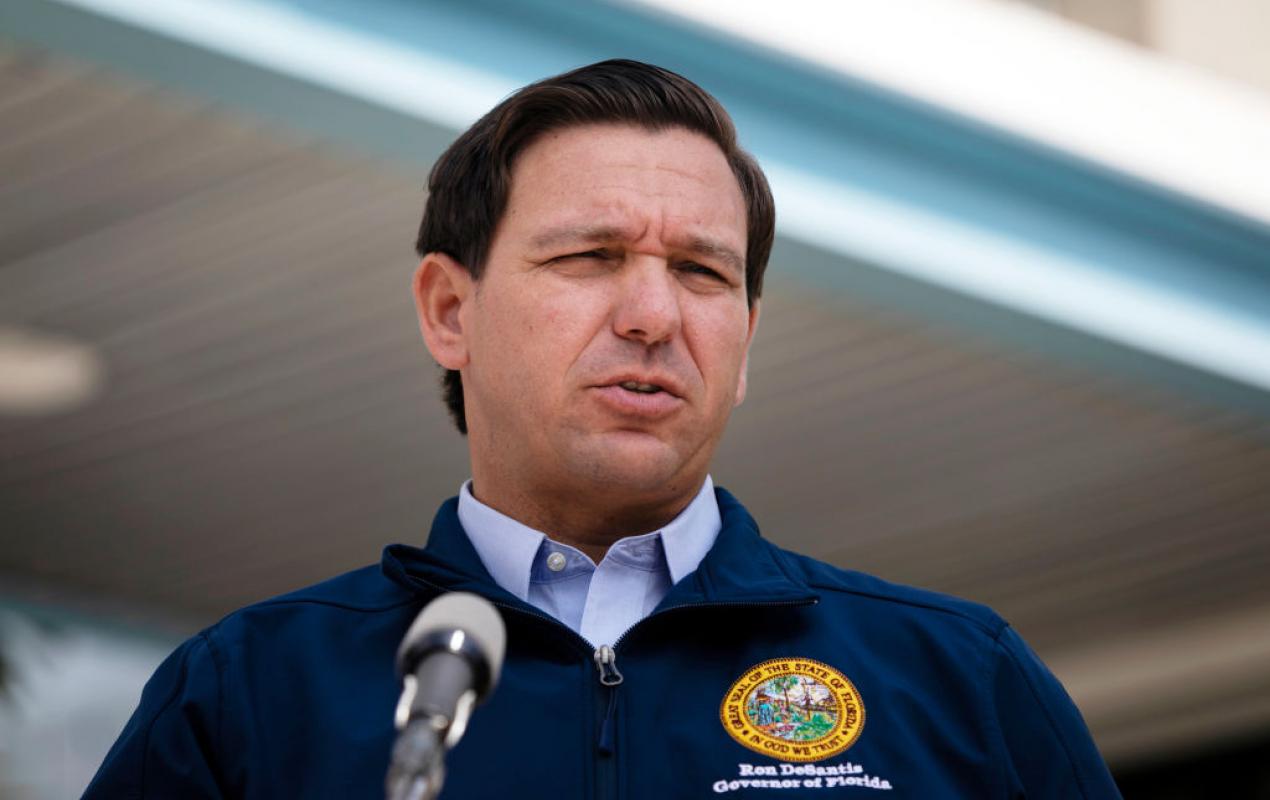
(Christian Toto) As of Feb. 5, 18 states had introduced some form of legislation to ensure that political views aren’t suppressed by Big Tech, said the Heartland Institute’s Cameron Sholty.
by Christian Toto, February 13th, 2021
protecting their freedom to speak on Facebook, YouTube and Twitter.
Several red states, including Texas and Florida, are taking the initiative instead after social media giants deplatformed President Donald Trump along with a bevy of high-profile conservatives like My Pillow CEO Mike Lindell.
Cameron Sholty, government relations director at the right-leaning Heartland Institute, says as of Feb. 5, 18 states had introduced some form of legislation to ensure that political views aren’t suppressed by what many dub “Big Tech.”
Previously, conservatives hoped Congress might step up enforcement of or tweak Section 230 of the Communications Decency Act, which protects companies like Facebook from being legally liable if users create damaging content.
Then-candidate Joe Biden even criticized Section 230 in an early 2020 interview, saying it should be “revoked” for platforms like Facebook that share “falsehoods they know to be false.”
The subject concerns far more than shared memes and baby pictures across the digital landscape, Sholty says.
“I’m reluctant to call social media the modern town square, but let’s be perfectly clear,” Sholty says. “Social media is how many, many people communicate and share their political and religious views.”
So far, he explains, the legislation in question often involves states creating a “civil or private cause of action” for citizens to seek potentially large financial damages against platforms which censor, ban or deplatform them.
Florida Gov. Ron DeSantis is using his power — and bully pulpit — to counter the Big Tech assault on conservative viewpoints. The Republican leader introduced legislation early this month that would create a $100,000 daily fine for platforms that censor political candidates. The proposal also would let social media users sue sites like Facebook.
“… these platforms have changed from neutral platforms that provided Americans with the freedom to speak to enforcers of preferred narratives,” Gov. DeSantis said Feb. 2.
The Big Tech threat to free speech is now about more than censoring political views on social media, as the governor sees it.
Florida State Rep. Randy Fine, meanwhile, has proposed a plan to divest state funds from social media giants he says are squeezing the free speech rights of Florida citizens.
“It is clear that Twitter and Facebook are engaged in one-sided viewpoint discrimination targeting conservatives … and it is not disputed that Amazon, Apple, and Google are actively working to eliminate any alternative outlets where conservatives can speak freely,” Fine wrote about the proposal.
Last month, Texas Attorney General Ken Paxton issued civil investigative demands to some of the biggest tech platforms, including Apple and Amazon Web Services, after the Twitter alternative Parler went dark following attacks by the aforementioned services. Paxton called the swift series of events which brought down Parler “unprecedented.”
The “Act for the Freedom to Express One’s Views and Obtain and Disseminate Information on the Internet” would make tech platforms open to fines as high as 1.8 million euros.
Center of the American Experiment President John Hinderaker says there’s no doubt that Big Tech platforms are censoring right-leaning voices.
“It’s very concerning not just to millions of people on the right but to all Americans who care about free speech,” Hinderaker says. The problem also includes platforms like YouTube censoring information that conflicts with that approved for circulation by select public health authorities, like COVID-19 research that contradicts what the World Health Organization suggests.
He says Minnesota will soon introduce a bill making it unlawful for social media giants to “restrict, either directly, manually, or through the use of an algorithm, a user’s account or content based on race, sex, political ideology, or religious beliefs.”
Hinderaker says it’s only natural for states to stand up for free expression given the federal government’s disinterest in the matter.
“Democrats don’t want any of those things to happen,” he says. “The federal avenue for the foreseeable future isn’t going to be promising. States have to take the lead here and do it quickly.”
For now, organizations like the ACLU are standing on the sidelines.
“I don’t know of any left-leaning groups that are on our side,” Hinderaker says. “They’re not in favor of free speech, to be blunt.”
“[They’re used] to censor or squash the voices that they don’t want to be heard or that they disagree with,” she said. “The power that they have to influence our society, to influence our democracy [is too great].”
Sholty says recent political statements make the states’ efforts against Big Tech even more critical.
Recent weeks “saw Congresswoman Ocasio-Cortez urge her supporters to identify unflattering tweets and hashtags about her account of the Capitol riots last month and to report them to Twitter as disinformation,” Sholty says. “That is a chilling manipulation of the private sector to engage in conduct that is otherwise forbidden by government if it were engaging in it itself.”
10 times more effective than ribavirin against Herpes (HSV1, HSV2), Swine flu (H1N1), Bird flu (H1N4), Pox (cowpox). Studied by the DoD for the Bioshield program. Get your Agarikon biodefense from Ascent Nutrition, one of the most pure and potent in the industry. Save 10% and get free shipping with a subscription!“I felt like I was getting a cold, but Agarikon stopped it in its tracks.”
Organic AGARIKON fights Viruses & Bio-warfare, and much more!

Stillness in the Storm Editor: Why did we post this?
The news is important to all people because it is where we come to know new things about the world, which leads to the development of more life goals that lead to life wisdom. The news also serves as a social connection tool, as we tend to relate to those who know about and believe the things we do. With the power of an open truth-seeking mind in hand, the individual can grow wise and the collective can prosper.
– Justin
Not sure how to make sense of this? Want to learn how to discern like a pro? Read this essential guide to discernment, analysis of claims, and understanding the truth in a world of deception: 4 Key Steps of Discernment – Advanced Truth-Seeking Tools.
Stillness in the Storm Editor’s note: Did you find a spelling error or grammatical mistake? Send an email to [email protected], with the error and suggested correction, along with the headline and url. Do you think this article needs an update? Or do you just have some feedback? Send us an email at [email protected]. Thank you for reading.
Source:
Leave a Reply