
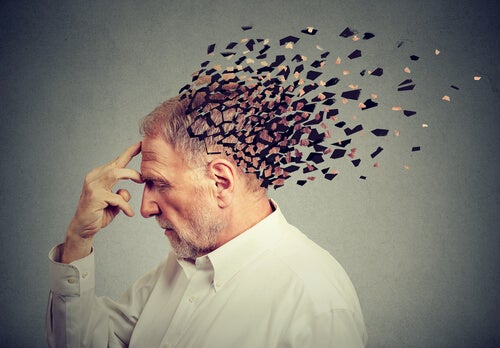
(Exploring Your Mind) People tend to worry more and more about cognitive functions as they get older. There’s a particular concern for future memory loss. Haven’t you ever thought: “My memory isn’t what it used to be?” Realizing your memory is deficient is precisely what subjective memory complaints (SMCs) are about.
Related White House Physician Says Trump ‘No Longer Considered A Transmission Risk’
by Staff Writer, December 11th, 2020
Memory is a function people test daily and tends to be frequently questioned due to this, especially when you begin to forget.
According to Peña (2015), the concept behind SMC involves several factors:
- A person’s judgment of their memory performance.
- The subjectivity of said performance.
- Also, the object of the complaint: the daily forgetfulness.
This means that people, in general, know their memory capacity and, thus, can easily detect a decrease in their performance.

Are subjective memory complaints a type of mild cognitive impairment?
For some authors, such as Reid & Maclullich (2006), mild cognitive impairment (MCI) has clinical significance due to its relationship with memory impairment. Also, because it assumes the risk of subsequent cognitive impairment and serves as a measure of the type of personality and depression.
In general, in order for these complaints to meet a diagnostic criterion, family members must corroborate and express them to a treating physician.
Currently, subjective memory complaints are part of the diagnostic criteria for mild neurocognitive disorder (mNCD), according to Petersen et al. (1999), as well as for minor neurocognitive disorder, as per the DSM-5.
Diagnostic criteria for mNCD (Petersen et al., 1999)
- Memory loss, referred by the patient or other reliable informant.
- Lower or below-average memory capacity for their age.
- Normal general cognition.
- Normalcy in their daily activities.
- Finally, an absence of diagnostic criteria for dementia.
Diagnostic criteria of mNCD (according to the DSM-5)
- Firstly, evidence of modest cognitive decline from a previous level of higher performance in one or more of one of the cognitive domains.
- Cognitive deficits are insufficient to interfere with a person’s independence and, thus, may require more effort, compensatory strategies, or accommodation in order to maintain their independence.
- Cognitive deficits don’t occur exclusively in the context of delirium.
- Finally, cognitive deficits aren’t primarily attributable to the presence of other mental disorders.
This hasn’t been the first time that the existence of SMC has been taken into account. In 1962, Kral introduced this concept by referring to “benign senescent forgetfulness”. The difficulty in remembering specific aspects of an episode that could normally be remembered later highlighted it.
Focusing on the present, several studies relate subjective memory complaints and cognitive impairment. Some of them suggest that people with subjective memory complaints harbor the neuropathology of Alzheimer’s disease in their brains, even before they’re aware of any symptoms of cognitive deterioration (Kryscio et al., 2014).
Conclusion on subjective memory complaints
In short, one could say there’s no consensus on whether subjective memory complaints and mNCD are related. However, the former may be an early symptom of the deterioration in the latter.
In any case, it’s always better to consult a professional if you perceive symptoms that could be related to mild cognitive impairment.
Primary care professionals can detect possible cognitive impairment with various screening tests. Furthermore, some of the tests used for early detection are:
- 35-point Lobo’s Mini Cognitive Test (Lob0 et al., 1999).
- Mini-Mental State Examination in cognitive impairment screening (Carnero, 2002).
- Short Cognitive Performance Test or “Syndrom Kurztest” (Erzigkeit, 1989).
- Buschke’s Memory Alteration Test (Peña-Casanova et al., 2004).
Finally, you must keep in mind that, in order to avoid confusion or errors, all these tests must be conducted by trained professionals, as it’s the only way to get a reliable diagnosis.
Support this site so we can continue to tell you the truth.
DONATE HERE
Stillness in the Storm Editor: Why did we post this?
The news is important to all people because it is where we come to know new things about the world, which leads to the development of more life goals that lead to life wisdom. The news also serves as a social connection tool, as we tend to relate to those who know about and believe the things we do. With the power of an open truth-seeking mind in hand, the individual can grow wise and the collective can prosper.
– Justin
Not sure how to make sense of this? Want to learn how to discern like a pro? Read this essential guide to discernment, analysis of claims, and understanding the truth in a world of deception: 4 Key Steps of Discernment – Advanced Truth-Seeking Tools.
Stillness in the Storm Editor’s note: Did you find a spelling error or grammatical mistake? Send an email to [email protected], with the error and suggested correction, along with the headline and url. Do you think this article needs an update? Or do you just have some feedback? Send us an email at [email protected]. Thank you for reading.
Source:
https://exploringyourmind.com/the-meaning-of-subjective-memory-complaints/
Leave a Reply