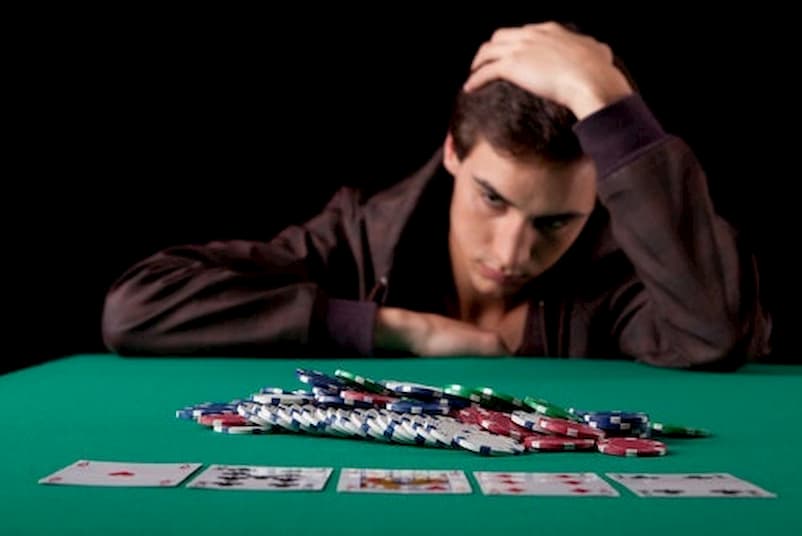
(Exploring Your Mind) For most of us, gambling, in its many forms, and sometimes perceived as just games, can be just another recreational activity that doesn’t have to cause any negative consequences. For others, though, it can develop into pathological gambling.
by Staff Writer, December 6th, 2020
Some people can happily play and gamble in social gatherings as a form of fun or socialization with others or as a way to pass the time. However, there are other cases where gambling stops being mere entertainment and becomes a central part of the person’s life. It starts to control their life.
When a person can’t stop thinking about gambling, feels the need to lie, or gambles large amounts of money that they can’t afford to lose, they may have become a pathological gambler.
What’s pathological gambling?
A person’s ability to voluntarily control their involvement in gambling decides whether gambling can be considered to be pathological in their life. Generally, it isn’t easy for a person to have a real perception of their own ability to control things. Thus, they may be unable to recognize the real dangers until it’s too late.
This bias, called the illusion of control, causes players to think they’re in control of the situation and can stop whenever they want. However, reality is different and the gambling (which they perceive as simply games) can frequently get out of hand. This can have disastrous consequences at a financial, family, social, and work level.
The DSM-5 (Diagnostic and Statistical Manual of Mental Disorders) has moved gambling to the section of Substance-Related and Addictive Disorders. What motivated this change was the similarity between gambling and other addictions. The same brain mechanisms are activated in both areas, particularly those related to the brain’s reward system.

How’s pathological gambling diagnosed?
In order to diagnose pathological gambling in a patient, the DSM-5 tells us that the gambling must be problematic, persistent, and recurrent. It must also cause a clinically significant deterioration or discomfort in the person. This means that the person plays in order to avoid feeling bad. With gambling, all other motivating factors lose their value.
The patient must also manifest four or more criteria, out of a total of nine, over a period of 12 months. These criteria are:
- A need to gamble, continually increasing the amount of money they play with in order to get the desired excitement.
- They’re nervous or irritated when they try to cut down or give up gambling.
- They’ve made repeated efforts to control, reduce, or stop gambling.
- Often, they can’t think about anything other than gambling.
- Gambling when they feel bad.
- After losing money when gambling, they often return soon afterward to try to win it back.
- They lie to hide their involvement in gambling.
- They’ve jeopardized or lost an important relationship, job, or academic or professional career.
- Counting on others to give them money in order to relieve their desperate financial situation.
We shouldn’t consider this behavior to be due to some sort of manic episode, as we’d then have to follow that route of diagnosis and not that of pathological gambling.
Cognitive distortions
In addition to these diagnostic characteristics provided by the American Psychiatric Association, there are also a number of cognitive distortions that we can often find in these patients.
In addition to the illusion of control, it’s normal for the players to manifest:
- Illusory correlation. Here, the person considers that there’ll be a covariation with certain variables where there clearly won’t be. One such example is: “If I speak nicely to the dice, then I’ll get a higher score“.
- The obsession with absolute frequencies. This means that they value their success in terms of what they’ve won and don’t take into account everything they’ve lost.
- Flexible attribution. This is where they attribute their success to personal factors and their failures to external factors that are out of their control.
- Post-hoc explanations. In this case, they believe they’ve predicted the result once it’s already occurred.
Explanatory theories regarding pathological gambling
Some theoretical perspectives have tried to explain pathological gambling are the following:
The model of need states
According to this theory, gambling is seen as behavior and actions that satisfy some of the subject’s shortcomings. They become addicted as they try to control the chronic stress that these supposed shortcomings create.
Two factors that would predispose people to gambling are:
- Having an altered level of aversive psychophysiological activation.
- Having an altered state of identity, such as having feelings of inferiority, disability, or feeling rejected.
In these cases, by gambling, they attempt to cover up these unresolved deficiencies.
Brown’s reversal theory
This is based on arousal/activation and Apter’s reversal theory. It proposes two systems that would lead the person to want to gamble due to the motivation to play and to an optimal level of activation.
From this perspective, we can speak of:
- A telic state (the subject is motivated and goal-oriented, enjoying the anticipation, but with a low activation).
- A paratelic state (states of high activation and enjoyment with immediate sensations).
We can say that a person in a telic state perceives the game with anxiety and those in the paratelic state are more attracted to the gambling. The telic person starts playing in an attempt to induce a paratelic state, in which they wouldn’t participate with anxiety, but with pleasure.
What happens here is that the player “learns” that, if they continue to play in spite of the anxiety they feel, then motivation and winnings will come. That’s why, in these cases, the problem will always remain.
Dickerson and Adcock model
This theory explains how the person keeps on gambling and focuses on activation as a key variable. The two factors that modulate the activation are mood and the illusion of control.
This model explains that the lower the mood, the longer the desire to play continues. They do so in order to reach an optimal level of activation that the player feels comfortable with.
Sharpe and Tarrier model
This model explains the problem by focusing on the typical motivation of the game: how variable it is. The monetary gain isn’t something fixed. Sometimes they win, sometimes they don’t, and the amounts vary as well. This variability makes it easier for the person to get hooked on gambling games, as they can’t anticipate if, or when, they’re going to win.

Treatment of pathological gambling
There are two therapeutic goals as far as gambling is concerned: complete abstinence or controlled play. The therapist will choose one or the other according to each patient’s profile. However, the most commonly used treatment is complete abstinence. We can find the following types of therapy:
Self-help groups, such as Gamblers Anonymous
It considers gambling a chronic and progressive disease. They believe that you can intervene to stop it from developing but that there’s no ultimate cure.
The type of group is a social support network but dropout rates are high from the first few sessions. This type of therapy wouldn’t be particularly useful in people in the early stages of gambling addiction. It’s more for people who have more associated problems.
Pharmacotherapy
- Mood stabilizers, such as lithium carbonate along with neuroleptics.
- SSRIs, such as fluoxetine.
- Naltrexone due to its similarity to substance addictions.
Multi-component programs
There are two ways to carry out these programs:
- Internment. This is the best option for patients without any social or family support, suicidal ideation, or behavioral disorganization. We’re talking here about people with serious gambling problems.
- Outpatient therapy. From this perspective, we can focus on two of the most famous examples: the program devised by Ladouceur et al. and Echeburua and Baez’s program. The first includes more cognitive techniques such as restructuring, problem-solving, and relapse prevention. On the other hand, Echeburua and Baez’s program is more behavioral in nature, including strategies such as control-stimulation and exposure with response prevention, as well as group therapy.
Just as with any addiction, treating pathological gambling isn’t easy. Firstly, the person needs to recognize their problem. Then, they need to realize that they can’t handle it on their own.
Finally, in many cases, having a good support system is that last vital stimulus that encourages the person to attend therapy sessions. These sessions can reinforce and consolidate the person’s progress, and also help to prevent a relapse.

Stillness in the Storm Editor: Why did we post this?
The news is important to all people because it is where we come to know new things about the world, which leads to the development of more life goals that lead to life wisdom. The news also serves as a social connection tool, as we tend to relate to those who know about and believe the things we do. With the power of an open truth-seeking mind in hand, the individual can grow wise and the collective can prosper.
– Justin
Not sure how to make sense of this? Want to learn how to discern like a pro? Read this essential guide to discernment, analysis of claims, and understanding the truth in a world of deception: 4 Key Steps of Discernment – Advanced Truth-Seeking Tools.
Stillness in the Storm Editor’s note: Did you find a spelling error or grammatical mistake? Send an email to [email protected], with the error and suggested correction, along with the headline and url. Do you think this article needs an update? Or do you just have some feedback? Send us an email at [email protected]. Thank you for reading.
Source:
https://exploringyourmind.com/pathological-gambling-diagnosis-theories-and-treatment/
Leave a Reply