
(Stillness in the Storm Editor) Working with others is a valuable life skill. But we suffer from a serious lack of education in this regard. Despite the fact that having to work with others has been a facet of human life since the dawn of time, finding good information can be difficult.
Personality types are acknowledged by modern psychology. In antiquity, personality types were described in terms of astrology. Whether you believe in astrology or not, it is a system for measuring, describing, and dealing with different types of people. Point being, we’ve been learning how to deal with different types of people for a very long time.
The law, in relation to society and people, is itself a system for managing cooperation. Granted, how it is used in our world today is often to give power to the few at the cost of the many, but the essence of law remains the “science” of how people work together.
In short, cooperation is about trust, fleshed out via agreements, wherein two or more people pool their unique resources, energy, and skills for some collective purpose. Part of what we bring to the table in any collective endeavor is our very being—our personlity.
The following article discusses how different personality types can work well together. Specifically, the classification system used, which is an arbitrary taxonomy, is the Myers-Briggs system.
What I want you to take away from this is that we each come into this life with something special. But due to social programming and cultural influence, we can be encouraged to downplay our unique potential.
Buy Book Unmasking the Face: A Guide to Recognizing Emotions From Facial Expressions
You shouldn’t do this.
Your uniqueness isn’t a problem.
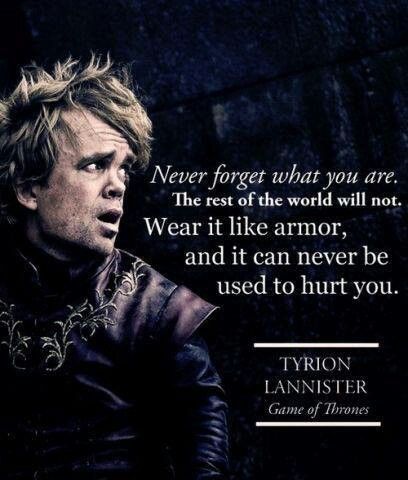
I know, at times, you might have felt like an outcast, or that you were strange or weird. Don’t worry, we’ve all felt this way. The ones that are successful in life embrace their “weirdness,” wearing it like a badge of honor.
Introverts often think their inner world is completely private, or possibly shameful.
For some, they feel if they let the world see their true selves, rejection and abandonment are sure to follow. And to be sure, you must keep your trusted pearls close at hand, for not everyone can be respectful. I would argue, we should strive to unfold our being to others because this makes us feel better, and more to the point, it helps us work with others better.
Contracts are at the heart of all human interaction.
Whether written or verbal, agreements are everywhere. We can’t escape them.
Whether you’re talking about your relationship to your parent, your children, your life partner, your boss, your co-worker, or a friend, all of these relationships and more, are founded on communication, which is a pillar of an honest, fair, and beneficial agreement. We have to be willing to trust another with who we are so we can work with others on the same page.
Our unique skills, experience, and passions are an asset. We can work better with others when they have a better understanding of who we are.
Have faith that those around you are willing to work with you and your uniqueness. With careful discernment and trust, most cooperative efforts can be enhanced if each person in that group truly seeks to embrace the unique aspects of all involved.
– Justin
(Sarah Keene) I’m an INFJ who works as the assistant director of a performing arts program in the public school system. The head director, the person with whom I work most closely on a daily basis, is an INTJ personality type.
Related Testosterone Has a Complicated Relationship with Moral Reasoning, Study Finds
by Sarah Keene, October 9th, 2019
When I first started my job, a close friend asked me how I felt about the professional compatibility between the department head and myself. My response? “I’m pretty sure he’s my actual polar opposite.”
Was I right in that assumption? Kind of. There are ways in which he and I are as different as two people can be. But over time, I’ve noticed several key ways in which we’re actually similar.
After several conversations about our Myers-Briggs personality types, and much personal reflection, I concluded that the ways we’re different complement each other far more than they lead to contradiction; and our similarities, which are oddly enough the qualities that typically separate me from others, align in such a way that makes for an almost ideal working environment.
Allow me to break it down. Although each INFJ and INTJ is different, here are seven reasons these two types generally work really well together.
(What’s your personality type? We recommend this free personality assessment.)
Why INFJs and INTJs Work Well Together
1. We’re always looking for ways to improve.
Working with an INTJ colleague has been refreshingly free of issues regarding the protecting, harming, or inflating of egos. Like INFJs, INTJs have an almost obsessive inner drive to improve themselves. As a result, both my colleague and I are constantly looking for potential “leaks” in our methods and approaches. Neither one of us wants to continue down a path that doesn’t bring positive results.
When we see something that needs to be addressed, we get straight to the point. While my colleague may be more blunt in his delivery, neither of us are fans of sugar-coating. As an INFJ who is on the sensitive side, I have a nasty habit of taking criticism to heart, but I would rather hear the cold, hard truth than have my feelings spared.
And while I do crave the occasional indicator that my work is valued, too much positive attention feels insincere or unearned. Working with an INTJ is ideal in this aspect because he only gives compliments when he really means it, rather than general feel-good stuff that doesn’t directly relate to my performance.
In short, for both of us, it’s all about what we do and who we serve — not us.
2. We both see the big picture.
INFJs and INTJs are the only Myers-Briggs types whose dominant function is Introverted Intuition. While we experience this function differently, we’re both experts at seeing the big picture. We can easily envision our plans and see the various ways they might play out. While our visions may differ greatly at times, we discuss the differences, assess the strengths of each, and strike a balance between the two.
The greatest benefit to sharing strong Introverted Intuition is the fact that we so easily understand each other when discussing ideas. This just doesn’t happen with other people. For example, I sometimes lose people by jumping tracks mid-conversation, making my thoughts seem scattered and abstract.
Having dominant Introverted Intuition means INFJs and INTJs are constantly making connections between ideas. As a result, my colleague and I seem to fill in the blanks for each other effortlessly. This not only makes planning more fulfilling and enjoyable, but saves us a lot of time we’d otherwise spend backtracking and explaining our thoughts.
3. We balance each other out.
Our second strongest cognitive functions are Extraverted Thinking (INTJ) and Extraverted Feeling (INFJ). Because of this, he focuses on developing the most efficient processes to get the best possible results. My basic approach tends to focus on processes that encourage the people we work with (in our case, our students) to buy in and contribute to a meaningful work environment.
This doesn’t mean he can’t create a positive work culture, nor does it mean I’m incapable of efficient and logical planning. To be honest, these are things we both do well; it just so happens that we naturally prioritize one approach over the other. It’s a good balance.
Buy Book Toxic Friends: A Practical Guide to Recognizing and Dealing with an Unhealthy Friendship
4. We keep each other in check.
My third function is Introverted Thinking. Despite being a “feeling” type, INFJs are constantly thinking. We do value logic (a lot) and tend to analyze things, sometimes obsessively, searching for the best possible outcome.
The biggest downfall to this function, as brought to my attention by my INTJ colleague, is a hesitation to act or make decisions. While he can think through something and come to a conclusion fairly quickly, I often second-guess myself and probably ask for advice more than I need to. His willingness to both offer advice (something INTJs are fond of doing), and also to remind me that I’m being indecisive, helps keep my Introverted Thinking from holding me back.
His third function, Introverted Feeling, doesn’t come up often at work, as INTJs consider their feelings private, and therefore irrelevant in a professional environment. Because INFJs have Extraverted Feeling, as mentioned earlier, we read others’ feelings well, even when the signs are subtle. My colleague is generally cool and collected, but I notice right away when he’s annoyed, stressed, or angry. Though he’d probably prefer to carry on as usual, as if he isn’t in fact annoyed, stressed, or angry, I can jump in and help.
5. We value our work over status and merit.
Both INTJs and INFJs are miserable in work situations that go against their values. INTJs desire independence and the freedom to construct whatever system and structure that works best for them. INFJs need creative autonomy to be true to themselves and the knowledge that what they’re doing is meaningful. Both take a lot of pride in their work, and consider the work itself to be more important than status, merit, or pay.
Because I believe in my colleague’s leadership and vision for his program, I have no qualms adapting to fit within the overarching structure he provides. Because his top priority is getting the best results as efficiently as possible, he understands when I need to resort to methods that are different than his own — as long as I can back my decisions with adequate reasoning. This gives me the creative autonomy I need to function in my own unique way.
Buy Book The Man Who Tapped the Secrets of the Universe — Walter Russell
6. We share the same sense of humor.
It’s slightly self-serving to mention, so I’ll keep this section brief: INTJs and INFJs are both pretty clever. This makes conversations much more enjoyable and productive. Similar intellect between these two personality types also leads to a similar sense of humor, which is often witty, sarcastic, dark, and occasionally straight-up quirky. Humor is essential to maintaining a good working relationship.
7. We both share a strong sense of values.
INFJs and INTJs have strong values that they rarely compromise. We both value the truth over prettier half-truths; we value education and constantly seek new knowledge and intellectual stimulation; and, most importantly, we deeply value our work. All of these shared values add up to a united front that more than makes up for our many differences.
Originally, it didn’t seem like my colleague and I were compatible in any way. While no personality assessment can guarantee compatibility in any relationship — professional or personal — as we took the time to find our rhythm as a team, I quickly proved myself wrong. The similarities and complementary qualities of INTJs and INFJs can lay a foundation for an incredibly rewarding working relationship. I think that any other INTJs and INFJs fortunate enough to share the same goals will come to the same conclusion.
Buy Book Sex in America: A Definitive Survey
Stillness in the Storm Editor: Why did we post this?
Psychology is the study of the nature of mind. Philosophy is the use of that mind in life. Both are critically important to gain an understanding of as they are aspects of the self. All you do and experience will pass through these gateways of being. The preceding information provides an overview of this self-knowledge, offering points to consider that people often don’t take the time to contemplate. With the choice to gain self-awareness, one can begin to see how their being works. With the wisdom of self-awareness, one has the tools to master their being and life in general, bringing order to chaos through navigating the challenges with the capacity for right action.
– Justin
Not sure how to make sense of this? Want to learn how to discern like a pro? Read this essential guide to discernment, analysis of claims, and understanding the truth in a world of deception: 4 Key Steps of Discernment – Advanced Truth-Seeking Tools.
Stillness in the Storm Editor’s note: Did you find a spelling error or grammar mistake? Send an email to [email protected], with the error and suggested correction, along with the headline and url. Do you think this article needs an update? Or do you just have some feedback? Send us an email at [email protected]. Thank you for reading.
Source:
https://introvertdear.com/news/7-reasons-infjs-and-intjs-work-really-well-together/
Oh good grief more Divide everyone up into initials…
Talk about virtue signalling… just pathetic, Oh Poor Me… brigade at it again..
Thank you for highlighting the importance and relevance of Myers-Briggs personality types. There is so much practical benefit to be gained from understanding your own type and the types of those around you. It is truly remarkable how well these types describe people. INTJ here. :)