(Peter Jacobsen) After Elon Musk’s offer to purchase Twitter was accepted, the Department of Homeland Security unveiled plans for a “disinformation” governance board. Musk’s purchase is not final, and the governance board is now paused, but the reaction to these events has been telling.
Related The Sabotage of Public Education
by Peter Jacobsen, June 7th, 2022
One might expect professionals in the market for ideas would be concerned by a government agency policing speech. Curiously, many groups who historically have defended free speech against interference seem slow (or absent) in response.
Members of the journalism industry have reacted negatively to Musk’s vocal support of free speech. His purchase is “dangerous,” and his commitment to free speech will lead to people being “silenced”.
Meanwhile, the Associated Press attacked Musk for wanting free speech, claiming that this desire was inconsistent with the fact that he has criticized people in the past.
This claim by the AP confused many, as criticism is obviously compatible with free speech.
Time magazine voiced opposition to Musk from another angle, trying to disparage his “tech bro” obsession with free speech.
CNN writers crafted the suggestive headline, “Twitter has been focused on ‘healthy conversations.’ Elon Musk could change that”.
At The Conversation, Filippo Menczer, a professor of informatics and computer science at Indiana University, argues John Milton’s idea of the uncensored marketplace of ideas is outdated and calls for “refereeing” of social media. And of course, this refereeing isn’t censorship. Why would you think that?
Another professor writing for The Conversation, Jaigris Hudson, argues Elon Musk’s free-speech push will make speech less free because if harsh language is allowed some people will stop talking. This article when set next to this Washington Post piece and the AP tweet underscores a consistent theme of mistaking free speech for freedom from criticism.
Head bureaucrat of the government’s “paused” disinformation board, Nina Jankowicz, also wishes Twitter would move in another direction. Jankowicz wonders, why not allow verified accounts to edit the tweets of people using free speech too dangerously?
Although it isn’t uncommon for high-level military bureaucrats like Jankowicz to desire censorship, academics and journalists have long been stalwart defenders of the importance of an uncensored marketplace for ideas. For a long time, universities and newspapers were seen as places where controversial means and ends could be debated publicly. “The truth will out” was the final defense of these institutions against calls for censorship.
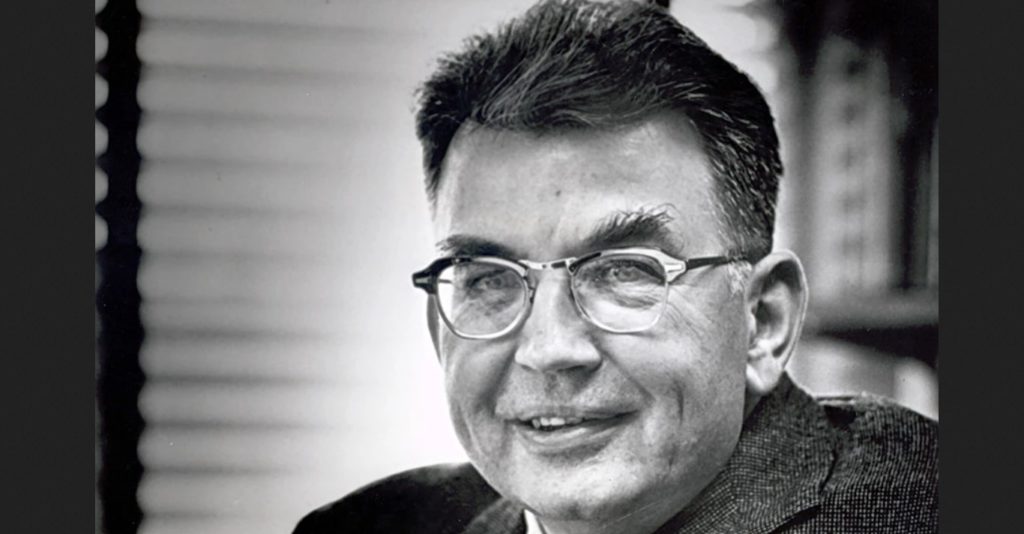
This defense of the marketplace of ideas was so universal among the professional intellectual class that it inspired Nobel Prize-winning economist Ronald Coase (1910-2013) to write a paper trying to explain why this was so. And, using this same paper, we can see Coase implicitly predicted the increasing favorability of censorship among the professional intellectual class.
The Market for Goods vs. the Market for Ideas
In a 1974 paper, Coase, the Clifton R. Musser Professor of Economics at the University of Chicago Law School, mused over an interesting puzzle. Professional intellectuals focus tremendous effort in highlighting why the market for goods and services requires regulation. Meanwhile, those same intellectuals often argued that the market for ideas should be free from regulation.
So, why the asymmetry?
To answer this puzzle, Coase first dismissed two popular but wrong explanations for this paradox.
The first explanation is that markets for goods and services can have market failures. For example, if gasoline buyers and sellers don’t have to pay for the pollution gasoline generates, they will buy and sell too much at the expense of those who experience pollution.
However, the problem with this explanation is obvious. There can also be failures in the market for ideas. Even if it’s correct that the best idea will win, it’s obvious that the best idea won’t always win immediately. Pollution in the market for ideas, such as disinformation, is also possible.
In other words, the market for ideas also has market failures. On this criteria, both types of markets should be regulated–or neither.
The second wrong explanation for why professional intellectuals defend the market for ideas from regulation is that unregulated speech is necessary for a functioning democracy. This explanation sounds okay at first, so what’s wrong with it?
Well, the market for goods and services is also necessary for a functioning democracy. As Coase puts it,
For most people in most countries (and perhaps in all countries), the provision of food, clothing, and shelter is a good deal more important than the provision of the “right ideas,” even if it is assumed that we know what they are.
So good ideas being necessary for a functioning democracy can’t be an explanation for why the market for ideas should be unregulated, since professional intellectuals favor regulation for goods and services which are also necessary for a functioning democracy.
The asymmetry remains.
Coase finishes his essay by solving the paradox. Why do professional intellectuals defend the market for ideas against regulation but not the market for goods and services?
The market for ideas is the market in which the intellectual conducts his trade. The explanation of the paradox is self-interest and self-esteem. Self-esteem leads the intellectuals to magnify the importance of their own market. That others should be regulated seems natural, particularly as many of the intellectuals see themselves as doing the regulating.
So, the market for ideas is the market controlled by the intellectuals. They see their market as a higher and more important calling. The market for goods and services, in their view, is both less important and more corrupted.
The Masses Take the Market for Ideas
So how does Coase’s explanation here predict the increasing calls for censorship in the market for ideas?
Remember the explanation Coase gave. Professional intellectuals considered the market for ideas as above regulation because they controlled the market.
But times have changed since Coase wrote his article in 1974.
The internet has revolutionized the landscape of the market for ideas. It’s no longer the case that the well credentialed have the most sway in the ideas market. Recent years have been characterized by creators on YouTube, podcasts, and, most recently, Substack dominating the market for ideas.
Now that the market for ideas is no longer dominated by academia and the journalism industry, members of those groups no longer have the same incentives to stop industry regulation.
In fact, as in many industries, it may be in incumbents’ best interest to regulate competition. After all, if people get their new commentary from Joe Rogan and not CNN, that hurts CNN’s bottom line.
So, although Coase did not foresee the decentralization of the market of ideas in his piece, the logic of his paper gives a clear prediction. If the ones who hold the reins to the market for ideas lose their grip, calls for regulation are sure to follow. And this is exactly what we’re seeing.
[the_ad_group id=”25840″]
Stillness in the Storm Editor: Why did we post this?
The news is important to all people because it is where we come to know new things about the world, which leads to the development of more life goals that lead to life wisdom. The news also serves as a social connection tool, as we tend to relate to those who know about and believe the things we do. With the power of an open truth-seeking mind in hand, the individual can grow wise and the collective can prosper.
– Justin
Not sure how to make sense of this? Want to learn how to discern like a pro? Read this essential guide to discernment, analysis of claims, and understanding the truth in a world of deception: 4 Key Steps of Discernment – Advanced Truth-Seeking Tools.
Stillness in the Storm Editor’s note: Did you find a spelling error or grammatical mistake? Send an email to [email protected], with the error and suggested correction, along with the headline and url. Do you think this article needs an update? Or do you just have some feedback? Send us an email at [email protected]. Thank you for reading.
Source:
[the_ad id=”121669″]
Leave a Reply